
About Lucy Dawidowicz
Lived 1915 – 1990 (aged 75). Lucy Dawidowicz was an American historian and writer.
Lucy Dawidowicz (; June 16, 1915 – December 5, 1990) was an American historian and writer. She wrote books about modern Jewish history, in particular, about the Holocaust.
Life Dawidowicz was born in New York City as Lucy Schildkret. Her parents, Max and Dora (née Ofnaem) Schildkret, Jewish immigrants from Poland, were secular-minded with little interest in religion. Dawidowicz did not attend a service at a synagogue until 1938.
Dawidowicz's first interests were poetry and literature. She attended Hunter College from 1932 to 1936 and obtained a B.A. in English. She went on to study for a M.A. at Columbia University, but abandoned her studies because of concerns over events in Europe. At the encouragement of her mentor, the historian Jacob Shatzky, Dawidowicz decided to focus on history, especially Jewish history. Dawidowicz made the decision to learn Yiddish, and at Shatzky's urging, she relocated to Wilno, Poland (present-day Vilnius, Lithuania) in 1938 to work at the Yiddish Scientific Institute (known by its Yiddish acronym as the YIVO). With the help of Shatzky she became a research fellow there.
Holocaust study and historiography Dawidowicz’s major interests were the Holocaust and Jewish history. A passionate Zionist, Dawidowicz believed that had the Mandate for Palestine been implemented as intended, establishing the Jewish State of Israel before the Holocaust, "the terrible story of six million dead might have had another outcome". Dawidowicz took an Intentionalist line on the origins of the Holocaust, contending that, beginning with the end of World War I on November 11, 1918, Hitler conceived his master plans, and everything he did from then on was directed toward the achievement of his goal, and that he had "openly espoused his program of annihilation" when he wrote Mein Kampf in 1924.
Dawidowicz criticized what she considered to be revisionist historians as incorrect and/or sympathetic to the Nazis, as well as German historians who sought to minimize German complicity in the Nazi era attempt to annihilate Europe's Jews.
For Dawidowicz, Nazism was the essence of total evil, and she wrote that the Nazi movement was the "... daemon let loose in society, Cain in corporate embodiment." Regarding foreign policy questions, she sharply disagreed with A.J.P. Taylor over his book The Origins of the Second World War. In even stronger terms, she condemned the American neo-Nazi historian David Hoggan for his book War Forced on Germany as well as David Irving's revisionist Hitler's War, which suggested Hitler was unaware of the Holocaust.
In her view, historians who took a functionalist line on the origins of the Holocaust question were guilty of ignoring their responsibility to historical truth.
Disputes with Arno Mayer Dawidowicz was a leading critic of the American historian Arno J. Mayer's account of the Holocaust in his 1988 book Why Did the Heavens Not Darken? arguing that Mayer played up anti-communism at the expense of antisemitism as an explanation for the Holocaust.
Dawidowicz titled her review of Why Did the Heavens Not Darken? in the October 1989 edition of Commentary as "Perversions of the Holocaust". Dawidowicz argued against Mayer that the historical evidence undoubtedly shows that Hitler never believed that the war was lost as early as December 1941 and that Mayer's theory is anachronistic.
Dawidowicz commented that the Einsatzgruppen had been massacring Jews since the beginning of Operation Barbarossa in June 1941 and that Mayer's claim that the Jews were only surrogate victims due to Germany's inability to defeat the Soviet Union was, in her opinion, rubbish.
Dawidowicz attacked Mayer for saying that more Jews died at Auschwitz from disease than from mass gassing and for supporting Holocaust denial by writing that Holocaust survivor testimony was highly unreliable as a historical source.
Dawidowicz questioned Mayer's motives in listing the works of Arthur Butz and Paul Rassinier in his bibliography.
Dawidowicz ended her review of Why Did the Heavens Not Darken? by accusing Mayer of excusing German racism, rationalizing the Nazi dictatorship, of portraying Soviet Jews as better off than they were under the Soviet dictatorship, and by presenting the Holocaust as due to reasonable political goals instead of, as she believed, being an ideological decision fueled by fanatical antisemitism.
Other She criticized the British historian Norman Davies, the author of God's Playground: A History of Poland, for "his virtuosity in erasing Polish antisemitism from the history books he writes" and for peppering some of his writing "with anti-Semitic tidbits." Ronald Hilton, professor emeritus at Stanford University replied: "Davies is not anti-Semitic, his reputation for fairness is recognized internationally." He also added: "People are frightened to speak up about this." Davies "absolutely" denied being antisemitic.
During the same period, Dawidowicz denounced the work of the philosopher Ernst Nolte, whom she accused of seeking to justify the Holocaust. In her The War Against the Jews (1975), she writes that antisemitism has had a long history within Christianity.
In her opinion, the line of "anti-Semitic descent" from Martin Luther to Adolf Hitler was "easy to draw". She wrote that both Hitler and Luther were obsessed by the "demonologized universe" inhabited by Jews and that the similarities between Luther's anti-Jewish writings and modern antisemitism are no coincidence because they derived from a common history of Judenhass.
Raul Hilberg's 1961 The Destruction of the European Jews has a detailed breakdown that reveals a total estimated death toll of 5.1 million Jews. In her book The War Against the Jews (1975), Dawidowicz researched birth and death records in many cities of prewar Europe to come up with a death toll of 5,933,900 Jews.
Criticism of Dawidowicz Raul Hilberg criticized Dawidowicz for her work The War Against the Jews, stating that it builds "largely on secondary sources and conveying nothing whatever that could be called new," and then going on to say in regards to Dawidowicz's portrayal of Jewish resistance and resisters that she included "soup ladlers and all others in the ghettos who staved off starvation and despair." Hilberg suggests that "nostalgic Jewish readers [would find here] vaguely consoling words, [which] could be easily clutched by all those who did not wish to look deeper." He then lists over 20 key authors on the subjects that Dawidowicz covers, that she did not use as references in her own work. Hilberg ends on the subject of Dawidowicz stating "To be sure, Dawidowicz has not been taken all that seriously by historians".
Books by Dawidowicz Her books include The War Against the Jews, her best-selling 1975 history of the Holocaust, and The Holocaust and the Historians, a study of Holocaust historiography. Her major work suggest that the destruction of Jews was a central element in Nazi ideology, reflecting a principle war aim of Hitler. Just as important as his military conquest of Europe, the Nazi regime believed the Holocaust served as a necessary component of the program, which Dawidowicz analyzed.
A collection of her essays relating to Jewish history, What Is the Use of Jewish History?, was published posthumously in 1992. Dawidowicz wrote The Golden Tradition: Jewish Life and Thought in Eastern Europe to document Jewish civilization in Eastern Europe before its destruction during the Holocaust.
In On Equal Terms: Jews in America, 1881–1981, Dawidowicz wrote an account of Jews in the United States that reflected an appreciation for her American citizenship, which saved her from being a victim herself in the Holocaust.
Awards
1976 Anisfield-Wolf Book Award, for The War Against the Jews: 1933–1945 1990 National Jewish Book Award for From That Place and Time: A Memoir, 1938-1947
Don’t just read it —
keep it.
Full-length biographies made to live with: read them, listen on the way to work, watch them tonight.
- E-book
- Audio
- Video
Instant download · yours to keep · every purchase keeps this site free
Important facts
People in Lucy Dawidowicz's life
Named in this biography and alive at the same time







Related people
Same field, nearest in time

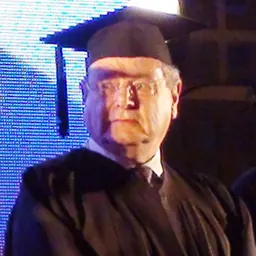
Contemporaries
People whose lives overlapped Lucy Dawidowicz's

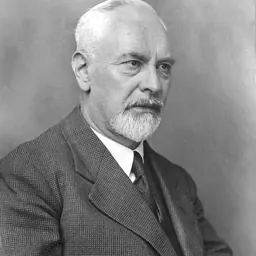



Frequently asked questions
Who was Lucy Dawidowicz?
American historian and writer (1915–1990)
When was Lucy Dawidowicz born?
Lucy Dawidowicz was born on 16 June 1915 in New York City.
When did Lucy Dawidowicz die?
Lucy Dawidowicz died on 5 December 1990 in New York City.
What was Lucy Dawidowicz's occupation?
Lucy Dawidowicz was a historian and writer.
What nationality was Lucy Dawidowicz?
Lucy Dawidowicz was American.
Sources & further reading
Cite this page
APA: Biography.guide. (2026). Lucy Dawidowicz. https://biography.guide/lucy-dawidowicz/
MLA: "Lucy Dawidowicz." Biography.guide, https://biography.guide/lucy-dawidowicz/.
Chicago: "Lucy Dawidowicz." Biography.guide. https://biography.guide/lucy-dawidowicz/.
Data last updated: 2026-09-22 · Spot an error? Report a correction.
Page generated 2026-09-27 05:08 UTC