
About Harry Allan
Lived 1882 – 1957 (aged 75). Harry Allan was a New Zealand botanist, teacher, writer, botanical collector, scientific collector and biologist.
Harry Howard Barton Allan (27 April 1882 – 29 October 1957) was a New Zealand teacher, botanist, scientific administrator, and writer. Despite never receiving a formal education in botany,
Teaching and writing (1903–1928) After graduating Nelson College he taught at various schools, beginning in 1903 in the mining town of Denniston, on the West Coast of the South Island. He later taught at King's College, in Auckland, as well as in Napier, before receiving a posting at Waitaki Boys' High School (Oamaru) in March 1907, as the "fourth assistant residential master." He joined in the second term of the year and became master of the preparatory department, in his first year overseeing its increase from 3 to 17 students. In 1908 he graduated from the University of Auckland, gaining his MA, There he later became the master of English in 1915, and, at the request of the Ministry of Education for more practical subjects to be taught, gave a course on agriculture. While teaching he often consulted Alfred Cockayne, who was at the time working for the Department of Agriculture, to help him with identifying weed and grass species. Through him he met his father, the botanist Leonard Cockayne, who often asked for weed specimens and would support his admission into the Linnean Society in 1917. he continued working—often with plants—at Ashburton High School, where he was agriculture master beginning in 1917. In 1917 the agricultural course he gave suffered from a lack of laboratory equipment and adequate space. At the end of the year Hugo Friedlander donated £500, , towards the building of a laboratory, which began early in 1918 and was finished in April of that year. Allan left Ashburton and began working at Fielding Agricultural High School, where he was English master, in early 1922.
The next six years he spent balancing his work teaching and his increasingly notable botanical research, much of it in collaboration with Cockayne. In writing his thesis he began collecting specimens of lichens, and started a correspondence with Gustaf Einar Du Rietz, who assisted in identifying them.
In 1927 Allan received a grant from the Royal Society of London to spend three months studying New Zealand plant hybrids in the field; from this he published several studies. Chief among his discoveries was the proof, using the genera Coprosma and Rubus, of the origin of a typical plant hybrid swarm. In 1927 he also published a monograph of the New Zealand members of the genus Hebe, describing several new species together with Cockayne. He was made a systematic botanist at the Plant Research Station (under the D.S.I.R), at Massey University in August 1928, retiring from teaching. In July 1928, prior to taking up his position at the institute, he published his first book: New Zealand Trees and Shrubs; How to Identify Them, a guide for the identification of New Zealand plants.
At D.S.I.R (1928–1948) Allan began working at the newly established Plant Research Station, an organisation formed by the Department of Science and Industrial Research (D.S.I.R), in August 1928. He worked as part of a committee, which included Cockayne and others, to research New Zealand agriculture, particularly fungi and grasses. Cockayne said of the institute: "there should develop an ever increasing stream of information of the highest value to the farming community." As part of his work there he published many articles on weeds, grasses, and naturalised plants in the New Zealand Journal of Agriculture, as well as writing two handbooks on those topics. His work often involved travelling around New Zealand to describe and collect species of plants. He attended the fifth International Botanical Congress, held that year in Cambridge, representing the New Zealand Institute, D.S.I.R, the State Forestry Service and the Research Station where he worked. At the conference, which had representatives from around 35 countries, he discussed hybridism in the New Zealand flora, the subject of his grant from the Royal Society. Allan also gave a talk at the Linnean Society, where he formally received his fellowship, He visited Kew Gardens and the South Kensington Museum to study New Zealand plant specimens, and also paid special attention to various grass species, such as Sporobolus × townsendii (syn. Spartina × townsendii), visiting the Essex coast where it grows rapidly. Allan was made head of this department and was relocated in 1937 to Wellington where it became based. The division also helped develop and expand large library and herbarium collections, which supported a plant identification service. Specific topics of study by the division included, as summarised by the botanist Lucy Moore: "New Zealand grasses their breeding systems and population genetics; a cytological survey of New Zealand plants; the study of pollen grains and spores and the peats and other organic deposits where they are preserved." which supplemented an earlier trip in 1946. He travelled to London again in 1950 to view herbarium specimens held at Kew Gardens, also attending the seventh International Botanical Congress in Sweden, and visiting Lapland with lichenologist Gustaf Einar Du Rietz.
Allan died in Wellington, on 29 October 1957, aged 75. He was survived by his wife and two children. After his death his colleague Lucy Moore, who had begun working with Allan on the flora in 1953, eventually completed and published the work as the first volume of Flora of New Zealand in 1961. Second, his three introductory handbooks on New Zealand plants, and finally, his overseeing of the Botany Division and the research that came out of it. A division, in Moore's words, where "each person was left rather free to produce the best possible results in his chosen field," a "welcome anomaly in the aridities of the Civil Service." is the "standard work on the subject"; the first volume contains descriptions and keys of 116 families, 290 genera, 1457 species, and 272 varieties. It was described by The Press in 1961 as "an essential volume to botanists and all who are connected in any authoritative way with the indigenous flora." Throughout his career, Allan described a total of 215 species and hybrids.
Awards and honours
Allan was elected a fellow of Linnean society in 1917, and an overseas member of the Royal Society of Sciences and Letters of Sweden in 1940—the first New Zealand botanist since Cockayne in 1929. In 1938 Allan was made a corresponding member of the Swedish Phytogeographical Society, for his work in the discipline, and earlier assistance given to the society's president when he visited New Zealand in 1927. In 1941 Allan was awarded the Hutton Medal for his botanical research, followed by the Hector Memorial Medal and Prize in 1942, After Allan's health began to decline, he was awarded the honorary degree of Doctor of Philosophy and Master of Arts in the University of Uppsala in May 1957, on the 250th anniversary of Carl Linnaeus's birth.
The species Pertusaria allanii, Pseudocyphellaria allanii, Lembergia allanii, Frullania allanii, Gelidium allanii, Carex allanii, Chenopodium allanii, Celmisia allanii'', are named after Allan.
Personal life Allan married Hannah Louise Arnold on 7 September 1909 and had two children: one daughter and one son. Moore described Allan as a man "quietly happy" with his life and satisfied in his work. He was a lover of books of many genres and could also speak Swedish, which he learnt to keep up with botanical news from the country. Shy and reserved, when he did speak he was "listened to with well-earned respect."
Selected works
Don’t just read it —
keep it.
Full-length biographies made to live with: read them, listen on the way to work, watch them tonight.
- E-book
- Audio
- Video
Instant download · yours to keep · every purchase keeps this site free
Important facts
People in Harry Allan's life
Named in this biography and alive at the same time
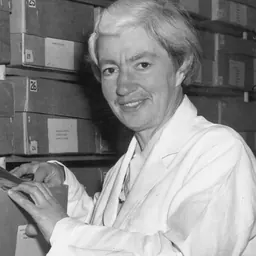
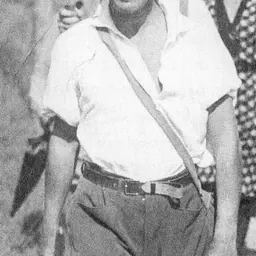

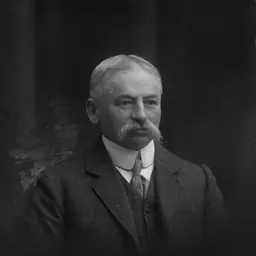

Related people
Same field, nearest in time
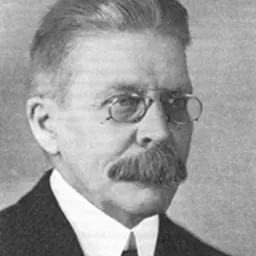


Contemporaries
People whose lives overlapped Harry Allan's





Frequently asked questions
Who was Harry Allan?
New Zealand teacher, botanist, scientific administrator, writer (1882–1957)
When was Harry Allan born?
Harry Allan was born on 27 April 1882 in Nelson.
When did Harry Allan die?
Harry Allan died on 29 October 1957 in Wellington.
What was Harry Allan's occupation?
Harry Allan was a botanist, teacher, writer, botanical collector, scientific collector and biologist.
What nationality was Harry Allan?
Harry Allan was New Zealand.
Sources & further reading
Cite this page
APA: Biography.guide. (2026). Harry Allan. https://biography.guide/harry-allan-botanist/
MLA: "Harry Allan." Biography.guide, https://biography.guide/harry-allan-botanist/.
Chicago: "Harry Allan." Biography.guide. https://biography.guide/harry-allan-botanist/.
Data last updated: 2026-09-20 · Spot an error? Report a correction.
Page generated 2026-09-27 05:22 UTC