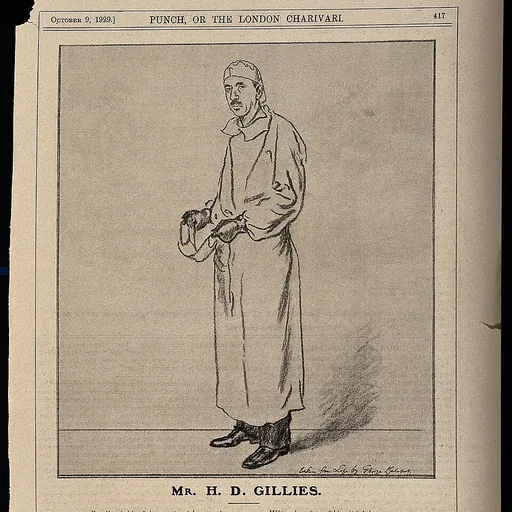
About Harold Gillies
Lived 1882 – 1960 (aged 78). Harold Gillies was a New Zealand physician, plastic surgeon, surgeon and otolaryngologist, known for Plastic surgery.
Sir Harold Delf Gillies (17 June 1882 – 10 September 1960) was the father of modern plastic surgery for the techniques he devised to repair the faces of wounded soldiers returning from World War I. He initially trained as an otolaryngologist and subsequently developed reconstructive techniques that culminated in the advent of plastic surgery.
Early life
Gillies was born in Dunedin, New Zealand, the son of Member of Parliament in Otago, Robert Gillies. He attended Whanganui Collegiate School and studied medicine at Gonville and Caius College, Cambridge. Despite a stiff elbow from a childhood accident at home, he was an excellent sportsman. He was a golf blue in 1903, 1904 and 1905 and also a rowing blue, competing in the 1904 Boat Race. At Caius he became a freemason and rose to be Master of Caius Lodge. Gillies was a student at St Bartholomew's Hospital and won the Luther Holden Research Scholarship in 1910. He was also lecturer on plastic surgery in that medical school.
Career
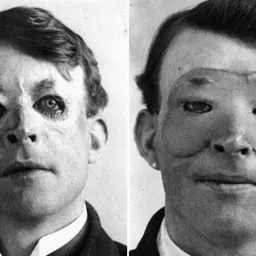
World War I Walter Yeo, a sailor injured at the Battle of Jutland, is assumed to be the first person to receive plastic surgery in 1917. These photographs shows him immediately following (right) the flap surgery by Sir Harold Gillies, and after healing (left). Following the outbreak of World War I he joined the Royal Army Medical Corps. Initially posted to Wimereux, near Boulogne, he acted as medical minder to a French-American dentist, Auguste Charles Valadier, who was not allowed to operate unsupervised but was attempting to develop jaw repair work. Gillies, eager after seeing Valadier experimenting with nascent skin graft techniques, then decided to leave for Paris, to meet the renowned oral surgeon Hippolyte Morestin. He saw him remove a tumour on a patient's face, and cover it with jaw skin taken from the patient. Gillies became enthusiastic about the work and on his return to England persuaded the army's chief surgeon, William Arbuthnot-Lane, that a facial injury ward should be established at the Cambridge Military Hospital, Aldershot.
The ward rapidly proved inadequate for the increasingly large number of patients in need of treatment, and a new hospital devoted to facial repairs was developed at Sidcup. The Queen's Hospital opened in June 1917, and with its convalescent units provided over 1,000 beds.
There, Gillies and his colleagues developed many innovative plastic surgery techniques; more than 11,000 operations were performed on over 5,000 men.
For his war services, Gillies was appointed an Officer of the Order of the British Empire in 1919, and promoted to Commander of the Order of the British Empire the following year. He was knighted in the 1930 Birthday Honours. Sir William Arbuthnot Lane, 1st Baronet, commented, "Better late than never".
Private practice
Between the wars Gillies developed a substantial private practice with Rainsford Mowlem, including many famous patients, and travelled extensively, lecturing, teaching and promoting the most advanced techniques worldwide.
In 1930 Gillies invited his cousin, Archibald McIndoe, to join the practice, and also suggested he apply for a post at St Bartholomew's Hospital. This was the point at which McIndoe became committed to plastic surgery, in which he too became pre-eminent.
World War II During World War II Gillies acted as a consultant to the Ministry of Health, the RAF and the Admiralty. He organised plastic surgery units in various parts of Britain and inspired colleagues to do the same, including pioneering plastic surgeon Stewart Harrison who founded the plastic surgery unit at Wexham Park Hospital, Berkshire.
His own work continued at Rooksdown House, part of the Park Prewett Hospital, Basingstoke. During this period, and after the war, he trained many doctors from Commonwealth nations in plastic surgery.
Gillies also carried out lecture tours on plastic surgery across South America between 1941 and 1942 alongside British colour photographer Percy Hennell.
Pioneering gender-affirming surgery Instead of retiring at the end of the Second World War Gillies had to keep working as he had insufficient savings. In 1951, he and colleagues carried out one of the first modern female gender-affirming surgeries, on Roberta Cowell,
Gillies made a visit to New Zealand in 1956 after an absence of 51 years.
Gillies died on 10 September 1960 at The London Clinic, at 20 Devonshire Place, Marylebone. He won the President's Putter in 1925.
For many years his home was at 71 Frognal, Hampstead, London. A blue plaque on the front of that house now commemorates his life and work.
In Cambridge, in 2015, Gonville and Caius College built twelve houses and named the road "Gillies Close" (postcode CB5 8ZD) in his honour.
Gillies Lane at Gun Hill Park in Aldershot, the former Cambridge Military Hospital, similarly commemorates him.
Selected publications Gillies HD. Plastic Surgery of the Face. Henry Frowde. 1920, 1983. Gillies HD, Millard DR. The Principles and Art of Plastic Surgery. Butterworth. 1958.
Don’t just read it —
keep it.
Full-length biographies made to live with: read them, listen on the way to work, watch them tonight.
- E-book
- Audio
- Video
Instant download · yours to keep · every purchase keeps this site free
Important facts
People in Harold Gillies's life
Named in this biography and alive at the same time
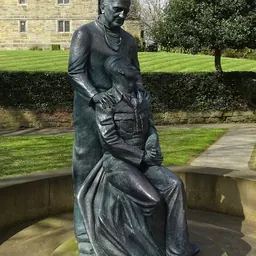
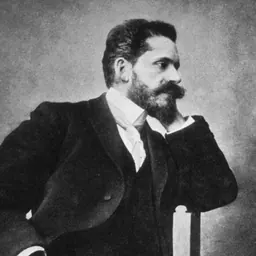




Related people
Same field, nearest in time


Contemporaries
People whose lives overlapped Harold Gillies's

Frequently asked questions
Who was Harold Gillies?
New Zealand plastic surgeon (1882–1960)
When was Harold Gillies born?
Harold Gillies was born on 17 June 1882 in Dunedin.
When did Harold Gillies die?
Harold Gillies died on 10 September 1960 in London.
What was Harold Gillies's occupation?
Harold Gillies was a physician, plastic surgeon, surgeon and otolaryngologist.
What was Harold Gillies known for?
Harold Gillies was known for Plastic surgery.
What nationality was Harold Gillies?
Harold Gillies was New Zealand.
Sources & further reading
Cite this page
APA: Biography.guide. (2026). Harold Gillies. https://biography.guide/harold-gillies/
MLA: "Harold Gillies." Biography.guide, https://biography.guide/harold-gillies/.
Chicago: "Harold Gillies." Biography.guide. https://biography.guide/harold-gillies/.
Data last updated: 2026-09-22 · Spot an error? Report a correction.
Portrait: Wikimedia Commons · author & licence
Page generated 2026-09-27 05:01 UTC