
About Hans Liska
Lived 1907 – 1983 (aged 76). Hans Liska was an Austrian painter, draftsperson, graphic artist and illustrator.
Hans Liska (19 November 1907 – 26 December 1983) was an Austrian artist, painter, commercial artist and illustrator.
Biography Liska was born on 19 November 1907 in Vienna, Austria-Hungary. He attended economic school and worked as a bureaucrat. A secondary job as a pianist helped him apply to University of Applied Arts Vienna. There he was a student of Berthold Löffler (a friend of Oskar Kokoschka).
Liska then worked as a commercial artist in St. Gallen, Switzerland, and went to the Königliche Kunstgewerbeschule München in Munich as a student of Emil Preetorius and Walter Teutsch. and the propaganda magazine Signal. He made a drawing of the "greatest ateliers in the world", a gigantic hall, which was to be erected in Baldham near Munich by Josef Thorak after a decision by Albert Speer. This was supposed to be used for mighty group performances on the rally ground in Nuremberg. The building looks like a living model (for example a horse), then a sound form, then a four-metre-tall model and finally a colossal horse statue. A second image shows the transport of ready-made horse sculptures to railway tracks for delivery to the deployment site.
After the end of the war, Liska remained in Germany. In 1945 his Skizzenbuch aus dem Kriege, originally published in 1944 by Buhrbanck in Berlin in 1944, and all of its translations, was placed on the "proscription list of rejected literature" as number 17549.
In 1948 Liska married Elisabeth (née Schmid, born 1922) in Scheßlitz near Bamberg. The couple had two daughters, Angelika and Gabriele.
In Scheßlitz, Liska started drawing for the magazines Quick and Hörzu. He worked in advertising for years, especially for the automobile company Daimler-Benz, but also for the Colognian companies Ford and Mühlens (4711). His other employers included Galeria Kaufhof, Degussa, Märklin, Quelle, the paint company Hoechst, the Lederer Bierkontor brewery, the Sekt producer Henkell & Co. Sektkellerei and the smoke beer brewery Schlenkerla (Bamberg). His city and country books with sketches of Salzburg, Bamberg, Cologne, Kulmbach and Franconia were published starting from 1960.
The porcelain company Kaiser in Bad Staffelstein published numerous pitchers, porringers and most importantly plates bearing over 200 of Liska's illustrations of the cities of Aachen, Berlin, Danzig, Königsberg, Munich, Wrocław and others.
Liska's love of Mozart's opera brought him in connection with the picture series Zauber der Bühne, published in 1982. In his illustrated autobiography Malerisches Kulmbach (1985), Liska admitted to honouring the works of Max Ernst, Oskar Kokoscha and Pablo Picasso.
Hans Liska died in Wertheim am Main on 26 December 1983, shortly after a stroke.
Don’t just read it —
keep it.
Full-length biographies made to live with: read them, listen on the way to work, watch them tonight.
- E-book
- Audio
- Video
Instant download · yours to keep · every purchase keeps this site free
Important facts
People in Hans Liska's life
Named in this biography and alive at the same time
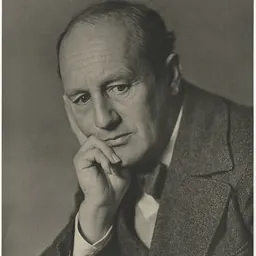
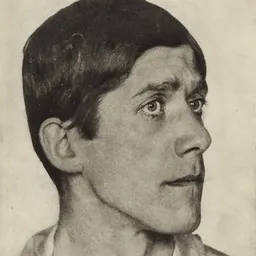
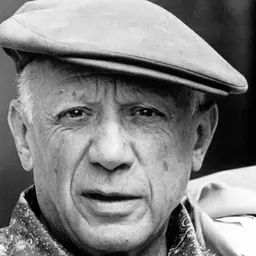
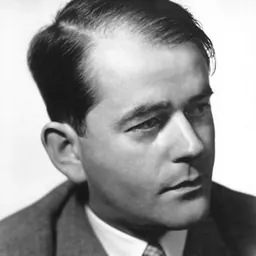
Related people
Same field, nearest in time


Contemporaries
People whose lives overlapped Hans Liska's



Frequently asked questions
Who was Hans Liska?
Austrian painter (1907-1983)
When was Hans Liska born?
Hans Liska was born on 19 November 1907 in Vienna.
When did Hans Liska die?
Hans Liska died on 26 December 1983 in Scheßlitz.
What was Hans Liska's occupation?
Hans Liska was a painter, draftsperson, graphic artist and illustrator.
What nationality was Hans Liska?
Hans Liska was Austrian.
Sources & further reading
Cite this page
APA: Biography.guide. (2026). Hans Liska. https://biography.guide/hans-liska/
MLA: "Hans Liska." Biography.guide, https://biography.guide/hans-liska/.
Chicago: "Hans Liska." Biography.guide. https://biography.guide/hans-liska/.
Data last updated: 2026-09-20 · Spot an error? Report a correction.
Page generated 2026-09-27 04:57 UTC