
About Hans Geiger
Lived 1882 – 1945 (aged 62). Hans Geiger was a German physicist, inventor, university teacher, nuclear physicist, laboratory director and scientist, known for Atomic nucleus, Geiger counter and Geiger–Marsden experiment.
Infobox scientist name = Hans Geiger image = Hans geiger.jpg caption = Geiger in 1928 birth_name = Johannes Wilhelm Geiger birth_date = birth_place = Neustadt an der Haardt, German Empire death_date = death_place = Potsdam, Germany fields = Physics education = University of Erlangen ( 1906) known_for = father = Wilhelm Geiger relatives = Rudolf Geiger (brother) awards = workplaces = thesis_title = Strahlungs-, Temperatur- und Potentialmessungen in Entladungsröhren bei starken Strömen thesis_url = https://zenodo.org/records/1859336 thesis_year = 1907 doctoral_advisor = Eilhard Wiedemann doctoral_students = (30 September 1882 – 24 September 1945) was a German experimental physicist. He is known as the inventor of the Geiger counter, a device used to detect ionizing radiation, and for carrying out the Rutherford scattering experiments, which led to the discovery of the atomic nucleus. He also performed the Bothe–Geiger coincidence experiment, which confirmed the conservation of energy in light-particle interactions.
He was the brother of meteorologist and climatologist Rudolf Geiger.
Biography Early years Johannes Wilhelm Geiger was born on 30 September 1882 in Neustadt an der Haardt, Germany, the son of Indologist Wilhelm Geiger. In 1902, Geiger started studying physics and mathematics at the University of Erlangen, receiving his Ph.D. in 1906 with a thesis on electric discharges.
After graduating, Geiger received a fellowship to the University of Manchester, where he worked as an assistant to Arthur Schuster. In 1907, after Schuster's retirement, Geiger began to work with his successor, Ernest Rutherford, and in 1908, along with Ernest Marsden, conducted the famous Geiger–Marsden experiment (also known as the "gold foil experiment"). This process allowed them to count alpha particles
Middle years In 1912, Geiger was named head of radiation research at the Physikalisch-Technische Reichsanstalt (now the Physikalisch-Technische Bundesanstalt) in Charlottenburg, where he worked with James Chadwick and Walther Bothe (winners of the 1935 and 1954 Nobel Prize in Physics, respectively). Work was interrupted when Geiger served in the German military during World War I as an artillery officer from 1914 to 1918.
In 1924, Geiger and Bothe carried out the Bothe–Geiger coincidence experiment that confirmed the Compton effect, which helped earn Arthur Compton the 1927 Nobel Prize in Physics.
In 1925, Geiger began a teaching position at Kiel University. In 1928, Geiger and his student, Walther Müller, created the Geiger–Müller tube. This new device not only detected alpha particles, but also beta and gamma particles, and is the basis for the Geiger counter.
In 1929, Geiger was appointed Professor of Physics and Director of Research at the University of Tübingen, where he made his first observations of a cosmic ray shower. In 1936, he took a position at Technische Hochschule Berlin (now Technische Universität Berlin), where he continued to research cosmic rays, nuclear fission, and artificial radiation until his death in 1945.
Geiger endured the Battle of Berlin and subsequent Soviet occupation in April/May 1945. In June 1945, Geiger's house in Potsdam was confiscated and sealed off by the Russians. He was forced to move into emergency accommodation, where he died of severe, debilitating rheumatism, hunger and general exhaustion on 24 September 1945 at the age of 62.
Awards Year Organization Award Citation 1929 Royal Society Hughes Medal "For his invention and development of methods of counting alpha and beta particles." 1937 Institute of Physics Duddell Medal and Prize —
Don’t just read it —
keep it.
Full-length biographies made to live with: read them, listen on the way to work, watch them tonight.
- E-book
- Audio
- Video
Instant download · yours to keep · every purchase keeps this site free
Important facts
People in Hans Geiger's life
Named in this biography and alive at the same time



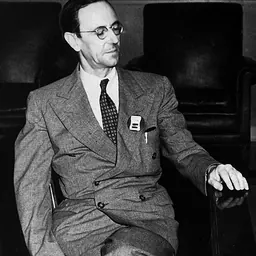


Related people
Same field, nearest in time
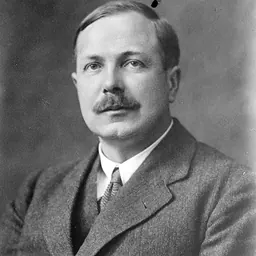


Contemporaries
People whose lives overlapped Hans Geiger's

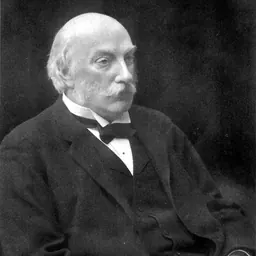




Frequently asked questions
Who was Hans Geiger?
German physicist (1882–1945)
When was Hans Geiger born?
Hans Geiger was born on 30 September 1882 in Neustadt an der Weinstraße.
When did Hans Geiger die?
Hans Geiger died on 24 September 1945 in Potsdam.
What was Hans Geiger's occupation?
Hans Geiger was a physicist, inventor, university teacher, nuclear physicist, laboratory director and scientist.
What was Hans Geiger known for?
Hans Geiger was known for Atomic nucleus, Geiger counter, Geiger–Marsden experiment, Geiger–Müller tube and Geiger–Nuttall law.
What nationality was Hans Geiger?
Hans Geiger was German.
Sources & further reading
Cite this page
APA: Biography.guide. (2026). Hans Geiger. https://biography.guide/hans-geiger/
MLA: "Hans Geiger." Biography.guide, https://biography.guide/hans-geiger/.
Chicago: "Hans Geiger." Biography.guide. https://biography.guide/hans-geiger/.
Data last updated: 2026-09-26 · Spot an error? Report a correction.
Page generated 2026-09-27 05:14 UTC