
About Hammer DeRoburt
Lived 1922 – 1992 (aged 69). Hammer DeRoburt was a politician.
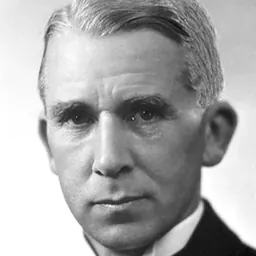
Hammer DeRoburt (25 September 1922 – 15 July 1992) was a Nauruan politician and independence leader. He led negotiations for independence from Australia and the end of the country's status as a United Nations trust territory. He was subsequently elected as the inaugural president of Nauru, serving four terms in office (1968–1976, 1978–1986, 1986, 1986–1989). Prior to independence he was head chief of Nauru and chair of the Nauru Local Government Council.
Early life DeRoburt was born in Nauru on 25 September 1922. He was the son of DeRoburt and Eidumunang; his maternal grandfather Daimon was the island's head chief from 1920 to 1930. He also had Banaban heritage, as his grandmother was from the island. DeRoburt was a member of the Iruwa tribe. He was raised in Boe District. Local residents and European residents protested without success, whilst a petition to the 1953 Visiting Mission from the United Nations was also overlooked. He was elected chairman of the Council of State, serving until 17 May 1968 when the legislature unanimously elected him as the country's inaugural president upon the adoption of the new constitution. Austin Bernicke and Buraro Detudamo received nominations but declined to stand for election.
In addition to the presidency, DeRoburt assumed the cabinet portfolios of external affairs, internal affairs, and island development and industry. He was re-elected as president unopposed in January 1971 after the 1971 Nauruan parliamentary election. In his second term, DeRoburt faced opposition from a ginger group of young MPs, who felt he had mismanaged the economy, was governing without consultation, and had failed to renew his cabinet. His opponents formed the Nauru Party, the first formal political party on the island. In July 1976, parliament failed to pass financial legislation introduced by DeRoburt. He treated the defeat as a motion of no confidence and resigned as president, but renominated himself in the ensuing election and was re-elected unopposed.
On 22 December 1976, following the 1976 Nauruan parliamentary election, DeRoburt was unexpectedly defeated in his bid for re-election to the presidency, with 30-year-old Bernard Dowiyogo defeating him by nine votes to seven and appointing a Nauru Party cabinet. Dowiyogo had reportedly not expected to win the ballot and offered to resign in DeRoburt's favour if he agreed to make concessions on cabinet choices, but DeRoburt refused to do so. He subsequently pressured Dowiyogo to resign and moved a motion attempting to declare Dowiyogo's election as unconstitutional, on the grounds that the constitution had not allowed for party politics. Dowiyogo was re-elected as president, but remained in office only until April 1978 when he resigned following a defeat on a phosphate royalties bill. His successor Lagumot Harris was ousted only a month later on a vote on an appropriations bill, with DeRoburt returning as president.
DeRoburt's second term in office lasted until his resignation on 19 September 1986 and replacement by Kennan Adeang. Adeang's government collapsed only two weeks, with DeRoburt returning as president on 1 October 1986.
Domestic affairs In his first years in office, DeRoburt's government established the Nauru Phosphate Corporation to continue phosphate mining, under the terms agreed prior to independence.
Foreign affairs In his final term, DeRoburt's government filed a case against Australia in the International Court of Justice for not rehabilitating mined-out areas of the island. His last public appearance was in the ICJ hearing in November 1991.
Personal life DeRoburt married Lukale Rowena Harris in 1950, with whom he had one daughter. He was predeceased by his wife and died on 15 July 1992 while in Melbourne for medical treatment. He was accorded a state funeral, before being buried in Boe cemetery, Nauru.
He was given an honorary knighthood by Queen Elizabeth II in 1982.
DeRoburt is credited with popularising Australian rules football to Nauru, which became the national sport.
Don’t just read it —
keep it.
Full-length biographies made to live with: read them, listen on the way to work, watch them tonight.
- E-book
- Audio
- Video
Instant download · yours to keep · every purchase keeps this site free
Important facts
Family & relationships
People in Hammer DeRoburt's life
Named in this biography and alive at the same time





Related people
Same field, nearest in time




Contemporaries
People whose lives overlapped Hammer DeRoburt's

Frequently asked questions
Who was Hammer DeRoburt?
President of Nauru (1922-1992)
When was Hammer DeRoburt born?
Hammer DeRoburt was born on 25 September 1922 in Nauru.
When did Hammer DeRoburt die?
Hammer DeRoburt died on 15 July 1992 in Melbourne.
What was Hammer DeRoburt's occupation?
Hammer DeRoburt was a politician.
What nationality was Hammer DeRoburt?
Hammer DeRoburt's recorded nationality: Nauru.
Sources & further reading
Cite this page
APA: Biography.guide. (2026). Hammer DeRoburt. https://biography.guide/hammer-deroburt/
MLA: "Hammer DeRoburt." Biography.guide, https://biography.guide/hammer-deroburt/.
Chicago: "Hammer DeRoburt." Biography.guide. https://biography.guide/hammer-deroburt/.
Data last updated: 2026-09-20 · Spot an error? Report a correction.
Page generated 2026-09-27 05:24 UTC