
About H. H. Holmes
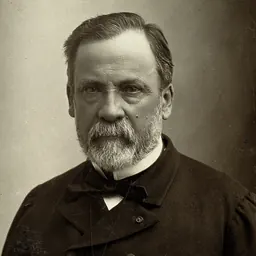
Lived 1861 – 1896 (aged 34). H. H. Holmes was an American serial killer, con artist, pharmacist, physician and hotel manager.
Herman Webster Mudgett (May 16, 1861 – May 7, 1896), better known as Dr. Henry Howard Holmes or H. H. Holmes and also known by the aliases Alexander Bond, Harry Gordon, J.A. Judson and Robert E. Phelps, was an American con artist and murderer active between 1891 and 1894. By the time of his execution in 1896, Holmes had engaged in a lengthy criminal career that included insurance fraud, forgery, swindling, three or four bigamous marriages, horse theft and murder. Known as the Beast of Chicago, the Devil in the White City or the Torture Doctor, he committed his most notorious crimes in Chicago around the time of the World's Columbian Exposition in 1893.
Holmes was convicted and sentenced to death for the murder of Benjamin Pitezel, his accomplice in several of his cons. However, Holmes confessed to twenty-seven murders, including those of some people who were verifiably still alive. It is believed that he also killed three of Pitezel's children, as well as three mistresses, the child of one mistress and the sister of another. Holmes was hanged on May 7, 1896.
Much of the lore attached to Holmes concerns the so-called "Murder Castle", a three-story building he commissioned on W. 63rd Street in Chicago. Details about the building, along with many of his alleged crimes, are considered exaggerated or fabricated for sensationalistic tabloid pieces with some accounts estimating his body count could be as high as 133. Many of these inaccuracies have persisted due to the combination of ineffective police investigation and hyperbolic yellow journalism of the period, which are often cited as historical record. Official findings suggest that the W. 63rd Street property was used for business, and that the irregular architecture was a product of fraud, rather than being designed to fulfill violent fantasies.
Holmes gave various contradictory accounts of his life, initially claiming innocence, and later that he was possessed by Satan. His propensity for lying has made it difficult for researchers to ascertain the truth on the basis of his statements. however, Leacock died on October 5, 1889, in Watford, Ontario, Canada.
Since the 1990s, Holmes has often been described as the first serial killer in U.S. history. In his book about Holmes, author Adam Selzer writes: "Just killing several people isn't necessarily enough for most definitions [of a serial killer]. More often, it has to be a series of similar crimes, committed over a period of time, usually more to satisfy a psychological urge on the killer's part than any more practical motive." He adds: "The murders we can connect 'Holmes' to generally had a clear motive: someone knew too much, or was getting in his way, and couldn't be trusted. The murders weren't simply for love of bloodshed but a necessary part of furthering his swindling operation and protecting his lifestyle." He had two older siblings, Ellen and Arthur, and one younger brother, Henry. As an adolescent, Holmes attended Phillips Exeter Academy before graduating high school with honors from Gilmanton Academy at age 16.
Holmes' parents were both devout Methodists. His father was from a farming family, and at times worked as a farmer, trader and house painter. He was also reportedly a heavy drinker who cruelly beat his children. Holmes also faced bullying by classmates due to his outstanding academic capabilities. In one incident, he was forced to stand in front of a human skeleton and put the skeleton's hands on his face in an effort to frighten him. Initially terrified, Holmes later discovered the experience to be intriguing and claimed that it helped him overcome his worries. Holmes subsequently developed an obsession with death as a result of the encounter, and began dissecting animals. Despite his mediocre academic performance, Holmes graduated in June 1884. While enrolled, he worked in the anatomy lab under Professor William James Herdman, then the chief anatomy instructor, and the two were said to have been engaged in facilitating body snatching to supply medical cadavers. Holmes had apprenticed in New Hampshire under Nahum Wight, a noted advocate of human dissection. He later traveled to Philadelphia and was hired as a keeper at Norristown State Hospital but quit after a few days. He then took a position at a drugstore in Philadelphia, but while he was working there a boy died after taking medicine that was purchased at the store. Holmes denied any involvement in the child's death and immediately left the city. Before moving to Chicago in August 1886, he changed his name to "Henry Howard Holmes" to avoid the possibility of being exposed by victims of his previous scams.
Murders
On August 11, 1895, Joseph Pulitzer's The World published a fictional floor plan of Holmes' "Murder Castle" with (left to right and top to bottom): a vault, a crematorium, a trapdoor in the floor, and a quicklime grave with bones. Soon after his arrival in Chicago, Holmes came across a drugstore at the northwest corner of South Wallace Avenue and W. 63rd Street in the Englewood section of the city. The drugstore's owner, Elizabeth Holton, gave Holmes a job; he proved to be a hardworking employee, eventually buying the store.
Contrary to several accounts, Holmes did not kill Dr. E. S. Holton, the drugstore's original owner. Holmes purchased an empty lot across the street, where construction began in 1887 for a two-story mixed-use building, with apartments on the second floor and retail spaces, including a new drugstore, on the first. When he declined to pay the architects or the steel company, Aetna Iron and Steel, they took him to court in 1888.
Contemporary accounts report that Holmes built the hotel to lure tourists visiting the Exposition in order to kill them and sell their skeletons to nearby medical schools. Although he did have a history of selling stolen cadavers to medical schools, Holmes had acquired these wares through body snatching rather than murder. Likewise, there is no evidence that Holmes ever murdered Exposition-goers on the premises.
Other accounts stated that the hotel was made up of over a hundred rooms and laid out like a maze, with doors opening into brick walls, windowless rooms and dead-end staircases. In reality, the third-floor hotel was moderately sized, largely unremarkable and uncompleted due to Holmes's disputes with the builders. It did contain some hidden rooms, but they were used for hiding furniture Holmes bought on credit and did not intend to pay for. In his confession, he stated that his usual method of killing was to suffocate his victims using various means, including an overdose of chloroform, overexposure to lighting gas fumes and trapping them in an airless vault. Holmes also claimed to have starved victims and to have burned them alive in his "castle".
Holmes' hotel was gutted by a fire started by an unknown arsonist shortly after his arrest, but was largely rebuilt and used as a post office until 1938. Besides his infamous "Murder Castle", Holmes also owned a one-story factory which he claimed was to be used for glass bending. It is unclear if the factory furnace was ever used for this purpose; it was speculated to have been used to destroy incriminating evidence of Holmes' crimes.
Presumed murders A newspaper account of Holmes's confession, including hand-drawn illustrations of the judge at his trial and ten of his suspected victims. Holmes's mistress, 31-year-old Julia Smythe, was the wife of Dr. Laurence Conner, who had moved into his building and began working at his drugstore's jewelry counter. After Conner found out about Smythe's affair with Holmes, he quit his job and moved away, leaving Smythe and their 5-year-old daughter, Pearl Conner, behind. Smythe gained custody of Pearl and remained at the hotel, continuing her relationship with Holmes. In early 1893, a 24-year-old one-time actress, Wilhelmina "Minnie" Williams, moved to Chicago. Holmes claimed to have met her in an employment office, though it is believed that he had actually met her in Boston several years earlier while he was then going by the alias "Harry Gordon". Holmes offered her a job at the hotel as his personal stenographer, and she accepted. He persuaded Williams to transfer the deed to her property in Fort Worth, Texas, to a man named "Alexander Bond", which was an alias of Holmes. Foul play was not suspected; in 1895, it was determined that DeBrueil's life had been insured, and that Holmes had profited from his death. In 1891, Emily Van Tassel disappeared after working at Holmes' drugstore; Holmes spoke of her in his confession. In 1897, Tassel's name was cited in a list of suspected victims and her mother believed she was a possible victim. "Dr. Russler" had an office in the "Castle" and went missing in 1892; Holmes mentioned killing Russler in his confession. John Davis of Greenville, Pennsylvania, went to visit the World's Columbian Exposition and vanished. In 1920, he was declared legally dead. Harry Walker of Greensburg, Indiana, went missing in November 1893. He was alleged to have insured his life to Holmes for $20,000 and wrote to friends that he was working for Holmes in Chicago. Holmes confessed to taking a man named George Thomas out to a Mississippi swamp on the Tombigbee River in June 1894, killed him and disposed of the body with assistance from Pietzel. Holmes is alleged to have killed two people in Lake County, Illinois, in the 1890s. Their deaths were confirmed in 1919, twenty-three years after his execution, when the remains of an unknown man and woman were found on a farm.
Confessed killings Of the twenty-seven killings to which Holmes confessed, only eight are confirmed, with one other considered probable. Dr. Robert Leacock was allegedly murdered by Holmes in 1886 for insurance money, as detailed earlier in this article. However, Leacock actually died of natural causes on October 5, 1889, in Watford, Ontario, Canada. – Claim disproven. "Lizzie", a domestic worker at the hotel, was allegedly smothered in the vault because Holmes believed a janitor was too interested in her. – Claim highly suspect. Julia Conner, her unborn child and Pearl Conner were murdered by Holmes on Christmas 1891. – Murders confirmed. Virginia Anna Betts died suddenly in her home one block from the hotel on February 8, 1892. Holmes claimed to have poisoned her, either to cancel a debt or to watch her die. – Murder confirmed. Sarah Cook and her unborn child, along with Cook's niece, Mrs. Mary Haracamp or Haverkamp of Hamilton, Ontario, were allegedly smothered in the vault. No person by the name Haverkamp was ever known in Hamilton. When the hotel was investigated, burned clothing believed to have belonged to Minnie was found. John Davis of Greenville, Pennsylvania, who came to Chicago to visit the Exposition and vanished, was declared legally dead in 1920.
In July 1894, Holmes was arrested and briefly jailed on the charge of selling mortgaged goods in St. Louis, Missouri. He was promptly bailed out, but while in jail he struck up a conversation with a convicted outlaw named Marion Hedgepeth, who was serving a twenty-five-year sentence. Holmes had concocted a plan to swindle an insurance company out of $10,000 by taking out a policy on himself and then faking his death. Holmes promised Hedgepeth a $500 commission in exchange for the name of a lawyer who could be trusted. Holmes was directed to St. Louis attorney Jeptha Howe. Howe thought Holmes's scheme was brilliant and agreed to participate. Nevertheless, Holmes' plan to fake his own death failed when the insurance company became suspicious and refused to pay. Holmes did not press the claim; instead, he concocted a similar plan with Pitezel. The ploy was successful and Holmes collected the insurance payout on the basis of the genuine Pitezel corpse.
Holmes then manipulated Canning into believing that Pitezel was alive and allowing three of her five children to be placed in Holmes' custody. The three children who were placed under his care, were 13-year-old Alice Pitezel, 9-year-old Nellie Pitezel and 7-year-old Howard Robert Pitezel. Holmes and the three Pitezel children traveled throughout the Northeastern United States and into Canada. He simultaneously escorted Canning along a parallel route, all the while using various aliases and falsely telling Carrie that Pitezel was hiding in London, Holmes was reported to have visited a local pharmacy to purchase the drugs which he used to kill Howard Pitezel on October 10, 1894, and a repair shop to sharpen the knives he used to chop up the child's body before he burned it. The boy's teeth and bones were discovered in the home's chimney.
Capture and execution Holmes' murder spree finally ended when he was arrested in Boston on November 17, 1894, after being tracked there from Philadelphia by the private Pinkerton National Detective Agency. He was held on an outstanding warrant for horse theft in Texas because the authorities had become more suspicious at this point and Holmes appeared poised to flee the country with his unsuspecting third wife.
Though many sensational claims were made, no evidence was found which could have convicted Holmes in Chicago. Thus Holmes would be tried for the murder of Pitezel in Philadelphia, which had the best chance for success.
In October 1895, Holmes was put on trial for the murder of Pitezel, and was found guilty and sentenced to death. By then, it was evident Holmes had also murdered the three missing Pitezel children. Following his conviction, he confessed to twenty-seven murders in Chicago, Indianapolis and Toronto, and six attempted murders. Holmes was paid $7,500 While writing his confessions in prison, Holmes mentioned how drastically his facial appearance had changed since his imprisonment. Until the moment of his death, he remained calm and amiable, showing very few signs of fear, anxiety or depression. Despite this, he asked for his coffin to be encased in concrete and buried ten feet deep, concerned that body snatchers would steal his body and use it for dissection.
Upon his execution, Holmes's body was interred in an unmarked grave at Holy Cross Cemetery, a Catholic cemetery in Yeadon, Pennsylvania. On New Year's Eve 1909, Hedgepeth, who had been pardoned for informing on Holmes, On March 7, 1914, the Chicago Tribune reported that, with the death of Patrick Quinlan, the former janitor of the "Castle", "the mysteries of Holmes's castle" would remain unexplained. Quinlan had committed suicide by taking strychnine. His body was found in his bedroom with a note that read: "I couldn't sleep." His surviving relatives claimed he had been "haunted" for several months and was suffering from hallucinations.
The "Castle" itself was damaged by a fire in August 1895. Two men were seen entering the back of the building at 9 p.m. About half an hour later, they were seen exiting the building and rapidly running away. Following several explosions, the castle went up in flames. Afterwards, investigators found a half-empty gas can underneath the back steps of the building. The building survived the fire and remained in use until it was torn down in 1938. The site is currently occupied by the Englewood branch of the United States Postal Service.
In 2017, during allegations Holmes had escaped execution, his body was exhumed for testing led by Janet Monge of the University of Pennsylvania Museum of Archaeology and Anthropology. Due to his coffin being encased in concrete, his body was found to not have decomposed normally. His clothes were almost perfectly preserved and his moustache was found to be intact. The body was positively identified by his teeth as being that of Holmes. He was then reburied.
Personal life
On July 4, 1878, Holmes married Clara Lovering in Alton, New Hampshire. They had one son, Robert Lovering Mudgett (February 3, 1880 – November 3, 1956), who was born in Loudon. Robert went on to become a certified public accountant In late 1886, while still legally married to Clara, Holmes married 24-year-old Myrta Belknap in Minneapolis, Minnesota. He filed for divorce from Clara a few weeks after marrying Myrta, alleging infidelity on her part. The claims could not be proven and the suit went nowhere. Surviving paperwork indicated that Clara probably was never even informed of the suit. it was dismissed on June 4, 1891, on the grounds of "want of prosecution".
Holmes had one daughter with Myrta, Lucy Theodate Holmes (July 4, 1889 – December 29, 1956), who was born in the Englewood neighborhood of Chicago. Lucy later became a public schoolteacher. Holmes lived with Myrta and Lucy in Wilmette, Illinois, and spent most of his time in Chicago tending to business. In May 1893, he represented his mistress Wilhelmina "Minnie" Williams as his wife. He married Georgiana Yoke on January 17, 1894, in Denver, Colorado, while still married to both Clara and Myrta.
In popular culture H. H. Holmes at the Criminals Hall of Fame wax museum in Niagara Falls, Ontario The Sherlock Holmes story "The Adventure of the Retired Colourman" (1927) features a killer who gasses his victims in a strongroom. The novel American Gothic (1974), by horror writer Robert Bloch, is a fictionalized version of the story of Holmes.
In 2015, a film adaptation of The Devil in the White City, starring Leonardo DiCaprio and directed by Martin Scorsese, was to begin filming. In 2019, Scorsese and DiCaprio were to be executive producers in a television version to have been released by Paramount TV and Hulu, but Hulu has since dropped the project, leaving the show's future undecided. Holmes was portrayed by Stephen Aberle in the second season of Supernatural, episode "No Exit", and by Joel Johnstone in the first season of Timeless, episode: "The World's Columbian Exposition". Holmes' hotel makes an appearance in the game The Dark Pictures Anthology: The Devil in Me, with various references to Holmes himself.
In 2026, American Murder Song released “H. H. Holmes (Gluttony)”, a song based on Holmes and the murders attributed to him.
Don’t just read it —
keep it.
Full-length biographies made to live with: read them, listen on the way to work, watch them tonight.
- E-book
- Audio
- Video
Instant download · yours to keep · every purchase keeps this site free
Important facts
People in H. H. Holmes's life
Named in this biography and alive at the same time



Related people
Same field, nearest in time

Contemporaries
People whose lives overlapped H. H. Holmes's


Frequently asked questions
Who was H. H. Holmes?
American con artist and serial killer (1861–1896)
When was H. H. Holmes born?
H. H. Holmes was born on 16 May 1861 in Gilmanton.
When did H. H. Holmes die?
H. H. Holmes died on 7 May 1896 in Moyamensing Prison, Philadelphia.
What was H. H. Holmes's occupation?
H. H. Holmes was a serial killer, con artist, pharmacist, physician and hotel manager.
What nationality was H. H. Holmes?
H. H. Holmes was American.
Sources & further reading
Cite this page
APA: Biography.guide. (2026). H. H. Holmes. https://biography.guide/h-h-holmes/
MLA: "H. H. Holmes." Biography.guide, https://biography.guide/h-h-holmes/.
Chicago: "H. H. Holmes." Biography.guide. https://biography.guide/h-h-holmes/.
Data last updated: 2026-09-20 · Spot an error? Report a correction.
Page generated 2026-09-27 05:25 UTC