
Albert Fish
American serial killer, pedophile and cannibal
About Albert Fish
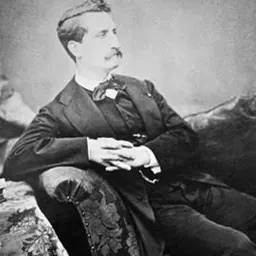
Lived 1870 – 1936 (aged 65). Albert Fish was an American serial killer, prostitute, painter and varnisher and cannibal.
Early life
Albert Fish was born Hamilton Howard Fish in Washington, D.C., on May 19, 1870, to Randall Fish and Ellen Francis Howell. Fish's father was American, of English ancestry, and his mother was a Scots-Irish American. His father was forty-three years older than his mother and aged 75 at the time of his birth. Fish was his family's youngest child and had three living siblings: Walter, Annie and Edwin. He wished to be known as "Albert" after a dead sibling and to escape the nickname "Ham and Eggs" that he was given at an orphanage in which he spent much of his childhood.
Fish's family had a history of mental illness. His uncle had mania, one of his brothers was confined in a state mental hospital, a paternal half-brother suffered from schizophrenia and his sister was diagnosed with a "mental affliction". Three other relatives were diagnosed with mental illnesses, and his mother had "aural and/or visual hallucinations".
On October 16, 1875, Fish's father, a fertilizer manufacturer and former riverboat captain, suffered a fatal heart attack at the Baltimore and Potomac Railroad Station. His mother then put him into Saint John's Orphanage in Washington, where he was frequently physically abused. However, Fish began to enjoy the physical pain brought by the beatings. By 1880, Fish's mother secured a government job and was able to remove him from the orphanage.
In 1882, at age 12, Fish began a relationship with a telegraph boy. The youth introduced Fish to such practices as drinking urine and eating feces. They had six children: Albert, Anna, Gertrude, Eugene, John and Henry Fish. Several years later, around 1910, Fish was working in Wilmington, Delaware, when he met a 19-year-old man named Thomas Bedden. He took Bedden to where he was staying and the two began a sadomasochistic relationship; it is unclear whether the sadomasochism was consensual on Bedden's part, but Fish's later confession implied that he was intellectually disabled.
After ten days, Fish took Bedden to "an old farm house", where he tortured him over two weeks. Fish eventually tied Bedden up and cut off half of his penis. "I shall never forget his scream or the look he gave me", Fish later recalled. He originally intended to kill Bedden, cut up his body and take it home, but feared the hot weather and resulting smell would draw attention; instead, Fish poured peroxide over the wound, wrapped it in a Vaseline-covered handkerchief, left a $10 bill, kissed Bedden goodbye and left. "Took first train I could get back home. Never heard what become of him, or tried to find out," Fish recalled.
In January 1917, Fish's wife left him for John Straube, a handyman who boarded with the Fish family. Fish was subsequently forced to raise his children as a single parent. After his arrest, Fish told a newspaper that when his wife left him, she took nearly every possession the family owned.
Fish began to have auditory hallucinations; he once wrapped himself in a carpet, saying that he was following the instructions of John the Apostle. He often chose people who were either mentally disabled or African-American as his victims, later explaining that he assumed these people would not be missed when killed. Fish would later claim to have occasionally paid boys to procure other children for him. Fish tortured, mutilated, and murdered young children with his "implements of Hell": a meat cleaver, a butcher knife, and a small handsaw.
Despite already being married, Fish married Estella Wilcox on February 6, 1930, in Waterloo, New York; they divorced after only one week. Fish was arrested in May 1930 for "sending an obscene letter to a woman who answered an advertisement for a maid."
Murder of Grace Budd
On May 25, 1928, Fish saw a classified advertisement in the Sunday edition of the New York World that read, "Young man, 18, wishes position in country. Edward Budd, 406 West 15th Street." On May 28, Fish, then 58 years old, visited the Budd family in Manhattan under the pretence of hiring Edward; he later confessed that he planned to tie Edward up, mutilate him, and leave him to bleed to death. Fish introduced himself as "Frank Howard", a farmer from Farmingdale, New York. He promised to hire Budd and his friend and said he would send for them in a few days. Fish failed to show up, but he sent a telegram to the Budd family apologizing and set a later date. When Fish returned, he met Edward's younger sister, 10-year-old Grace "Gracie" Budd. He apparently shifted his intentions toward Grace and quickly made up a story about having to attend his niece's birthday party.
He persuaded the parents, Delia Bridget Flanagan and Albert Francis Budd Sr., to let Grace accompany him to the party that evening. Fish subsequently took Grace to an abandoned house he had previously picked out to use for the murder of his next victim, Wisteria Cottage at 359 Mountain Road, located in the East Irvington neighborhood of Irvington, New York. There, Fish manually strangled her to death, then decapitated and dismembered her body, and ate most of the remains over the next several days. The police arrested 66-year-old superintendent Charles Edward Pope on September 5, 1930, as a suspect in Grace's disappearance, accused by Pope's estranged wife. Pope spent 108 days in jail between his arrest and trial on December 22, 1930. He was found not guilty.
Letter to the mother of Grace Budd In November 1934, an anonymous letter sent to Grace's parents ultimately led the police to Fish. Budd's mother was illiterate and could not read the letter herself, so she had her son read it to her. The unaltered letter reads:
Capture The letter was delivered in an envelope that had a small hexagonal emblem with the letters "N.Y.P.C.B.A." representing "New York Private Chauffeur's Benevolent Association". A chauffeur at the company told the police he had taken some of the stationery home but left it at his rooming house at 200 East 52nd Street when he moved out.
Following his confession, Fish led officers to the site of the abandoned house and showed them where Grace's remains could be found. Fish said it "never even entered [his] head" to rape the girl, but later told his attorney that, while kneeling on Grace's chest and strangling her, he did have two involuntary ejaculations. This information was used at trial to make the claim the kidnapping was sexually motivated, thus avoiding any mention of cannibalism.
Additional crimes discovered after Fish's arrest Francis McDonnell During the night of July 14, 1924, 9-year-old Francis McDonnell was reported missing after he failed to return home after playing catch with friends in Port Richmond, Staten Island. A search was organized, and his body was found—hanging from a tree—in a wooded area near his home. McDonnell was the son of a police officer. In the immediate aftermath of the discovery, District Attorney Albert C. Fach of Richmond County detained Jacob Gottlieb, an 18-year-old employee of Seaview Hospital in Newdorp, as a material witness. Gottlieb admitted that he and another hospital employee had frequented the woods where the boy was killed — an area the group called the "Rattlesnake Nest", leading Fach to order the arrest of the second employee on suspicion of murder. Neither man was ultimately charged.
The boy had been sexually assaulted and then strangled with his suspenders. When asked what happened to Gaffney, Beaton said "the bogeyman took him." Gaffney's body was never recovered. Initially, serial killer Peter Kudzinowski was a suspect in Gaffney's murder. Then, Joseph Meehan, a motorman on a Brooklyn trolley, saw a picture of Fish in a newspaper and identified him as the old man whom he saw February 11, 1927; the man had been trying to quiet a little boy sitting with him on the trolley. The boy was not wearing a jacket, was crying for his mother, and was dragged by the man on and off the trolley. Beaton's description of the "bogeyman" matched Fish. Police matched the description of the child to Gaffney.
Detectives of the Manhattan Missing Persons Bureau were able to establish that Fish was employed as a house painter by a Brooklyn real estate company during February 1927, and that on the day of Gaffney's disappearance, he was working at a location a few miles from where the boy was abducted. Gaffney's mother, Elizabeth Gaffney, visited Fish in Sing Sing, accompanied by Detective King. She wanted to ask him about her son's death, but Fish refused to speak to her. However, Fish claimed the following in a letter to his attorney: The first of four rebuttal witnesses was Menas Gregory, the former manager of the Bellevue Hospital, where Fish was treated during 1930. He testified that Fish was abnormal but sane. Under cross-examination, Dempsey asked if coprophilia, urophilia, and pedophilia indicated a sane or insane person. Gregory replied that such a person was not "mentally sick" and that these were common perversions that were "socially perfectly alright" and that Fish was "no different from millions of other people", some very prominent and successful, who had the "very same" perversions.
The next witness was the resident physician at The Tombs, Perry Lichtenstein. Dempsey objected to a doctor with no training in psychiatry testifying on the issue of sanity, but Justice Close overruled on the basis that the jury could decide what weight to give a prison doctor. When asked whether Fish's causing himself pain indicated a mental condition, Lichtenstein replied, "That is not masochism", as he was only "punishing himself to get sexual gratification". The next witness, Charles Lambert, testified that coprophilia was a common practice and that religious cannibalism may be psychopathic but "was a matter of taste" and not evidence of a psychosis. The last witness, James Vavasour, repeated Lambert's opinion. They found him to be sane and guilty, and the judge sentenced the defendant to death by electrocution. Fish arrived at prison in March 1935, and was executed on January 16, 1936, in the electric chair at Sing Sing. He entered the chamber at 11:06 p.m. and was pronounced dead three minutes later. He was buried in the Sing Sing Prison Cemetery. Fish is said to have helped the executioner position the electrodes on his body. His last words were reportedly, "I don't even know why I'm here." The mutilated body of 16-year-old Mary Ellen O'Connor was found in the woods close to a house that Fish had been painting in Far Rockaway, Queens on February 15, 1932. Benjamin Collings, 17, December 15, 1932.
Don’t just read it —
keep it.
Full-length biographies made to live with: read them, listen on the way to work, watch them tonight.
- E-book
- Audio
- Video
Instant download · yours to keep · every purchase keeps this site free
Important facts
more
The Boogey Man, Gray Man, Frank Howard, Thomas A. Sprague, Robert Hayden, John W. PellPeople in Albert Fish's life
Named in this biography and alive at the same time

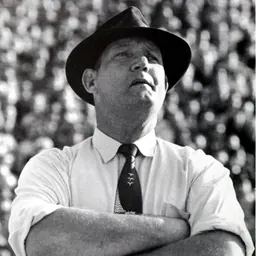

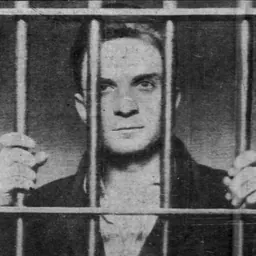

Related people
Same field, nearest in time

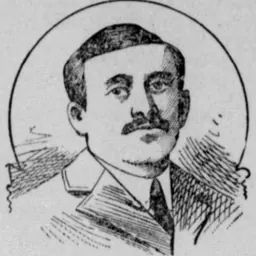

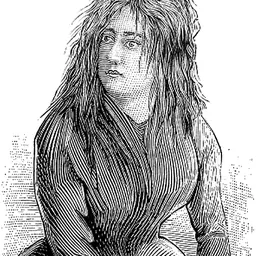

Contemporaries
People whose lives overlapped Albert Fish's





Frequently asked questions
Who was Albert Fish?
American serial killer, pedophile and cannibal (1870–1936)
When was Albert Fish born?
Albert Fish was born on 19 May 1870 in Washington, D.C..
When did Albert Fish die?
Albert Fish died on 16 January 1936 in Sing Sing.
What was Albert Fish's occupation?
Albert Fish was a serial killer, prostitute, painter and varnisher and cannibal.
What nationality was Albert Fish?
Albert Fish was American.
Sources & further reading
Cite this page
APA: Biography.guide. (2026). Albert Fish. https://biography.guide/albert-fish/
MLA: "Albert Fish." Biography.guide, https://biography.guide/albert-fish/.
Chicago: "Albert Fish." Biography.guide. https://biography.guide/albert-fish/.
Data last updated: 2026-09-25 · Spot an error? Report a correction.
Page generated 2026-09-27 05:11 UTC