
About Gustav Heckmann
Lived 1898 – 1996 (aged 98). Gustav Heckmann was a German university teacher, philosopher and teacher.
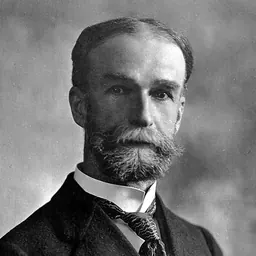
Gustav Heckmann (22 April 1898 – 8 June 1996) was a German philosopher and teacher. He is particularly associated with philosophical extrapolations from the Socratic Dialogue format, pioneered by his mentor and friend Leonard Nelson, with which Heckmann continued to work after Nelson died.
In 1932 he was an instigator of the so-called Urgent Call for Unity ("Dringender Appell für die Einheit"), a public appeal, signed by 32 high-profile intellectuals, urging the principal left wing parties to unite ahead of the first 1932 General election in order to block Nazi success. The Appeal failed in its objective, but it marked out its instigators as prominent opponents of the Nazi party: Heckmann went into exile in 1933. Twelve years later, on returning to Germany, in 1945 he became, for a few years, an influential member of the Social Democratic Party (SPD).
Life
Provenance and early years Gustav Heckmann was born into a traditional "church and emperor" family at Voerde, a town in the industrial Rhineland region, at the extreme western edge of Germany. for military service, serving in the war initially as a paramedic and later as a soldier. Heckmann's life experiences would lead him to develop Nelson's methodology of political philosophy towards his understanding of its Socratic basis, and a more practical and less absolutist search for truth. By the time of the second 1932 General election, in November, the Nazi party's share of the popular vote had been cut from 37.3% to 33.1%, which was actually slightly below the combined shares of the SPD and Communist parties, but the two left-wing parties remained mutually mistrustful and the Nazi tide proved unstoppable. Régime change in January 1933 was quickly followed by the creation of Germany's first one-party dictatorship. The "Walkemühle" Academy had for most purposes been closed in 1931 in order to enable Specht, Eichler and Heckmann to concentrate on more direct opposition to the rise of the Nazi Party, and now, at the start of February 1933, its premises were taken over by members of the Nazi Party's military wing (SA). In a Danish hamlet they were able to use an old manor house which was large but unmodernised. Water came via a handpump, and much effort had to be expended heating the "school" room before lessons could begin: activities were constantly overshadowed by a concern that necessary permission to operate the school might not be renewed. Scott's Welsh refuge had originally been established to support unemployed coal miners, and after its philanthropic objectives were switched it lost government support. The school moved for a period to the village of Redhill a little to the south of Bristol in England.
A committed opponent of nuclear weaponry, he was involved from the outset in the Easter Marches in Germany, demonstrating against nuclear weapons in the East and in the West. He was a speaker at the 1960 demonstration at the Bergen-Hohne Training Area, remembered as an early "star march" ("Sternmarsch") for which protesters converged from various different starting points including, in this case, Hamburg, Bremen, Braunschweig and Hannover.
† Gustav Heckmann died at Hannover on 8 June 1996. He was 98.
Don’t just read it —
keep it.
Full-length biographies made to live with: read them, listen on the way to work, watch them tonight.
- E-book
- Audio
- Video
Instant download · yours to keep · every purchase keeps this site free
Important facts
People in Gustav Heckmann's life
Named in this biography and alive at the same time


Related people
Same field, nearest in time


Contemporaries
People whose lives overlapped Gustav Heckmann's




Frequently asked questions
Who was Gustav Heckmann?
German teacher (1898-1996)
When was Gustav Heckmann born?
Gustav Heckmann was born on 22 April 1898 in Wesel.
When did Gustav Heckmann die?
Gustav Heckmann died on 8 June 1996 in Hanover.
What was Gustav Heckmann's occupation?
Gustav Heckmann was a university teacher, philosopher and teacher.
What nationality was Gustav Heckmann?
Gustav Heckmann was German.
Sources & further reading
Cite this page
APA: Biography.guide. (2026). Gustav Heckmann. https://biography.guide/gustav-heckmann/
MLA: "Gustav Heckmann." Biography.guide, https://biography.guide/gustav-heckmann/.
Chicago: "Gustav Heckmann." Biography.guide. https://biography.guide/gustav-heckmann/.
Data last updated: 2026-09-26 · Spot an error? Report a correction.
Page generated 2026-09-27 05:16 UTC