
About Leonard Nelson
Lived 1882 – 1927 (aged 45). Leonard Nelson was a German mathematician, philosopher, socialist and university teacher.
Leonard Nelson (; ; 11 July 1882 – 29 October 1927), sometimes spelt Leonhard, was a German mathematician, critical philosopher, and socialist. He was part of the neo-Friesian school (named after post-Kantian philosopher Jakob Friedrich Fries) of neo-Kantianism and a friend of the mathematician David Hilbert. He devised the Grelling–Nelson paradox in 1908 and the related idea of autological words with Kurt Grelling.
Nelson subsequently became influential in both philosophy and mathematics, as his close contacts with scientists and mathematicians influenced their ideas. Despite dying earlier than many of his friends and assistants, his ISK organization lived on after his death, even after being banned by the Nazi Regime in 1933. It is even claimed that Albert Einstein supported it. He's also credited with popularizing the Socratic method in his book Die sokratische Methode (The Socratic Method).
Life Early life and education Leonard Nelson was the son of lawyer Heinrich Nelson and artist Elisabeth Lejeune Dirichlet. His mother was the granddaughter of mathematician Peter Gustav Lejeune Dirichlet and descendant of Jewish philosopher Moses Mendelssohn. Nelson was baptised as a Protestant at the age of five on 13 June 1887.
Nelson studied at Französisches Gymnasium Berlin, where mathematics and science were not a focus of the curriculum. He was therefore privately tutored by mathematician Gerhard Hessenberg (1874–1925), and began reading the works of philosophers Immanuel Kant, Jakob Friedrich Fries, and Ernst Friedrich Apelts, which began to spark his interest in philosophy.
In 1901, Nelson studied mathematics and philosophy at Heidelberg University for a short period of time before going to Friedrich Wilhelm University (today: Humboldt-Universität) in Berlin, from March 1901 to 1903. From 1903 to 1904, he worked with mathematicians and philosophers at the University of Göttingen, such as his doctoral advisor Julius Baumann, David Hilbert, Felix Klein, Carl Runge, and his later rival Edmund Husserl.
Nelson's work as a philosopher was most concerned with critical philosophy, attributed to Kant. It sets out to find a "critique" on science and metaphysics, similar to empiricism, as things can only be true based on the perceptions and limitations on human minds. Kant's 1781 book Critique of Pure Reason (Kritik der reinen Vernunft) inspired Nelson to go down the path of critical philosophy, and later followed the works of post-Kantian philosopher Fries who had also followed Kant's work.
In 1922, Nelson founded the Philosophisch-Politische Akademie (Philosophical-Political Academy or PPA) as a "Platonic Academy" and non-profit association, which was abandoned soon after the Nazis banned it, but re-established in 1949. It still stands today for political discussions between philosophers and politicians, and was supported financially by the Gesellschaft der Freunde der Philosophisch-Politischen Akademie (Society of Friends of the Philosophical-Political Academy or GFA). They started working with an education center called Landerziehungsheim Walkemühle, founded in 1921 by a support of Nelson, progressive teacher Ludwig Wunder (1878–1949). Although Wunder left it shortly after in 1924, educator and co-worker of Nelson, Minna Specht, took over, with the help of journalist and author Mary Saran.
Internationaler Sozialistischer Kampfbund (ISK) In 1917 Nelson and Minna Specht founded the Internationaler Jugendbund (International Youth Federation or IJB). In 1918, Nelson briefly became a member of the Independent Social Democratic Party (USPD), and from 1923 to 1925 he was a member of the Social Democratic Party (SPD), until he was ultimately excluded. As a result, in 1925, he and Minna Specht founded the Internationaler Sozialistischer Kampfbund ('SK; "International Socialist Militant League") merging it with the IJB by taking over its publishing label, Öffentliches Leben. Prime Minister Alfred Kubel (1909–1999) and journalist Fritz Eberhard (1896–1982), later member of the Parlamentarischer Rat.
Animal rights and vegetarianism Nelson was an early advocate of animal rights and a vegetarian. His lecture "Duties to Animals" was published posthumously in Germany in 1932 and included in his book A System of Ethics (translated in 1956) and reprinted in the 1972 book Animals, Men and Morals.
Personal life
Nelson married Elisabeth Schemmann (1884–1954), in 1907, but divorced in 1912 after she baptised their son Gerhard David Wilhelm Nelson (1909–1944) in the Lutheran Church. Nelson's refusal to baptise his son and divorce was a big change based on his Jewish ancestry. He even resigned from the Evangelical Church in 1919.
His wife married Paul Hensel (Nelson's third cousin) in 1917.
Nelson was an insomniac and died at a young age from pneumonia, and was buried at a Jewish cemetery in Melsungen alongside his father Heinrich.
Posthumous legacy Nelson's ideas continued to have an impact upon German socialism and communism in Nazi Germany as the ISK's members became active in the left-wing resistance to Nazism.
Don’t just read it —
keep it.
Full-length biographies made to live with: read them, listen on the way to work, watch them tonight.
- E-book
- Audio
- Video
Instant download · yours to keep · every purchase keeps this site free
Important facts
People in Leonard Nelson's life
Named in this biography and alive at the same time



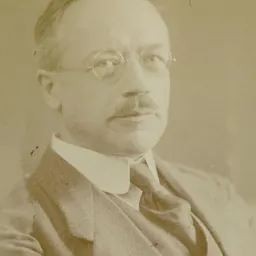

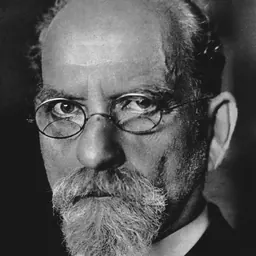
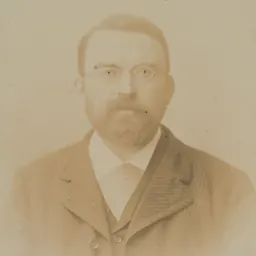
Related people
Same field, nearest in time

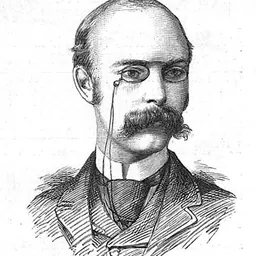
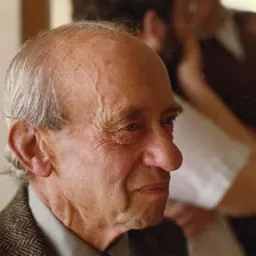

Contemporaries
People whose lives overlapped Leonard Nelson's

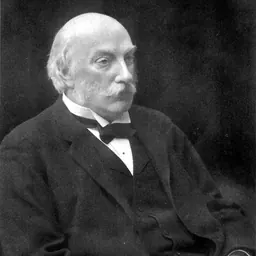

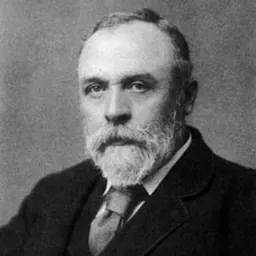


Frequently asked questions
Who was Leonard Nelson?
German mathematician and philosopher (1882-1927)
When was Leonard Nelson born?
Leonard Nelson was born on 11 July 1882 in Berlin.
When did Leonard Nelson die?
Leonard Nelson died on 29 October 1927 in Göttingen.
What was Leonard Nelson's occupation?
Leonard Nelson was a mathematician, philosopher, socialist and university teacher.
What nationality was Leonard Nelson?
Leonard Nelson was German.
Sources & further reading
Cite this page
APA: Biography.guide. (2026). Leonard Nelson. https://biography.guide/leonard-nelson/
MLA: "Leonard Nelson." Biography.guide, https://biography.guide/leonard-nelson/.
Chicago: "Leonard Nelson." Biography.guide. https://biography.guide/leonard-nelson/.
Data last updated: 2026-09-20 · Spot an error? Report a correction.
Page generated 2026-09-27 05:30 UTC