
Grace Raymond Hebard
American historian, suffragist, educator, economist and writer
About Grace Raymond Hebard
Lived 1861 – 1936 (aged 75). Grace Raymond Hebard was an American economist, historian, suffragist, librarian, writer and surveyor.
Wyoming pioneer Grace Raymond Hebard broke new ground as a university administrator, historian, and social activist. The intrepid field researcher explored Wyoming's countryside for most of her adult life, seeking to document a fast-disappearing frontier. Grace Raymond Hebard (July 2, 1861 – October 1936) was an American historian, suffragist, scholar, writer, political economist, and noted University of Wyoming educator. Hebard's standing as a historian in part rose from her years trekking Wyoming's high plains and mountains seeking first-hand accounts of Wyoming's early pioneers. Today, her books on Wyoming history are sometimes challenged due to her romanticization of the Old West, spurring questions regarding accuracy of her research findings. In particular, her conclusion after decades of field research that Sacajawea (participant in the Lewis and Clark Expedition) was buried in Wyoming's Wind River Indian Reservation is questioned.
Hebard served as the first female on the University of Wyoming Board of Trustees, where she exercised authority over the university finances, its president, and faculty. Her University of Wyoming role extended to establishing the university's first library. Hebard served as a professor for 28 years. She was also the first woman admitted to the Wyoming State Bar Association (1898); admitted to practice before the Wyoming Supreme Court (1914); and appointed by her peers as vice president of the National Society of Women Lawyers.
She was active in Wyoming political life, giving speeches, organizing historical associations, conducting citizenship classes for immigrants, participating in the local and national suffragist movement, lobbying for child-welfare laws, serving as a Red Cross volunteer, and selling war bonds during World War I.
Background
Grace Hebard was born in the Mississippi river town of Clinton, Iowa, on July 2, 1861, to Rev. George Diah Alonzo Hebard (1831–1870) and Margaret E. Dominick Hebard (Marven). Her family soon moved to Iowa City where her father, a missionary and a later territorial legislator, built a new Presbyterian church. Hebard took her B.S. in what is now civil engineering at the University of Iowa in 1882. She was a member of Pi Beta Phi Women's Fraternity. Hebard became the first woman to "be graduated from the Civil Engineering Dep(artment) of the University," according to documents at the University of Iowa Library. In later years, Hebard reflected in a 1928 letter to a colleague on her singular experience as a female engineering student:
"I met with many discouragements and many sneers and much opposition to my enrolling in the scientific course, which was then entirely a man's college. ... All kinds of discouraging predictions were made that I would fail, that it was impossible for a woman to do the kind of work I was undertaking."
Hebard later resumed her studies by correspondence and earned an M.A. from the University of Iowa in 1885. Finally, again by correspondence, she received her Ph.D. in political science from Illinois Wesleyan University in 1893.
Hebard made her way west in 1882 to Cheyenne, eight years before Wyoming became a state in 1890. Hebard arrived at the future capital city in the company of her mother and brothers; Fred, Lockwood, and her sister, Alice. She became part of the social scene with other young people at the newly constructed Cheyenne Club, where cattle barons, often wealthy Europeans, held sway over Cheyenne. Yet general violence and roughness were still common. Rowdy cowhands wearing guns in the saloons and prostitutes openly plying their trade in brothels made for a sometimes raucous downtown. Citizens were known to hand out their own form of retribution, however, if things got out of hand. For example, in 1883 a crowd lynched an accused murderer, leaving him hanging from a Cheyenne telephone pole. Hebard rose to the position of deputy state engineer, reporting at first to Elwood Mead. Mead made his mark drafting Wyoming Territory water laws and later as head of the U.S. Bureau of Reclamation.
Yet engineering was not to be Hebard's calling. Instead, after nine years in Cheyenne, she left her family and ventured 50 miles west across a boulder-strewn mountain range to the railroad town of Laramie. This small town in Southeastern Wyoming, which began as a tent city mid-1860s, was home to a fledgling university when Hebard arrived in 1891. Laramie's scruffy prairie campus became the locale from which Hebard launched a storied career in higher education, devoting more than 45 years (1891–1936) to the University of Wyoming.
University trustee The University of Wyoming in 1908, some 17 years after Hebard's arrival, remained an isolated campus adjoining the prairie on the eastern edge of Laramie. In 1891 Grace Hebard parlayed the recommendation of Republican U.S. Senator Joseph M. Carey of Cheyenne, whom she had known since childhood Hebard continued serving as librarian until 1919. The catalogued collection of books had grown to 42,000 volumes by the end of her tenure. Hebard's association with Jackson began in 1920, when her research led to a request for a copy of a photograph of Chief Washakie made by Jackson during the Hayden Geological Survey.
In particular, Hebard's 30 years of research which lead to the 1933 biography of the Shoshone woman who accompanied the Lewis and Clark Expedition is called into question by critics.
If Sacajawea appears as a grand figure in Hebard's writings, so do Sacajawea's descendants. Consider for instance the heroic imagery Hebard uses in "Sacajawea" when she describes 90-year-old Maggie Bazil Large, whom Hebard contends was the granddaughter of Sacajawea. Hebard, without citing a source, recounts when Large reportedly attended the funeral of a person who was, according to Hebard, another descendant of Sacajawea. Hebard describes Large as a woman who "exhibited great energy in an emergency" when the ropes used to lower a coffin became fouled. Hebard further expands on the actions of the valiant Large:
"An ancient, white-haired woman sprang forward, took the ropes in her own hands, and, bracing herself, successfully lowered the box to its resting place with a dexterity that challenged the skill of the young men present. She seems to have possessed something of the alertness, power to do, and energy of her grandmother [Sacajawea].
Hebard particularly recognized the efforts of Nickerson in Wyoming trail marking. Nickerson, who had lived in the South Pass area since 1868, later became president of the Oregon Trail Commission of Wyoming. Hebard saluted his work locating and marking old western trails during a period of eight years noting that: "Here and there Captain Nickerson has placed stones, boulders and slabs of native material on which he, in the open, has carved with his chisels and mallet inscriptions and notations.
Hebard's indoctrination of new Americans came on the heels of the greatest wave of migrants to ever enter the country. Millions of new immigrants from Eastern and Southern Europe entered the United States, mostly through Ellis Island, from 1880 to 1915. New Americans, with their new languages, foods, and customs were not always welcome. One of the early targets where the Chinese who were locked out from immigrating to the U. S. by the Chinese Seclusion Act. This federal act passed in 1882 coincided with Hebard's arrival in Cheyenne.
Hebard's progressive work with immigrants in Laramie would have been in stark contrast to the national tension between residents and immigrants. Such tension spurred the National Origins Act of 1924, which favored Northern European immigrants, but restricted East European Jews.
Hebard's activism placed her against the prevailing social and political winds that swept through Wyoming and the nation. The way Hebard lived her feminist life, including her deep relationship with fellow Professor Agnes M. Wergeland, spoke volumes about her worldview. Wergeland, like Hebard a feminist, was a trail breaker in her own right. The Norwegian immigrant was the first woman from her country to earn a Ph.D.
Suffragist National suffragists heralded Wyoming when on Dec. 10, 1869, territorial Gov. John A. Campbell signed the suffrage act into law. Suffragists were not so celebratory two years later when legislators seeking to repeal women's enfranchisement failed by a single vote, according to historian Phil Roberts. Roberts cites the late T.A. Larson's research that found suffrage detractors feared women voters would seek Sunday closing of saloons. Yet, Hebard in a 1920 interview with the New York Tribune failed to account for opposition to women's suffrage in Wyoming, noting:
"I never before saw an anti-suffragist. You know, out in Wyoming we have had woman suffrage for fifty years, and there is no such thing as an anti-suffrage man in our state -- much less a woman." Morris' historic posting in South Pass City, a mining town in Central Wyoming, followed the previous justice resigning in protest of Wyoming's suffrage legislation. Author Virginia Scharff reads more than imperfect history into Hebard's statements concerning Morris. Scharff sees Hebard's portrayal of Morris as a suffragist as being rendered "in her [Hebard's] own image."
Being the first of western territories or states to adopt women's suffrage placed Wyoming in the national spotlight. National suffragists in subsequent years found a potent symbol in Wyoming enfranchising women as states voted on the Nineteenth Amendment to the U.S. Constitution granting suffrage to women. Carrie Chapman Catt, who was president of the National American Woman Suffrage Association, incorrectly claimed that Wyoming "gave so much evidence of positive good to the community arising from the votes of women that she became the direct cause of the establishment of woman suffrage in all of the surrounding states." The record is unclear if Wyoming territorial adoption of suffrage influenced Hebard's decision to migrate to Wyoming in 1882.
Just as suffragist found an ideal symbol in Wyoming for their campaign, so too did Catt and others laud the feminist role of Hebard. Suffragists were eager to "hold her up as an example of the finest type of American womanhood," according to former Wyoming state historian Agnes Wright Spring. Both historic events took place in 1870, before Hebard had finished her studies in Iowa.
Yet Hebard established her own standing as a suffragist when she petitioned the Wyoming constitutional convention to adopt a suffrage clause in advance of Wyoming entering the Union July 10, 1890. Moreover, national suffragists tapped Hebard to participate in the National American Woman Suffrage Association and later as a member of the Suffrage Emergency Brigade. The latter group lobbied Connecticut's governor for the state's legislature to become the 36th state to ratify the 19th Amendment.
Hebard's association with national suffragist leader Catt allowed Hebard to achieve an "academic coup d'etat" in 1921. Hebard teamed up with Professor June Downey to convince faculty members to award the University of Wyoming's first honorary degree to Carrie Chapman Catt. Catt came to Laramie to receive the university honor and to present the baccalaureate address. The imagery of Catt appearing in Laramie where women voters and jurists made history would not have been lost on the suffragists. In addition, Catt was at the forefront of a one-year anniversary celebration of the 19th Amendment later that summer in New York City. Catt, following the suffrage victory, turned her focus to the newly established League of Women Voters.
Final days
Grace Hebard retired from teaching in 1931. Yet she continued to research and collect historical material in her Laramie home, known to students and colleagues as "The Doctors Inn". Hebard lived in this house that she had built with her friend, Agnes Wergeland, who died in 1914. Grace's sister Alice Marvin Hebard then lived there until her death in 1928.
Hebard died in October 1936 at the age of 75. "To the time of death, she was a dominant -- and perhaps domineering -- figure on campus." The University of Wyoming held a memorial program in her honor later that month. The influence and impact of Hebard's life in part can be measured by the attendees at her funeral and contributors to the 50-page "In Memoriam" program published by her fellow faculty.
The memorial service had the trappings of a state funeral featuring testimonials from: Mr. and Mrs. Bryant Butler Brooks, former Wyoming governor Robert D. Carey, United States senator and former Wyoming governor Carrie Chapman Catt, president of the National American Woman Suffrage Association and former president of the International Woman Suffrage Alliance Frank Pierrepont Graves, president of the University of the State of New York; third University of Wyoming president W. H. Jackson, pioneer photographer and former member of Hayden Geological Survey Agnes Wright Spring, former Wyoming State Historian. Colorado State Historian. The written tributes and eulogies following Hebard's death that colleagues, students, and friends delivered were added to Hebard's personal papers. Those papers are part of an extensive collection of documents that still bear Hebard's name today. The collection includes an almost terse tribute by Carrie Chapman Catt that overlooks Hebard's contributions to national suffragism for women:
"I shall miss Dr. Hebard more than words can say. My sympathy is extended to the University and all the Wyoming friends. She lived a great life."
Other contributors to the memorial program characteristically presented Hebard as a multi-faceted, action-driven feminist with a penchant for history and trail marking. Furthermore, Hebard garnered recognition as the first woman admitted to the Wyoming State Bar Association (1898) followed by her being admitted to practice before the Wyoming Supreme Court (1914). Hebard's peers also recognized her involvement in a variety of civic and public affairs, such as supporting American troops in World War I by selling war bonds and planting Victory Gardens. Moreover, she successfully spearheaded passage of a 1923 Wyoming child labor law.
Youth, particularly University of Wyoming students, played a special role in Hebard's career, as noted by testimonials from fellow students, faculty, and citizens. The memorial service program included a statement by university President Crane, "Above all she was a friend to generations of students." Similarly, an October 12, 1936, editorial in the student newspaper, the Branding Iron, noted: "In the death of Dr. Grace Raymond Hebard the students of the University have lost a friend."
Hebard furthered her legacy with students by funding a number of scholarships, including: The Agnes Mathilde Wergeland Memorial History Scholarship The Alice Marven Hebard Memorial Fund Hebard Map Scholarship Fund
The intrepid Hebard is buried across the street from campus at the Greenhill Cemetery in Laramie in a plot near her sister and teacher, Alice, and Wergeland. A plaque memorializing Hebard is mounted on the famed Oregon Trail icon, Independence Rock; located in barren central Wyoming, about 50 miles southwest of Casper.
Don’t just read it —
keep it.
Full-length biographies made to live with: read them, listen on the way to work, watch them tonight.
- E-book
- Audio
- Video
Instant download · yours to keep · every purchase keeps this site free
Important facts
Family & relationships
People in Grace Raymond Hebard's life
Named in this biography and alive at the same time
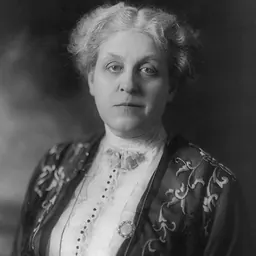
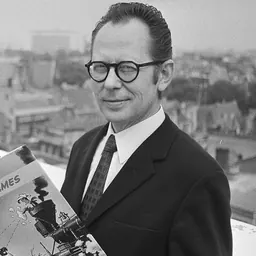
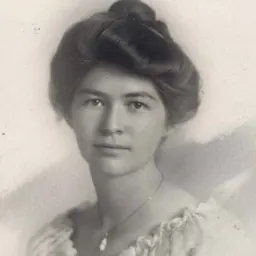
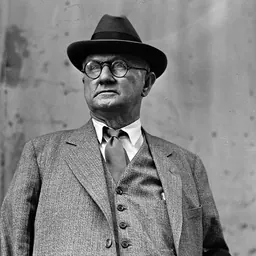


Related people
Same field, nearest in time



Contemporaries
People whose lives overlapped Grace Raymond Hebard's



Frequently asked questions
Who was Grace Raymond Hebard?
American historian, suffragist, educator, economist and writer (1861–1936)
When was Grace Raymond Hebard born?
Grace Raymond Hebard was born on 2 July 1861 in Clinton.
When did Grace Raymond Hebard die?
Grace Raymond Hebard died on 11 October 1936 in Laramie.
What was Grace Raymond Hebard's occupation?
Grace Raymond Hebard was an economist, historian, suffragist, librarian, writer and surveyor.
What nationality was Grace Raymond Hebard?
Grace Raymond Hebard was American.
Sources & further reading
· Wikipedia: Grace Raymond Hebard
· DBpedia: Grace Raymond Hebard
Cite this page
APA: Biography.guide. (2026). Grace Raymond Hebard. https://biography.guide/grace-raymond-hebard/
MLA: "Grace Raymond Hebard." Biography.guide, https://biography.guide/grace-raymond-hebard/.
Chicago: "Grace Raymond Hebard." Biography.guide. https://biography.guide/grace-raymond-hebard/.
Data last updated: 2026-09-20 · Spot an error? Report a correction.
Page generated 2026-09-27 05:28 UTC