
About William Cunningham
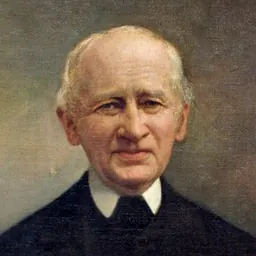
Lived 1849 – 1919 (aged 69). William Cunningham was a British economist, historian, economic historian, anglican priest and educator, known for Economic history.
Career Cunningham took holy orders in 1873, later serving as chaplain of Trinity College, Cambridge, from 1880 to 1891. He was university lecturer in history from 1884 to 1891, in which year he was appointed Tooke Professor of Economy and Statistics at King's College, London, a post which he held until 1897. He was lecturer in economic history at Harvard University , and Hulsean Lecturer at Cambridge (1885). He became vicar of Great St Mary's, Cambridge, in 1887, and was a founding fellow of the British Academy. In 1907 he was appointed Archdeacon of Ely.
Cunningham's Growth of English Industry and Commerce During the Early and Middle Ages (1890; 4th ed., 1905) and Growth of English Industry and Commerce in Modern Times (1882; 3rd ed., 1903) were at the time among the standard works of reference on the industrial history of England.
Cunningham's eminence as an economic historian gave special importance to his support of Joseph Chamberlain from 1903 onwards in criticizing the English free-trade policies and advocating tariff reform.
He was a critic of the nascent neoclassical economics, particularly as propounded by his colleague, Alfred Marshall, and the Cambridge school.
Cunningham has been described as "a champion of women's education in Cambridge." He taught the British historian Annie Abram.
Cunningham died in 1919 in Cambridge, England.
Works Growth of English Industry and Commerce in Modern Times: The Mercantile System (1882); Cambridge U. Press, revised 7th ed. (1907) on line, McMaster Politics and Economics: An Essay on the Nature of the Principles of Political Economy, Together with a Survey of Recent Legislation, London, Kegan, Paul, Trench & Co. (1885) Growth of English Industry and Commerce During the Early and Middle Ages (1890); Cambridge, 5th ed. (1910) on line, McMaster The Use and Abuse of Money, New York, Scribner's (1891); Kessinger, (2006) Routledge (1997) An Essay on Western Civilization in Its Economic Aspects (Ancient Times), Cambridge U. Press (1898) An Essay on Western Civilization in Its Economic Aspects (Mediaeval and Modern Times), Cambridge U. Press (1900) The Rise and Decline of the Free Trade Movement (1904); Cosimo Christianity and Politics, Boston and New York, Houghton Mifflin (1915) The Story of Cambridgeshire (1920). Cambridge University Press (reissued by Cambridge University Press, 2009; )
Don’t just read it —
keep it.
Full-length biographies made to live with: read them, listen on the way to work, watch them tonight.
- E-book
- Audio
- Video
Instant download · yours to keep · every purchase keeps this site free
Important facts
People in William Cunningham's life
Named in this biography and alive at the same time

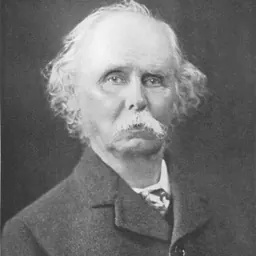

Related people
Same field, nearest in time

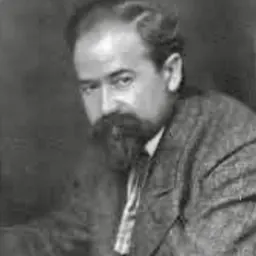

Contemporaries
People whose lives overlapped William Cunningham's

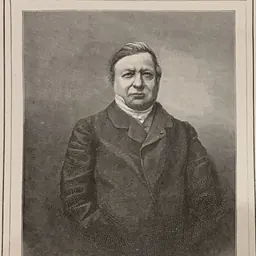
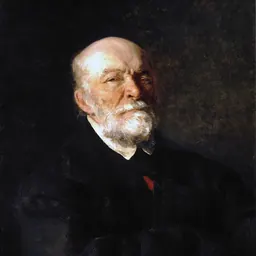


Frequently asked questions
Who was William Cunningham?
British economist and churchman (1849–1919)
When was William Cunningham born?
William Cunningham was born on 29 December 1849 in Edinburgh.
When did William Cunningham die?
William Cunningham died on 10 June 1919 in Cambridge.
What was William Cunningham's occupation?
William Cunningham was an economist, historian, economic historian, anglican priest and educator.
What was William Cunningham known for?
William Cunningham was known for Economic history.
What nationality was William Cunningham?
William Cunningham was British.
Sources & further reading
· Wikipedia: William Cunningham
· DBpedia: William Cunningham (economist)
Cite this page
APA: Biography.guide. (2026). William Cunningham. https://biography.guide/william-cunningham-economist/
MLA: "William Cunningham." Biography.guide, https://biography.guide/william-cunningham-economist/.
Chicago: "William Cunningham." Biography.guide. https://biography.guide/william-cunningham-economist/.
Data last updated: 2026-09-20 · Spot an error? Report a correction.
Page generated 2026-09-27 05:19 UTC