
About Gottlieb Konrad Pfeffel
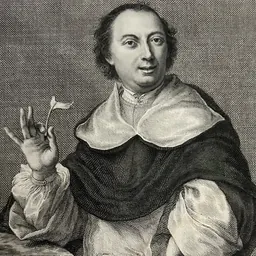
Lived 1736 – 1809 (aged 72). Gottlieb Konrad Pfeffel was a German, French and Swiss pedagogue, librettist, playwright, writer and poet.
Gottlieb Konrad Pfeffel (28 June 1736 – 1 May 1809) was a French-German writer and translator from the Pfeffel family.
His texts were put to music by Ludwig van Beethoven, Joseph Haydn and Franz Schubert. He is sometimes also known as Amédée or Théophile Conrad Pfeffel, which is the French translation of Gottlieb ("Godlove").
Biography Gottlieb Konrad Pfeffel was born in Colmar. His father, Johann Konrad Pfeffel (1682–1738), was the mayor of Colmar and a legal consultant of the French king, but died when Gottlieb was only two years old. His mother was Anna Katharina Pfeffel, nee Herr (1694–1773), daughter of patrician of Colmar Johann Georg Herr. His father was the son of a pastor Johann Konrad Pfeffel (1636–1701). He was raised by his brother (1726–1807), who was ten years older.
He went in 1751 to the University of Halle to study law, with the intention of becoming a diplomat. There, he was a student of the philosopher Christian Wolff.
In 1752, Pfeffel translated Johann Joachim Spalding's Gedanken über den Werth der Gefühle in dem Christenthum into French.
In 1754, he went to Dresden for treatment of an eye problem; there, he met the poet Christian Fürchtegott Gellert. His eye condition deteriorated, and in 1758, after an operation, he became completely blind and had to abandon his studies.
In February 1759, Pfeffel married Margaretha Cleophe Divoux (1738–1809), a merchant's daughter from Strasbourg. They had thirteen children together, of whom seven died before adulthood.
His son Gottlieb Conrad August Pfeffel (b. 1759), who studied law in Göttingen, was admitted to the Golden Circle Lodge there in 1781. The other son was (1775–1858) who subsequently became Banker and member of Parliament.
He started to establish himself as a writer and translator. In 1762, he translated Magnus Gottfried Lichtwer's Fabeln into French. He also worked on a translation into German of Claude Fleury's Histoire ecclésiastique.
Pfeffel opened a military academy for aristocratic Protestants in 1773, since these boys were not allowed at the military academy of Paris.
He joined the Helvetic Society in 1776, and in 1782 became a citizen of the city of Biel (Bienne) in Switzerland, and became an honorary member of the city council in 1783. The Prussian Academy of Arts made him an honorary member in 1788. Franz Schubert made a lied of his text Der Vatermörder (D10), and Leopold Kozeluch put music to his cantata for the blind Austrian singer Maria Theresia von Paradis.
In 1773, Pfeffel's Philemon und Baucis: Ein Schauspiel in Versen von einem Aufzuge, a play in verse in one act, was turned into a singspiel for a marionette theater by Joseph Haydn with the new title Philemon und Baucis oder Jupiters Reise auf die Erde (Philemon and Baucis or Jupiter's Travels to the Earth). It was changed into a regular opera in 1776.
Pfeffel was a friend or acquaintance of many well-known persons of his period, including Voltaire, Vittorio Alfieri and the Swiss poet Johann Kaspar Lavater, with whom he corresponded for many years. In 1839, his grandniece Ernestine von Pfeffel (1810–1894) married Fyodor Tyutchev, one of the most famous Russian poets.
A statue of Pfeffel by André Friedrich was placed in the Unterlinden Museum in 1859, and a copy of that statue was placed on the Grand Rue in Colmar in 1927.
Don’t just read it —
keep it.
Full-length biographies made to live with: read them, listen on the way to work, watch them tonight.
- E-book
- Audio
- Video
Instant download · yours to keep · every purchase keeps this site free
Important facts
People in Gottlieb Konrad Pfeffel's life
Named in this biography and alive at the same time




Related people
Same field, nearest in time

Contemporaries
People whose lives overlapped Gottlieb Konrad Pfeffel's






Frequently asked questions
Who was Gottlieb Konrad Pfeffel?
German writer (1736-1809)
When was Gottlieb Konrad Pfeffel born?
Gottlieb Konrad Pfeffel was born on 28 June 1736 in Colmar.
When did Gottlieb Konrad Pfeffel die?
Gottlieb Konrad Pfeffel died on 1 May 1809 in Colmar.
What was Gottlieb Konrad Pfeffel's occupation?
Gottlieb Konrad Pfeffel was a pedagogue, librettist, playwright, writer and poet.
What nationality was Gottlieb Konrad Pfeffel?
Gottlieb Konrad Pfeffel was German, French and Swiss.
Sources & further reading
· Wikipedia: Gottlieb Konrad Pfeffel
· DBpedia: Gottlieb Konrad Pfeffel
Cite this page
APA: Biography.guide. (2026). Gottlieb Konrad Pfeffel. https://biography.guide/gottlieb-konrad-pfeffel/
MLA: "Gottlieb Konrad Pfeffel." Biography.guide, https://biography.guide/gottlieb-konrad-pfeffel/.
Chicago: "Gottlieb Konrad Pfeffel." Biography.guide. https://biography.guide/gottlieb-konrad-pfeffel/.
Data last updated: 2026-09-20 · Spot an error? Report a correction.
Page generated 2026-09-27 05:20 UTC