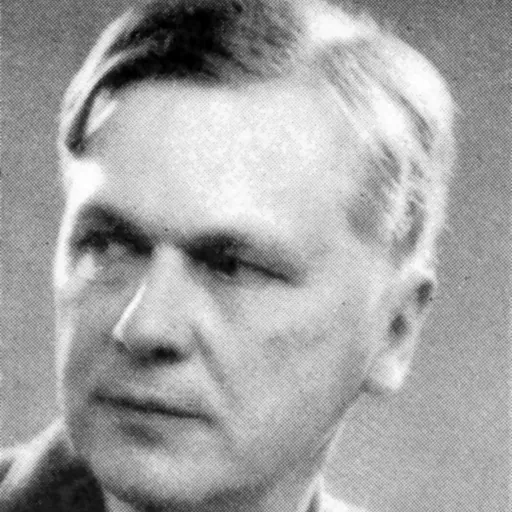
About Gösta Bagge
Lived 1882 – 1951 (aged 68). Gösta Bagge was a Swedish economist, politician and journalist.
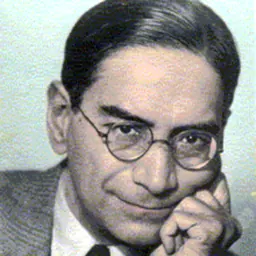
Gösta Adolfsson Bagge (27 May 1882 – 3 January 1951) was a Swedish economist and politician who served as Minister of Education during World War II from 1939 to 1944. He succeeded Arvid Lindman as leader of the General Electoral League in 1935 and represented Stockholm in both chambers of the Riksdag from 1932 to 1947.
Biography Bagge was born in Stockholm and entered Uppsala University in 1900, where he graduated with a bachelor's degree in 1904. He then studied at the Johns Hopkins University in Baltimore 1904–1905. He took a licentiate degree at Stockholm University in 1911 and a Ph.D. in economics in Stockholm in 1917, with a thesis on the regulation of wages through trade unions.
He worked at the National Board of Trade's division for labour statistics 1906 to 1909, where he studied collective bargaining. He was a teacher at the Stockholm School of Economics from 1917 to 1919. In 1921 he was appointed professor of economics and social policy at Stockholm University.
He died on 3 January 1951 in Högalid, Stockholm.
Political career Bagge was initially active in local politics in Stockholm, where he was a member of the city council from 1913 to 1926. He was then a member of the upper chamber of the Riksdag from 1932 to 1936, and of the lower chamber from 1937 to 1947.
Bagge was named leader of the National Organization of the Right after the sudden retirement of Arvid Lindman in 1935. He remained the party's leader until 1944, when he was succeeded by Fritiof Domö. Bagge was a social conservative politician within the rightist party, but had a liberal view of economic affairs. He was a harsh critic of the economic policies of the social democratic finance minister Ernst Wigforss. Bagge was also Minister of Education and Ecclesiastical Affairs in the Hansson III Cabinet, a coalition government, from 13 December 1939 to 15 December 1944.
In government he was the leading supporter of Finland's fight for survival against the Soviet Union during World War II and wanted to give aid to the Nordic neighbour country.
Don’t just read it —
keep it.
Full-length biographies made to live with: read them, listen on the way to work, watch them tonight.
- E-book
- Audio
- Video
Instant download · yours to keep · every purchase keeps this site free
Important facts
People in Gösta Bagge's life
Named in this biography and alive at the same time

Related people
Same field, nearest in time


Contemporaries
People whose lives overlapped Gösta Bagge's





Frequently asked questions
Who was Gösta Bagge?
Swedish economist and politician (1882–1951)
When was Gösta Bagge born?
Gösta Bagge was born on 27 May 1882 in Högalid Parish, Storkyrkoförsamlingen.
When did Gösta Bagge die?
Gösta Bagge died on 3 January 1951 in Högalid Parish.
What was Gösta Bagge's occupation?
Gösta Bagge was an economist, politician and journalist.
What nationality was Gösta Bagge?
Gösta Bagge was Swedish.
Sources & further reading
Cite this page
APA: Biography.guide. (2026). Gösta Bagge. https://biography.guide/gosta-bagge/
MLA: "Gösta Bagge." Biography.guide, https://biography.guide/gosta-bagge/.
Chicago: "Gösta Bagge." Biography.guide. https://biography.guide/gosta-bagge/.
Data last updated: 2026-09-20 · Spot an error? Report a correction.
Portrait: Wikimedia Commons · author & licence
Page generated 2026-09-27 04:58 UTC