
About Glencairn Balfour Paul
Lived 1917 – 2008 (aged 90). Glencairn Balfour Paul was a British diplomat.
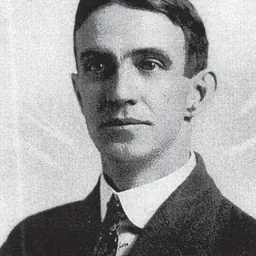
(Hugh) Glencairn Balfour Paul (23 September 1917 – 2 July 2008) was a British Arabist and diplomat. He served as the British ambassador to Iraq, Jordan and Tunisia before becoming an academic at Exeter University.
Biography The son of John William Balfour Paul, he was born in Moniaive in Dumfriesshire, educated at Lime House school near Carlisle, then at Sedbergh School, before going to Magdalen College, Oxford, in 1936, to read classics. He was also the great-grandnephew of the British supercentenarian Margaret Ann Neve, related to her on his mother's side. He served with the Argyll and Sutherland Highlanders during World War II before being sent east to Egypt and then on to Sudan to the Sudan Defence Force. After the war he served the Sudan Political Service as a District Commissioner in the Blue Nile and Darfur provinces. Before leaving Sudan in 1954, he set out on a camel trek to explore the foothills of eastern Ennedi in nearby Chad. He was appointed Ambassador to Iraq in 1969 (from where he was expelled in December 1971 for Britain's having failed to stop the Iranian seizure of the Tunb and Abu Musa Islands immediately prior to the foundation of the United Arab Emirates On 2 December 1971), Ambassador to Jordan in July 1972 and then Ambassador to Tunisia 1975–77.
Kim Philby Balfour Paul was a close friend of Kim Philby's during his tenure in Beirut, and he and his wife Marnie frequently socialised with Kim and Eleanor Philby. On 23 January 1963, the Philbys were due at the Balfour Paul's for dinner, when Eleanor arrived alone, explaining that Kim would be following. In fact, Philby had been picked up by a Soviet ship waiting in Beirut harbour, having been confronted by British intelligence agent Nicholas Elliott and accused of being the 'third man', the double agent who had protected double agents Maclean and Burgess and thereby facilitated their escape. Offered immunity from prosecution by Elliott in return for giving up the details of his espionage to SIS, Philby had been allowed to go home for the night and, in lieu of attending dinner at the Balfour Pauls, had fled.
The defection of Philby, given their close friendship, was to cause Balfour Paul - as a prominent diplomat - considerable discomfort, not least when Philby published a list of 'British spies in the Middle East' in Pravda with Balfour Paul's name at the top. Balfour Paul considered this a joke on Philby's part, and 'a singularly bad one'. Balfour Paul himself noted that Philby had likely been apprised of British suspicions of his role as a double agent by 'Fourth Man' Anthony Blunt, who had travelled to Beirut in December 1962 ostensibly in search of a rare frog orchid.
Ouster of Shakhbut During his short period as acting Political Resident in the Gulf, Balfour Paul was to be responsible for managing the removal of Sheikh Shakhbut bin Sultan Al Nahyan as Ruler of Abu Dhabi in favour of his brother, Sheikh Zayed bin Sultan Al Nahyan. Shakhbut's removal was long considered desirable by Balfour Paul's predecessor as Political Agent to the Trucial States, William Luce, who had even discussed the possibility with Shakhbut himself on a number of occasions.
The Al Nahyan family having finally petitioned for Shakhbut's removal, Balfour Paul flew to Abu Dhabi from Bahrain to meet Shakhbut for an ostensibly routine call, but had arranged for two companies of the Trucial Oman Scouts to be on 'manouevres' nearby. Shakhbut, enraged, appeared ready to resist the suggestion with force, calling up his guards, but the Scouts moved in with overwhelming superiority in numbers. Shakhbut was appraised of the fact that the senior members of the Al Nahyan family were gathered in a local police station awaiting his decision, and that his ouster was also supported by Britain. Shakhbut was removed to a temporary exile in a hotel in southwest Iran before returning to Abu Dhabi, now firmly under Zayed's rule.
Personal life He married his first wife Margaret (Marnie) in 1950, who became ill and died following his posting to Iraq, suffering from spongiform encephalitis diagnosed in 1970 and which took her in March 1971 - having previously overcome a severe spinal injury from being thrown from a horse, and then polio. He married his second wife Jenny Scott, an authority on the production of the dye indigo, in 1974 during his tenure in Jordan. He was survived by three daughters and a son by Margaret and a son and daughter with Jenny.
Honours
Don’t just read it —
keep it.
Full-length biographies made to live with: read them, listen on the way to work, watch them tonight.
- E-book
- Audio
- Video
Instant download · yours to keep · every purchase keeps this site free
Important facts
People in Glencairn Balfour Paul's life
Named in this biography and alive at the same time







Related people
Same field, nearest in time
Contemporaries
People whose lives overlapped Glencairn Balfour Paul's


Frequently asked questions
Who was Glencairn Balfour Paul?
British diplomat (1917–2008)
When was Glencairn Balfour Paul born?
Glencairn Balfour Paul was born on 23 September 1917.
When did Glencairn Balfour Paul die?
Glencairn Balfour Paul died on 2 July 2008.
What was Glencairn Balfour Paul's occupation?
Glencairn Balfour Paul was a diplomat.
What nationality was Glencairn Balfour Paul?
Glencairn Balfour Paul was British.
Sources & further reading
· Wikipedia: Glencairn Balfour Paul
· DBpedia: Glencairn Balfour Paul
Cite this page
APA: Biography.guide. (2026). Glencairn Balfour Paul. https://biography.guide/glencairn-balfour-paul/
MLA: "Glencairn Balfour Paul." Biography.guide, https://biography.guide/glencairn-balfour-paul/.
Chicago: "Glencairn Balfour Paul." Biography.guide. https://biography.guide/glencairn-balfour-paul/.
Data last updated: 2026-09-20 · Spot an error? Report a correction.
Page generated 2026-09-27 05:01 UTC