
About Zayed bin Sultan Al Nahyan
Lived 1918 – 2004 (aged 86). Zayed bin Sultan Al Nahyan was a politician and poet.
Family and early life Zayed was the youngest of four sons of Sheikh Sultan bin Khalifa Al Nahyan. She extracted a promise from her sons not to use violence against each other, a promise which they kept. Sheikh Zayed was named after his grandfather, Sheikh Zayed bin Khalifa Al Nahyan ("Zayed the Great"), who ruled the emirate from 1855 to 1909. At the time of Sheikh Zayed's birth, the sheikhdom of Abu Dhabi was one of seven Trucial States along the lower coast of the Persian Gulf. He also showed interest in falconry.
Zayed was born at Qasr Al Hosn, Abu Dhabi, in 1918 and moved from Abu Dhabi to Al Ain in 1926, after the death of his father. As Zayed was growing up in Al-Ain, there were no modern schools anywhere along the coast. He only received a basic instruction in the principles of Islam, and lived in the desert with Bedouin tribesmen, familiarising himself with the life of the people, their traditional skills and their ability to survive under the harsh climatic conditions.
Career and reign
Zayed was appointed the governor of the Eastern Region of Abu Dhabi in 1946,
The discovery of oil in 1958, and the start of oil exports in 1962, led to frustration among members of the ruling family about the lack of progress under Sheikh Shakhbut's rule. Shakhbut was seen as averse to spending revenue from oil money to develop the emirate by other members of Al Nahyan and hence they requested British help to install Sheikh Zayed bin Sultan Al Nahyan as the ruler of Abu Dhabi in his stead through a bloodless coup. On 6 August 1966, Shakhbut was deposed in a bloodless palace coup. The move to replace Shakhbut with Zayed had the unanimous backing of the Al Nahyan family. The news was conveyed to Shakhbut by British Acting Resident Glen Balfour-Paul who added the support of the British to the consensus of the family. Shakhbut finally accepted the decision and, with the Trucial Oman Scouts providing safe transport, left for Bahrain. Takahashi, working to instructions from Zayed, often marked out in sand with a camel stick, was responsible for a number of key buildings, while also introducing wide roads, the construction of corniches and also greening the city. Another architect, Egyptian Abdulrahman Makhlouf, also worked to render Zayed's instructions into city plans and infrastructural projects following Takahashi's departure.
Between 8–11 January 1968, the UK's Foreign Office Minister Goronwy Roberts visited the Trucial States and announced to its shocked rulers that the United Kingdom would abrogate its treaties with them and intended to withdraw from the area. In a seminal meeting on 18 February 1968 at a desert highland on the border between Dubai and Abu Dhabi, Sheikh Zayed and Sheikh Rashid bin Saeed Al Maktoum of Dubai shook hands on the principle of founding a Federation and attempting to invite other trucial rulers to join in order that a viable nation be formed in the wake of the British withdrawal.
In 1971, after occasionally difficult negotiations with the other six rulers of the Trucial States, the United Arab Emirates was formed. Zayed was appointed to the presidency of the UAE in 1971 and was re-elected on four more occasions: 1976, 1981, 1986, and 1991.
In 1974, Zayed settled the outstanding border dispute with Saudi Arabia by the Treaty of Jeddah by which Saudi Arabia received the output of the Shaybah oilfield and access to the lower Persian Gulf in return for recognising the UAE.
In 1976 he founded the Abu Dhabi Investment Authority, which grew to be the world's third-largest sovereign investment fund by 2020, with nearly a trillion US dollars' worth of assets under management.
In the 1970s, Al Nahyan became the largest investor (holding up to 50 percent of the total shares) in the Bank of Credit and Commerce International, which was used for money laundering and the financing of terrorism and collapsed in 1991, leading to long legal disputes about responsibility.
Attitudes
Sheikh Zayed was determined to unite the Emirates into federation. His calls for cooperation extended across the Persian Gulf to Iran. He advocated dialogue as the means to settle the row with Tehran over three strategic Persian Gulf islands which Iran seized from the (future) UAE Emirate of Sharjah in 1971. The islands remain in Iranian hands, despite over three decades of UAE diplomatic initiatives.
The attitude of Zayed towards his neighbors can best be seen in his position regarding the "Umm al Zamul" dispute (1964), when he expressed a genuine wish that his brother Sheikh Shakhbut would accept "the Sultan's proposal for a neutral zone". He said in that regard: "... it was ridiculous to squabble over a [water] well so bitter that few bedouin could stomach its waters, or to split hairs over a tiny area of barren, almost totally unfrequented desert. And even if there happened to be oil in the area, Abu Dhabi had so much already that she could well afford to spare some for her less fortunate neighbours".
Furthermore, during the negotiations between Abu Dhabi and Dubai that resulted in forming the Abu Dhabi — Dubai Union (which preceded the formation of the United Arab Emirates), Sheikh Zayed was extremely generous with the Sheikh Rashid of Dubai. Kemal Hamza, Sheikh Rashid's envoy to the meeting between Sheikh Zayed and Sheikh Rashid in Sumeih remarked that "Zayed was extremely 'karim' (generous) throughout the negotiations and seemed prepared to give Rashid whatever he wanted". This amounted to Zayed giving Rashid "oil rights in the sea-bed that might be worth millions a year" even at the risk of criticism "at home for giving so much..." It also gave rise to comments that such concessions constituted "an alienation of territory by Abu Dhabi". But the future course of events proved, none of these arguments stood the test of judgment in light of the much higher goal that Sheikh Zayed had in mind, and which in the ultimate analysis amply justified the sacrifices incurred by him. Such concessions are rare in the records of history and news of this generosity travelled far and wide.
Zayed was one of the wealthiest men in the world. A Forbes estimate put his fortune at around US$20 billion in 2004. The source of this wealth was almost exclusively due to the immense oil wealth of Abu Dhabi and the Emirates, which sit on a pool of a tenth of the world's proven oil reserves. In 1988, he purchased, for £5m, Tittenhurst Park at Sunninghill, Berkshire as his English home.
Policies and charity At the time the British withdrew from the Persian Gulf in 1971, Zayed oversaw the establishment of the Abu Dhabi Fund for Arab Economic Development; some of its oil riches were channeled to some forty less fortunate Islamic nations in Asia and Africa during the decades that followed.
Using the country's enormous oil revenues, Zayed built institutions such as hospitals, schools and universities and made it possible for UAE citizens to enjoy free access to them. In 1959, he founded the Al Nahyaneia Model School, the first formal school in the city of Al Ain. He was also known for making donations to the tune of millions [pounds sterling] for worthy causes around the Arab World as well as in the neighbouring countries and in the world at large.
Land was also often distributed gratis (free). However, while this policy benefited many landless families, enormously wealthy clans and individuals were given free land grants in proportion to their status and influence with the royal family. His majlis (a traditional Arab consultation council) was open to the public. He allowed non-Muslim religious buildings, such as churches and a temple, to be built. Zayed was also in favour of certain rights for women, such as access to education and women's labour rights, within traditional parameters. His views regarding women's rights were considerably more liberal than his counterparts in the GCC nations.
Zayed was one of the founders of the Dar Al Maal Al Islami Trust which was initiated by Saudi royal Mohammed bin Faisal Al Saud, King Faisal's son, in 1981. After floods ravaged Yemen's Ma'rib Governorate in 1982, Zayed financed the construction of the current dam of Ma'rib in 1984. This was to replace the historical one that was damaged in antiquity, and support the country's agriculture and economy. The area of Ma'rib is reportedly from where his ancestors migrated to what is now the UAE.
Zayed Centre
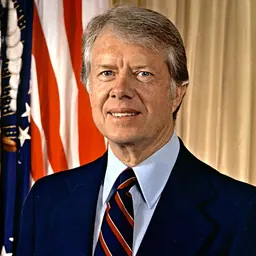
Controversy over the opinions of the Zayed Centre caused the Harvard Divinity School, after much equivocation, to return/have withdrawn in 2004 Sheikh Zayed's $2.5 million gift in 2000 to the institution, as "tainted money." Former United States president Jimmy Carter accepted the Zayed International Prize for the Environment in 2001. The award included a monetary prize of $500,000 from the Zayed Centre, and Carter stated in his acceptance speech that the award carried extra significance to him, since it was named after his personal friend.
There was similar controversy when the London School of Economics accepted a large donation by the Zayed Centre, to build a new lecture theatre in the New Academic Building in 2008. The gift was accepted with the Sheikh Zayed Theatre being the second largest lecture hall on the campus.
Harvard's equivocation, the Carter controversy, and the engendered negative publicity, prompted Sheikh Zayed to shut down the centre in August 2003, stating that the Zayed Centre "had engaged in a discourse that starkly contradicted the principles of interfaith tolerance."
Death On 2 November 2004, Zayed died at the age of 86. He had been suffering from diabetes and kidney problems. Zayed bin Sultan Al Nahyan's Mosque, also known as Stockholm Mosque, in Stockholm, Sweden. The Sheikh Zayed Grand Mosque in Surakarta, Indonesia. A lecture theater was named in his honor at the London School of Economics. A street in Montenegro was named for his memory in 2013. Shaikh Zayed Hospital for children and another for women in Larkana Sindh Pakistan. Shaikh Zayed Hospital Lahore Punjab Pakistan, Shaikh Zayed Medical Complex Lahore. The 5th ring road in Kuwait is now named in honor of Sheikh Zayed bin Sultan Al Nahyan. The Sheikh Zayed Tower at the Johns Hopkins Hospital is named in his honor. Sheikh Zayed Hospital located at Vushtrri, Kosovo, was named in his honor. Sheikh Zayed Institute for Pediatric Surgical Innovation, Children's National Medical Center, Washington, DC. Sheikh Zayed Professorship of Cardiovascular Diseases at the Mayo Clinic. Sheikh Zayed Children Welfare Centre, a centre for orphaned children located in Mombasa, Kenya.
Year of Zayed
On 6 August 2017, the Emirates News Agency reported that Sheikh Khalifa bin Zayed al-Nahyan, President of the United Arab Emirates issued directives that declared 2018 to be the Year of Zayed in honor of his father, Sheikh Zayed. The declaration came during Zayed's 51st anniversary of assuming the leadership of Abu Dhabi in 1966, who became the ruler by replacing Sheikh Shakbut and was aimed to commemorate centenary birth anniversary of Sheikh Zayed.
Founder's Memorial
In 2018, a year dedicated in the UAE to the celebration of Zayed's life and legacy, the Founder's Memorial was opened in Abu Dhabi. The memorial consists of an open Heritage Garden and Sanctuary Garden at the centre of which is a cubic pavilion housing The Constellation, an artwork dedicated to Zayed's memory.
Marriage and children Zayed bin Sultan married seven times and has 19 sons. His 30 children are listed as follows:
Ancestry
Don’t just read it —
keep it.
Full-length biographies made to live with: read them, listen on the way to work, watch them tonight.
- E-book
- Audio
- Video
Instant download · yours to keep · every purchase keeps this site free
Important facts
Family & relationships
People in Zayed bin Sultan Al Nahyan's life
Named in this biography and alive at the same time



Related people
Same field, nearest in time





Contemporaries
People whose lives overlapped Zayed bin Sultan Al Nahyan's


Frequently asked questions
Who was Zayed bin Sultan Al Nahyan?
Sheikh of Abu Dhabi from 1966 to 2003
When was Zayed bin Sultan Al Nahyan born?
Zayed bin Sultan Al Nahyan was born on 6 May 1918 in Abu Dhabi.
When did Zayed bin Sultan Al Nahyan die?
Zayed bin Sultan Al Nahyan died on 2 November 2004 in Abu Dhabi.
What was Zayed bin Sultan Al Nahyan's occupation?
Zayed bin Sultan Al Nahyan was a politician and poet.
What nationality was Zayed bin Sultan Al Nahyan?
Zayed bin Sultan Al Nahyan's recorded nationality: United Arab Emirates, Trucial States.
Sources & further reading
· Wikipedia: Zayed bin Sultan Al Nahyan
· DBpedia: Zayed bin Sultan Al Nahyan
Cite this page
APA: Biography.guide. (2026). Zayed bin Sultan Al Nahyan. https://biography.guide/zayed-bin-sultan-al-nahyan/
MLA: "Zayed bin Sultan Al Nahyan." Biography.guide, https://biography.guide/zayed-bin-sultan-al-nahyan/.
Chicago: "Zayed bin Sultan Al Nahyan." Biography.guide. https://biography.guide/zayed-bin-sultan-al-nahyan/.
Data last updated: 2026-09-20 · Spot an error? Report a correction.
Page generated 2026-09-27 05:27 UTC