
Giuseppe Castiglione
Italian monk, missionary and painter
About Giuseppe Castiglione
Lived 1688 – 1766 (aged 77). Giuseppe Castiglione was an Italian and Chinese painter, missionary, draftsperson, architect, printmaker and artist.
Giuseppe Castiglione S.J. (; 19 July 1688 – 17 July 1766), was an Italian Jesuit brother and missionary in China, where he served as an artist at the imperial court of three Qing emperors – the Kangxi, Yongzheng and Qianlong emperors. He painted in a style that is a fusion of European and Chinese traditions.
Early life Castiglione was born in Milan's San Marcellino district on 19 July 1688. He was educated at home with a private tutor, then a common practice among wealthy families. He also learned to paint under the guidance of a master. In 1707, he entered the Society of Jesus in Genoa aged 19. In 1710, on the way to Lisbon, he passed through Coimbra where he stayed for several years to decorate the chapel of St. Francis Borgia in the Church of the novitiate, today the New Cathedral of Coimbra. He painted several panels in the chapel and a Circumcision of Jesus for the main altar of the same church.
In August 1715, Castiglione arrived in Macau, China, and reached Beijing later in the year. He was presented to the Kangxi Emperor who viewed his painting of a dog, another source said a bird was also painted on the spot on Kangxi's request.
His skill as an artist was appreciated by the Qianlong Emperor, and Castiglione served the Emperor for three decades and was granted increasingly higher official rank within the Qing court.
Castiglione died in Beijing on 17 July 1766. An obituary was personally penned by Qianlong, who also erected a special stone in Castiglione's memory. The project was initiated by Qianlong in 1747, in a garden once used by Yongzheng, with the construction of European-style palaces and gardens, aviaries, a maze, and perspective paintings organized as an outdoor theatrical stage, as well as fountains and waterworks designed by Michel Benoist. Castiglione also created trompe-l'œil paintings on the walls of the palaces.
Publications Castiglione edited the first Chinese book on Western perspective technique Shixue (視學, "Study of Vision") in collaboration with Nian Xiyao (年希堯) in 1729. The book contains an adaptation of sections of Perspectiva Pictorum et Architectorum by Andrea Pozzo. An expanded edition with additional illustrations was published in 1735.
Style and techniques Linear perspective painting by Castiglione. (The Old Summer Palace museum collection) Castiglione's style of painting is a unique blend of European and Chinese compositional sensibility, themes, and painting techniques. He adjusted the European style he was trained in to suit Chinese taste; for example, strong shadows used in chiaroscuro techniques were unacceptable in portraiture as the Qianlong Emperor thought that shadows looked like dirt, therefore when Castiglione painted the Emperor, the intensity of the light was reduced so that there was no shadow on the face, and the features were distinct.
The paintings were done on silk, and unlike European painting where mistakes can be reworked, in Chinese painting, where brushwork on silk is almost impossible to be removed, it requires careful and precise painting. The painting needed to be worked out in detail beforehand, which Castiglione did in a preparatory drawing on paper before he traced the design onto silk. It was painted in 1728 for the Yongzheng emperor. Some of the horses are in a 'flying gallop' pose, which had not been done before by European painters.
Castiglione was assisted in many of his paintings by a number of court painters. For example, in the painting Deer Hunting Patrol (哨鹿圖, Shaolutu), he was responsible for painting the portraits of the emperor and other officials on horseback. Other members of the hunting party, the trees and landscape were painted by other court painters in a Chinese style that is distinctly different from Castiglione's.
In 2005, Castiglione became the subject of the television series Palace Artist in China, played by Canadian-Chinese actor Dashan (Mark Rowswell), and broadcast by China Central Television (CCTV).. Castiglione was portrayed by Steven Thomas Boergadine in the TV series Ruyi's Royal Love in the Palace; at the end of the 48th episode, Castiglione is seen painting the emperor and the empress together in one of the few happy episodes of the TV series.
Gallery
Paintings of Qing campaigns in Xinjiang
Don’t just read it —
keep it.
Full-length biographies made to live with: read them, listen on the way to work, watch them tonight.
- E-book
- Audio
- Video
Instant download · yours to keep · every purchase keeps this site free
Important facts
more
Lang Shining Castiglione, Giuseppe Castilhone, Giuseppe Castiglione (1688-1766), RuosePeople in Giuseppe Castiglione's life
Named in this biography and alive at the same time
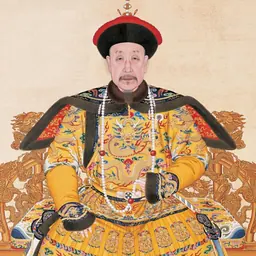

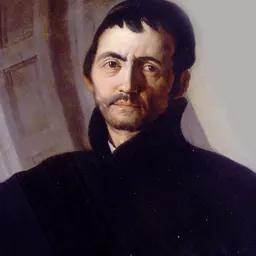

Related people
Same field, nearest in time

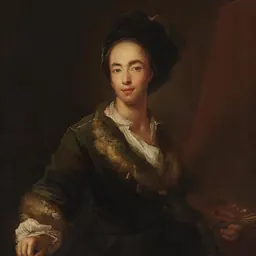



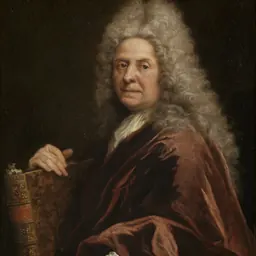
Contemporaries
People whose lives overlapped Giuseppe Castiglione's




Frequently asked questions
Who was Giuseppe Castiglione?
Italian monk, missionary and painter (1688-1766)
When was Giuseppe Castiglione born?
Giuseppe Castiglione was born on 19 July 1688 in Milan.
When did Giuseppe Castiglione die?
Giuseppe Castiglione died on 17 July 1766 in Beijing.
What was Giuseppe Castiglione's occupation?
Giuseppe Castiglione was a painter, missionary, draftsperson, architect, printmaker and artist.
What nationality was Giuseppe Castiglione?
Giuseppe Castiglione was Italian and Chinese.
Sources & further reading
· Wikipedia: Giuseppe Castiglione
· DBpedia: Giuseppe Castiglione (Jesuit painter)
Cite this page
APA: Biography.guide. (2026). Giuseppe Castiglione. https://biography.guide/giuseppe-castiglione/
MLA: "Giuseppe Castiglione." Biography.guide, https://biography.guide/giuseppe-castiglione/.
Chicago: "Giuseppe Castiglione." Biography.guide. https://biography.guide/giuseppe-castiglione/.
Data last updated: 2026-09-26 · Spot an error? Report a correction.
Page generated 2026-09-27 05:15 UTC