
About Giulia Lama
Lived 1681 – 1747 (aged 66). Giulia Lama was an Italian painter and poet.
Giulia Elisabetta Lama (1 October 1681 – 8 October 1747) was an Italian painter active in Venice during the late Baroque period. Her dark, intense style contrasted with the dominant pastel tones of the era. She was one of the first female artists to study and depict the nude male figure.
Biography Giulia Lama (alias Lisalba Arcadia) was born in the parish of Santa Maria Formosa in Venice. She was the daughter of the painter Agostino Lama and Valentina dell'Avese. Lama was the eldest of three siblings: Cecilia, Niccolò, and Pietro. According to historical records, she resided at Calle Lunga 1242, between the Campo of Santa Maria Formosa and Campo SS. Giovanni e Paolo.
The letter indicates that in addition to painting, Lama was skilled in mathematics, poetry, and lace making. Over 200 surviving drawings confirm that she studied both male and female nude figures during her training.
Lama achieved public recognition for her work in history painting, a genre traditionally dominated by men. She demonstrated versatility in her art, creating both sensitive portraits—such as Young Man with a Turban—and large-scale commissions, including altarpieces. The identification of three such altarpieces in a Venetian guidebook from 1733 played a crucial role in reconstructing her artistic legacy.
Career
Lama's career is somewhat elusive. However, it is known that her work as a painter was financially successful, and she received multiple commissions, both public and private. Two years before Abbot Conti's letter, Luisa Bergai Gozzi (1703–1779) discussed Lama's accomplishments: "...Lisalba Arcadia [Giulia Lama], most erudite in philosophy, a well-renowned painter, so much so that the main churches sought to acquire her works, particularly some altarpieces. She earned great honors for her painting style."
Lama received an important commission in 1722 to paint the altarpiece for her parish church, Santa Maria Formosa, located in the Sestiere of Castello. Another significant commission came around 1750, when she was tasked with painting a Crucifixion scene for an altar in San Vidal.
Works Self-portrait In her self-portrait, Lama is depicted at 45 years old. She holds a paintbrush and palette and has chosen to dress in simple attire. Around her wrist is a double-looped pearl bracelet.
The Martyrdom of Saint Eurosia The Martyrdom of Saint Eurosia, c. 1730, Fondazione Fantoni di Rovetta, Bergamo
Lama's depiction of the beheading of Saint Eurosia was displayed in either the Church of Saint Eurosia or the adjacent Oratory of the Assumption of Mary and Saint Eurosia at Le Vignole. The previous owner of the piece is unknown. The Ca' Rezzonico Museum registered the painting in 1962, when Gatti Casazza donated his collection to the museum.
Judith and Holofernes
Lama created two versions of Judith beheading Holofernes. The earlier version, created in 1725, is housed at the Galleria dell'Accademia in Venice (shown on the left). Lama created a later version in 1735, which is part of the G. Rossi Collection in Milan.
The Rape of Europa "The Rape of Europa" is a now-lost piece by Lama. Antonio Schinella Conti describes the work in his letter:
"The subject is The Rape of Europa [now lost], but the bull is in the forest, far from the sea, and her companions dance around the beast that carries Europa, laughing. The group of these figures is filled with poetry, so much so that this woman has more cords in her art and excels in painting as much as in poetry – her poetry is in the style of Petrarch."
Poetry Though there is limited information about the number of poems Lama composed, sources indicate that she wrote two songs, three sonnets, and a eulogy. The eulogy honors the death of her literary friend, Abbot Antonio Sforza.
Death Sources indicate that Lama may have died of the plague on 8 October 1747. The record states:
Lady Giulia, the daughter of Agostino Lama, about 66 years of age, ill with acute fever due to a skin disease, which degenerated into convulsions, died today at 21 hours on the 8th day.
She was buried at the Church of Santi Giovanni e Paolo.
Don’t just read it —
keep it.
Full-length biographies made to live with: read them, listen on the way to work, watch them tonight.
- E-book
- Audio
- Video
Instant download · yours to keep · every purchase keeps this site free
Important facts
People in Giulia Lama's life
Named in this biography and alive at the same time

Related people
Same field, nearest in time
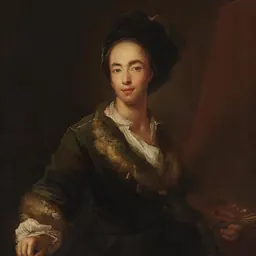



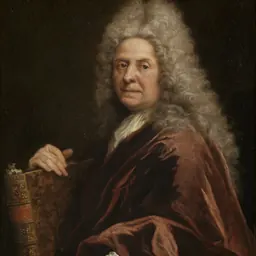
Contemporaries
People whose lives overlapped Giulia Lama's

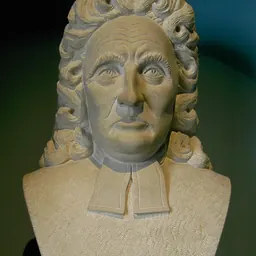



Frequently asked questions
Who was Giulia Lama?
Italian painter (1681-1747)
When was Giulia Lama born?
Giulia Lama was born on 1 October 1681 in Venice.
When did Giulia Lama die?
Giulia Lama died on 7 October 1747 in Venice.
What was Giulia Lama's occupation?
Giulia Lama was a painter and poet.
What nationality was Giulia Lama?
Giulia Lama was Italian.
Sources & further reading
Cite this page
APA: Biography.guide. (2026). Giulia Lama. https://biography.guide/giulia-lama/
MLA: "Giulia Lama." Biography.guide, https://biography.guide/giulia-lama/.
Chicago: "Giulia Lama." Biography.guide. https://biography.guide/giulia-lama/.
Data last updated: 2026-09-25 · Spot an error? Report a correction.
Page generated 2026-09-27 05:12 UTC