
Antonio Schinella Conti
Historian, mathematician, philosopher and physicist from Italy
About Antonio Schinella Conti
Lived 1677 – 1749 (aged 72). Antonio Schinella Conti was an Italian physicist, historian, philosopher, mathematician, translator and poet.
Antonio Schinella Conti (1677–1749), also known by his religious title as Abate Conti, was an Italian writer, translator, mathematician, philosopher and physicist. He was born in Padua on 22 January 1677 and died there on 6 April 1749.
Life In 1699 Conti became an Oratorian Father in Venice but ceased to fulfil priestly duties after 1708. His placement, however, had allowed him to follow studies in philosophy, mathematics, astronomy, science and medicine. This strengthened his belief in the ability of the human intellect to investigate reality and to come to conclusions at odds with the traditional religious interpretations current until then and to formulate his own theories.
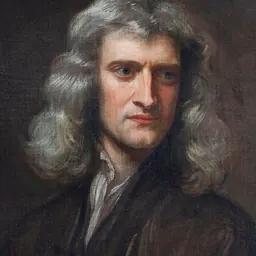
In 1713 he left for Paris, where he befriended the scientific thinkers Bernard Le Bovier de Fontenelle, Nicolas Malebranche and Charles François de Cisternay du Fay. In 1715 he left for London to observe an eclipse of the sun and to visit Isaac Newton, for whom he acted as intermediary in the Leibniz-Newton calculus controversy. During this period he also began a lasting friendship with Lady Mary Wortley Montagu, whose poems he translated, and who made him the recipient of her more philosophical Turkish Embassy Letters (1717–18). Starting in autumn 1716, he left to spend six months in dialogue with thinkers in the Netherlands and Germany, and then returned to England, continuing both scientific and literary projects there.
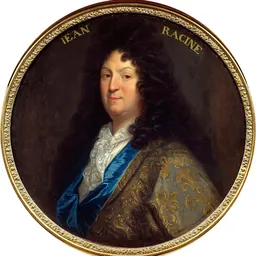
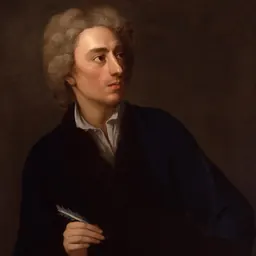
In 1718 he returned to Paris, where he continued to play an active part in the intellectual life of the French capital and during that time began a verse translation of Jean Racine's Athalie and, with the help of the exiled politician Viscount Bolingbroke, continued his translation of Alexander Pope's The Rape of the Lock, although this was not published until after his death. Once back in Italy in 1726, he continued to encourage scientific studies at university level and with the support of Celia Grillo Borromeo drew up a plan for an Italian scientific academy. During much of this time his scientific work was subject to censorship, although a selection of his literary works appeared in 1739.
Free-thinking pillar of the Age of Enlightenment though he was, however, Conti could not entirely free himself from all the prejudices of his times. Coming from a patrician background and generally mixing with the titled and royalty, he vented his sarcasm upon the social pretensions of the Venetian composer Antonio Vivaldi. Again, despite enjoying the friendship and patronage of some of the foremost women intellectuals in Britain, France and Italy, he was at the same time advancing pseudo-scientific arguments to demonstrate not simply women's physical but also their mental inferiority.
As a dramatist and admirer of Shakespeare, Conti had begun his own blank verse Giulio Cesare in London and completed it in 1726. It was later followed by three more Roman tragedies: Giunio Bruto (1743), Marco Bruto (1744) and Druso (1748), which appeared with individual prefaces by the author. To his own plays may be added publication of the revised translation of Athalie and another of Voltaire's drama Mérope (Venice 1744). A dramatic excursion of a different sort was the series of experimental long cantatas he wrote for the Venetian composer Benedetto Marcello: the duet, Il Timoteo, with a text translated from John Dryden; then five monologues, Cantone, Lucrezia, Andromaca, Arianna abandonnata, and finally Cassandra.
During his life, Conti was made the subject of an ink drawing by the caricaturist Pier Leone Ghezzi. After his death a statue of him was commissioned by his home town in 1781 from the local sculptor Felice Chiereghin.
Works
Don’t just read it —
keep it.
Full-length biographies made to live with: read them, listen on the way to work, watch them tonight.
- E-book
- Audio
- Video
Instant download · yours to keep · every purchase keeps this site free
Important facts
People in Antonio Schinella Conti's life
Named in this biography and alive at the same time




Related people
Same field, nearest in time


Contemporaries
People whose lives overlapped Antonio Schinella Conti's



Frequently asked questions
Who was Antonio Schinella Conti?
historian, mathematician, philosopher and physicist from Italy
When was Antonio Schinella Conti born?
Antonio Schinella Conti was born on 22 January 1677 in Padua.
When did Antonio Schinella Conti die?
Antonio Schinella Conti died on 6 April 1749 in Padua.
What was Antonio Schinella Conti's occupation?
Antonio Schinella Conti was a physicist, historian, philosopher, mathematician, translator and poet.
What nationality was Antonio Schinella Conti?
Antonio Schinella Conti was Italian.
Sources & further reading
· Wikipedia: Antonio Schinella Conti
· DBpedia: Antonio Schinella Conti
Cite this page
APA: Biography.guide. (2026). Antonio Schinella Conti. https://biography.guide/antonio-schinella-conti/
MLA: "Antonio Schinella Conti." Biography.guide, https://biography.guide/antonio-schinella-conti/.
Chicago: "Antonio Schinella Conti." Biography.guide. https://biography.guide/antonio-schinella-conti/.
Data last updated: 2026-09-20 · Spot an error? Report a correction.
Page generated 2026-09-27 05:02 UTC