
About Daniel Gabriel Fahrenheit
Lived 1686 – 1736 (aged 50). Daniel Gabriel Fahrenheit was a Polish physicist, inventor, instrument maker and chemist, known for Alcohol thermometer, Fahrenheit and Fahrenheit hydrometer.
Daniel Gabriel Fahrenheit FRS (24 May 1686 – 16 September 1736) was a physicist, inventor, and scientific instrument maker. He was born in Poland to a family of German origin, although he spent much of his life in the Dutch Republic. Fahrenheit significantly improved the design and manufacture of thermometers; his were accurate and consistent enough that different observers, each with their own Fahrenheit thermometers, could reliably compare temperature measurements with each other. Fahrenheit is also credited with producing the first successful mercury-in-glass thermometers, which were more accurate than the spirit-filled thermometers of his time and of a generally superior design. The popularity of his thermometers also led to the widespread adoption of his Fahrenheit scale, with which they were provided.
Biography Early life
Fahrenheit was born in Danzig (Gdańsk), then in the Polish–Lithuanian Commonwealth. The Fahrenheits were a German Hanse merchant family who had lived in several Hanseatic cities. Fahrenheit's great-grandfather had lived in Rostock, and research suggests that the Fahrenheit family originated in Hildesheim. Daniel's grandfather moved from Kneiphof in Königsberg (then in the Duchy of Prussia) to Danzig and settled there as a merchant in 1650. His son, Daniel Fahrenheit (the father of Daniel Gabriel), married Concordia Schumann, the daughter of a well-known Danzig business family. Daniel was the eldest of the five Fahrenheit children (two sons, three daughters) who survived childhood. His sister, Virginia Elisabeth Fahrenheit, married Benjamin Krüger and was the mother of Benjamin Ephraim Krüger, a clergyman and playwright.
As a young adult, Fahrenheit "showed a particular desire for studying," and was scheduled to enroll in the Danzig Gymnasium. Fahrenheit, along with two brothers and sisters, was placed under guardianship. In 1702, Fahrenheit's guardians enrolled him in a bookkeeping course and sent him to a four-year merchant trade apprenticeship in Amsterdam. In 1708, Fahrenheit met with the mayor of Copenhagen and astronomer, Ole Rømer, and was introduced to Rømer's temperature scale and his methods for making thermometers. Rømer told Fahrenheit that demand for accurate thermometers was high. Perhaps not coincidentally, Fahrenheit's arrest warrant was dropped around the time of his meeting with Rømer. In that year, he published five papers in Latin for the Royal Society's scientific journal, Philosophical Transactions, on various topics. In his second paper, "Experimenta et observationes de congelatione aquæ in vacuo factæ", he provides a description of his thermometers and the reference points he used for calibrating them. For two centuries, this document was the only description of Fahrenheit's process for making thermometers. thumb
Fahrenheit scale
According to Fahrenheit's 1724 article, he determined his scale by reference to three fixed points of temperature. The lowest temperature was achieved by preparing a frigorific mixture of ice, water, and a salt ("ammonium chloride or even sea salt"), and waiting for the eutectic system to reach equilibrium temperature. The thermometer then was placed into the mixture and the liquid in the thermometer allowed to descend to its lowest point. The thermometer's reading there was taken as . The second reference point was selected as the reading of the thermometer when it was placed in still water when ice was just forming on the surface. This was assigned as . The third calibration point, taken as , was selected as the thermometer's reading when the instrument was placed under the arm or in the mouth.
Fahrenheit came up with the idea that mercury boils around 300 degrees on this temperature scale. Work by others showed that water boils about 180 degrees above its freezing point. The Fahrenheit scale later was redefined to make the freezing-to-boiling interval exactly 180 degrees, a convenient value as 180 is a highly composite number, meaning that it is evenly divisible into many fractions. It is because of the scale's redefinition that normal mean body temperature today is taken as 98.6 degrees, whereas it was 96 degrees on Fahrenheit's original scale.
The Fahrenheit scale was the primary temperature standard for climatic, industrial and medical purposes in English-speaking countries until the 1970s. The British Meteorological Office officially adopted "Centigrade" — the Celsius scale — as standard in 1963 but continued using Fahrenheit for public broadcasts into the 1980s. It is presently mostly replaced by the Celsius scale long used in the rest of the world, apart from the United States, where temperatures and weather reports are still broadcast in Fahrenheit.
Don’t just read it —
keep it.
Full-length biographies made to live with: read them, listen on the way to work, watch them tonight.
- E-book
- Audio
- Video
Instant download · yours to keep · every purchase keeps this site free
Important facts
People in Daniel Gabriel Fahrenheit's life
Named in this biography and alive at the same time
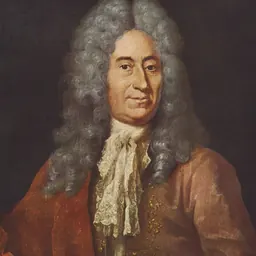
Related people
Same field, nearest in time



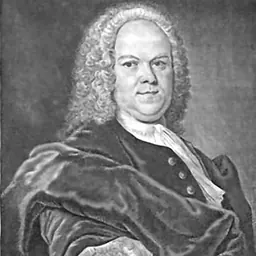

Contemporaries
People whose lives overlapped Daniel Gabriel Fahrenheit's



Frequently asked questions
Who was Daniel Gabriel Fahrenheit?
German-Polish physicist and engineer (1686-1736)
When was Daniel Gabriel Fahrenheit born?
Daniel Gabriel Fahrenheit was born on 24 May 1686 in Gdańsk.
When did Daniel Gabriel Fahrenheit die?
Daniel Gabriel Fahrenheit died on 16 September 1736 in The Hague.
What was Daniel Gabriel Fahrenheit's occupation?
Daniel Gabriel Fahrenheit was a physicist, inventor, instrument maker and chemist.
What was Daniel Gabriel Fahrenheit known for?
Daniel Gabriel Fahrenheit was known for Alcohol thermometer, Fahrenheit, Fahrenheit hydrometer, Mercury-in-glass thermometer and Precision thermometry.
What nationality was Daniel Gabriel Fahrenheit?
Daniel Gabriel Fahrenheit was Polish.
Sources & further reading
· Wikipedia: Daniel Gabriel Fahrenheit
· DBpedia: Daniel Gabriel Fahrenheit
Cite this page
APA: Biography.guide. (2026). Daniel Gabriel Fahrenheit. https://biography.guide/daniel-gabriel-fahrenheit/
MLA: "Daniel Gabriel Fahrenheit." Biography.guide, https://biography.guide/daniel-gabriel-fahrenheit/.
Chicago: "Daniel Gabriel Fahrenheit." Biography.guide. https://biography.guide/daniel-gabriel-fahrenheit/.
Data last updated: 2026-09-25 · Spot an error? Report a correction.
Page generated 2026-09-27 05:10 UTC