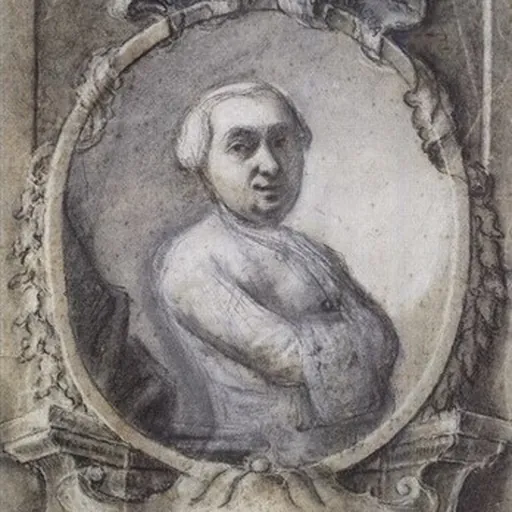
About Giannambrogio Migliavacca
Lived 1718 – 1787 (aged 68–69). Giannambrogio Migliavacca was a poet and librettist.
Giovanni Ambrogio Migliavacca ( 1718 – c. 1795) was an Italian poet and librettist. A student and protégé of Metastasio, he was primarily active in the court theaters of Dresden and Vienna. His most successful work was the libretto for the opera Solimano, first set by Johann Adolph Hasse in 1753 and subsequently set by eighteen other composers in the following decades.
Life and career Migliavacca was born in Milan around 1718, but the exact date of his birth as well as his parentage and early life are unknown. Much of the information about his life has come from Metastasio's letters. At the age 18, in 1736, Migliavacca edited a collection of poetic tributes dedicated to the Duke of Noailles. Soon after, he became a member of the Accademia dei Filodossi and was active in the Milanese intellectual milieu of the Enlightenment. He initially opted for a career as a diplomat, working as the imperial secretary of the Italian legation to the court of Charles VII where he became a favourite of the emperor. After the death of Charles VII in 1745, Migliavacca saw little future in a diplomatic career and instead focused on his literary pursuits.
Migliavacca made his debut as a librettist in his own right (albeit closely supervised by Metastasio) in 1750 with Armida placata, composed by and performed in Madrid to celebrate the marriage of Maria Antonia Ferdinanda of Spain and Victor Amadeus III of Sardinia. It was performed again in Vienna later that year in a pastiche version with music by several composers including Luca Antonio Predieri and Johann Adolph Hasse. Through Metastasio, Migliavacca had also become acquainted with Duchess Maria Antonia of Bavaria. She was the wife of Frederick Christian, heir to the thrones of Saxony and Poland, and was a patron of the arts as well as gifted composer, singer, and harpsichordist. Two of her operas, Il trionfo della fedeltà and Talestri, have survived, but according to Bruno Brunelli, she had earlier composed a short opera (now lost) to a libretto by Migliavacca entitled Giove fulminatore dei giganti.
In 1752, through the intervention of Metastasio, Migliavacca was appointed court poet and diplomatic counselor to Frederick Christian's father Frederick Augustus II. It premiered at the court theatre in Dresden in a spectacular production that included live elephants and camels and hundreds of extras in addition to the seven main singers. When the 1756 Prussian invasion of Dresden severely curtailed the musical life of the court, Migliavacca worked in Vienna and then returned to Milan in 1765. During his sojourn in Milan he was instrumental in negotiating the Biblioteca Ambrosiana's acquisition of two valuable book collections belonging to the Clerici and Lambertenghi families.
Migliavacca's libretti were long ignored by later literary critics who dismissed them as the work of a semi-dilettante and mediocre imitator of Metastasio. However, in the late 20th century, he came to be appreciated as one of a group of reforming Italian librettists which also included Ranieri de' Calzabigi, Mattia Verazi, Giovanni de Gamerra, and Gaetano Martinelli. They moved away from the traditional Metasasian plot structures, increased the number of ensembles relative to solo arias, and organized the ballets, arias, and ensembles into integrated dramatic scenes rather than the series of showy arias which had previously characterised opera seria.
Libretti
Armida placata (opera seria in two acts) first set by , premiered Buen Retiro Palace, Madrid, 12 April 1750 Giove fulminatore dei giganti (opera/cantata) set by Maria Antonia of Bavaria, 1752 (lost) Artemisia (opera in three acts) first set by Johann Adolph Hasse, premiered Opernhaus am Zwinger, Dresden, 6 February 1754 (Artemisia was subsequently set by and performed at the Teatro San Benedetto, Venice in 1782.) Prometeo assoluto (serenata), first set by Georg Christoph Wagenseil, premiered Burgtheater, Vienna to celebrate the birth of Archduchess Maria Theresa of Austria, 24 March 1762 Acide e Galatea (festa teatrale in one act) and Vivan gl'illustri sposi (cantata), both set by Joseph Haydn, premiered Schloss Esterházy, Eisenstadt for the wedding of Prince Anton Esterházy, 11 January 1763 Armida (2nd version, opera in three acts) co-written with Giacomo Dubrazzo and based on Quinault's Armide, first set by Tommaso Traetta, premiered Teatro San Carlo, Naples, 30 May 1763 Il ritorno del figliuol prodigo (azione sacra), set by Johann Gottlieb Naumann, premiered Royal Chapel, Dresden, 10 April 1784 Mosè riconosciuto figura di Gesù Cristo salvator nostro (oratorio), set by Joseph Schuster, premiered Royal Chapel, Dresden, 15 April 1786 La reggia d'Imeneo (festa teatrale in one act), set by Johann Gottlieb Naumann, premiered Opernhaus am Zwinger, Dresden for the wedding of Anton of Saxony, 21 October 1787
Don’t just read it —
keep it.
Full-length biographies made to live with: read them, listen on the way to work, watch them tonight.
- E-book
- Audio
- Video
Instant download · yours to keep · every purchase keeps this site free
Important facts
People in Giannambrogio Migliavacca's life
Named in this biography and alive at the same time




Related people
Same field, nearest in time

Contemporaries
People whose lives overlapped Giannambrogio Migliavacca's




Frequently asked questions
Who was Giannambrogio Migliavacca?
Italian poet and librettist
When was Giannambrogio Migliavacca born?
Giannambrogio Migliavacca was born in 1718 in Milan.
When did Giannambrogio Migliavacca die?
Giannambrogio Migliavacca died in 1787.
What was Giannambrogio Migliavacca's occupation?
Giannambrogio Migliavacca was a poet and librettist.
Sources & further reading
· Wikipedia: Giannambrogio Migliavacca
· DBpedia: Giovanni Ambrogio Migliavacca
Cite this page
APA: Biography.guide. (2026). Giannambrogio Migliavacca. https://biography.guide/giannambrogio-migliavacca/
MLA: "Giannambrogio Migliavacca." Biography.guide, https://biography.guide/giannambrogio-migliavacca/.
Chicago: "Giannambrogio Migliavacca." Biography.guide. https://biography.guide/giannambrogio-migliavacca/.
Data last updated: 2026-09-22 · Spot an error? Report a correction.
Portrait: Wikimedia Commons · author & licence
Page generated 2026-09-27 04:57 UTC