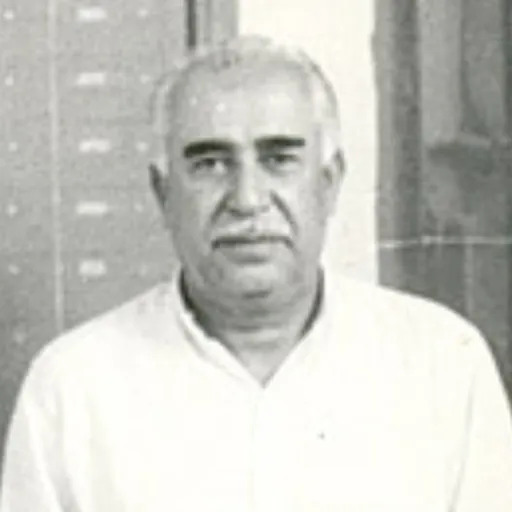
About Ghaus Bakhsh Bizenjo
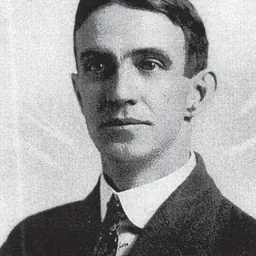
Lived 1917 – 1989 (aged 71–72). Ghaus Bakhsh Bizenjo was a Pakistani and Indian politician.
Mir Ghaus Bakhsh Bizenjo (Urdu/Baloch: میرغوث بخش بزنجو) was a Pakistani politician from Balochistan. He served as the 3rd Governor of Balochistan.
Entry into politics In 1938, after returning from Aligarh, Ghaus Bakhsh joined the Baloch League, a party based in Karachi which was formed by some Baloch intellectuals.
In 1939 the Kalat State National Party (KSNP) arranged its annual convention in Mastung. The Baloch League sent Mir Ghaus Bakhsh Bizenjo as a representative to attend the convention. On 6 July 1939 an armed tribal force was sent by the Sardars of Balochistan to disrupt the annual rally of the KSNP. This tribal force opened fire on the participants of the rally but police and Levies Force interfered in time and a potential bloodbath was averted. After this incident many of the KSNP workers and leaders were either arrested or exiled from Kalat. Abdul Rahim Khwaja Khel, Babu Abdul Karim Shorish and others who were at Government Posts resigned. Mir Gul Khan Nasir who was the Secretary Judicial Affairs, Mir Hammal Khan who was the Custom Officer, Mir Mohammad Faazal Khan Mohammad Shahi who was Education Minister and Faiz Mohammad Yousafzai who was Assistant Collector also tendered in their resignations though it is believed that the resignations of Mir Gul Khan and Mir Hammal Khan were accepted in 1941. After this incident Mir Ghaus Bakhsh Bizenjo joined the KSNP. In fact, the resignations of Mir Gul Khan Nasir, Mir Abdul Aziz Kurd and Mir Hammal Khan are believed to have been tendered in as a result of Mir Ghaus Bakhsh's efforts. Initially he was against independence.
Muslim League After Balochistan joined Pakistan, the Khan of Kalat Ahmed Yar Khan decided to join the Muslim League. He sent Ajmal Khan to go and persuade Mir Ghaus Bakhsh and Gul Khan Nasir to join the party with him. Both Ghaus Bakhsh and Gul Khan thought this would be a good opportunity to further their political cause so, they joined the party. Ghaus Bakhsh also persuaded Abdullah Jan Jamaldini, Ghulam Mohammed Baloch and Bahadur Khan to join Muslim League. In 1955, all of West Pakistan's provinces and princely states were merged into one unit. This was not acceptable to the Baloch nationalists. So, on 14 July 1955, Ghaus Bakhsh Bizenjo, Abdul Karim, Gul Khan Nasir, Mohammad Hussain Anqa and Qadir Bakhsh Nizamani formed the Usthman Gal which means "The People's Party".
Usthman Gal In 1955, all of West Pakistan's provinces and princely states were merged into one unit. This policy was highly criticized by Baloch nationalists. So, on 14 July 1955 Ghaus Bakhsh Bizenjo, Agha Abdul Karim, Mir Gul Khan Nasir, Mohammad Hussain Anqa and Qadir Bakhsh Nizamani formed the Usthman Gal which means "The People's Party".
Pakistan National Party In 1956, Usthman Gal and Warur Pashtun from Balochistan, Khudai Khidmatgar from North-West Frontier Province, Azad Pakistan Party from Punjab, Sindh Mahaaz and Sindh Hari Committee from Sindh merged to form the Pakistan National Party. PNP was an umbrella for progressive people from all walks of life. It was composed solely of ethnic nationalists, socialists and communists.
National Awami Party In 1957, Maulana Bhashani broke off from Awami League and joined the Pakistan National Party (PNP), thus, the National Awami Party came into being. This became the biggest party of Pakistan containing within its folds, some of the most prominent progressive politicians of that era.
National Awami Party government In the 1970 General Election in Pakistan, the NAP came out as a majority party in North-West Frontier Province and Balochistan. Ghaus Bakhsh Bizenjo was elected from the Lyari Town area of Karachi with the help of another notable politician of Pakistan – Mahmoud Haroon.
Constitutional Committee Pakistan ran under the remnant of Martial Law LFO (Legal Framework Order) without any proper constitution. It was obligatory on the Legislature to frame a new constitution for a country, so it appointed a 25-member Constitutional committee composed of all the political parties represented in the parliament according to their strength on 17 April 1972, to prepare a draft of the permanent Constitution of Pakistan.
Khan Amirzadah Khan and Mir Ghous Bux Bizenjo were representing National Awami Party. This Constitutional Committee headed Abdul Hafiz Pirzada of Pakistan Peoples Party work day and night for many months and framed a draft constitution which was presented in the parliament and adopted as the well-known 1973 constitution.
In 1988, Mir Ghaus Bakhsh Bizenjo took part in the elections but lost. This was Mir Bizenjo's last election.
Death Mir Ghaus Bakhsh Bizenjo died on 11 August 1989. His sons remain active in Baloch politics. After the death of Mir Ghaus Bakhsh, his son Mir Bizen Bizenjo took over the political faction of his father. But after sometime, Ghaus Bakhsh's younger son Mir Hasil Bizenjo rose to prominence while Bizen Bizenjo faded into the background.
Legacy Mir Ghaus Bakhsh Bizenjo along with Nawab Yousaf Aziz Magsi, Abdul Aziz Kurd, Mir Gul Khan Nasir and Faiz Mohammad Yousafzai is considered to be one of the founders of democratic politics in Balochistan and is, to this day, remembered as "Baba i Balochistan" or "The Father of Balochistan" by Baloch nationalists.
In 2017, at a public meeting organized on the 28th death anniversary of Ghaus Bakhsh Bizenjo, the then chief minister of Balochistan Sanaullah Zehri criticized the people waging a war against Pakistan and under the cover of Baloch liberation. He stated that these political leaders were enjoying their lives in Europe and in other Western countries and yet they were inciting local Baloch people to rebel against the state of Pakistan. He praised Bizenjo's politics of reconciliation with the state of Pakistan. He also said that Bizenjo never favoured militancy in Balochistan and always preferred talks to bring durable peace and development in Balochistan.
Don’t just read it —
keep it.
Full-length biographies made to live with: read them, listen on the way to work, watch them tonight.
- E-book
- Audio
- Video
Instant download · yours to keep · every purchase keeps this site free
Important facts
Family & relationships
People in Ghaus Bakhsh Bizenjo's life
Named in this biography and alive at the same time



Related people
Same field, nearest in time





Contemporaries
People whose lives overlapped Ghaus Bakhsh Bizenjo's

Frequently asked questions
Who was Ghaus Bakhsh Bizenjo?
Pakistani politician
When was Ghaus Bakhsh Bizenjo born?
Ghaus Bakhsh Bizenjo was born in 1917 in Khuzdar.
When did Ghaus Bakhsh Bizenjo die?
Ghaus Bakhsh Bizenjo died on 11 August 1989 in Balochistan.
What was Ghaus Bakhsh Bizenjo's occupation?
Ghaus Bakhsh Bizenjo was a politician.
What nationality was Ghaus Bakhsh Bizenjo?
Ghaus Bakhsh Bizenjo was Pakistani and Indian.
Sources & further reading
· Wikipedia: Ghaus Bakhsh Bizenjo
· DBpedia: Ghaus Bakhsh Bizenjo
Cite this page
APA: Biography.guide. (2026). Ghaus Bakhsh Bizenjo. https://biography.guide/ghaus-bakhsh-bizenjo/
MLA: "Ghaus Bakhsh Bizenjo." Biography.guide, https://biography.guide/ghaus-bakhsh-bizenjo/.
Chicago: "Ghaus Bakhsh Bizenjo." Biography.guide. https://biography.guide/ghaus-bakhsh-bizenjo/.
Data last updated: 2026-09-20 · Spot an error? Report a correction.
Portrait: Wikimedia Commons · author & licence
Page generated 2026-09-27 04:58 UTC