
About George W. Johnson
Lived 1811 – 1862 (aged 50). George W. Johnson was an American politician.
George Washington Johnson (May 27, 1811 – April 8, 1862) was the first Confederate governor of Kentucky. A lawyer-turned-farmer from Scott County, Kentucky, Johnson, a supporter of slavery who owned 26 slaves, favored secession as a means of preventing the Civil War, believing the Union and Confederacy would be forces of equal strength, each too wary to attack the other. As political sentiment in the Commonwealth took a decidedly Union turn following the elections of 1861, Johnson was instrumental in organizing a sovereignty convention in Russellville, Kentucky, with the intent of "severing forever our connection with the Federal Government." The convention created a Confederate shadow government for the Commonwealth, and Johnson was elected its governor. This government never controlled the entire state though it controlled about half the state early in the war, Kentucky remained in the Union after 1862 throughout the rest of the war.
Despite his meager political experience—having previously served only three years in the Kentucky House of Representatives—Johnson labored vehemently to ensure the success of the shadow government. Kentucky was admitted to the Confederacy on December 10, 1861, but the shadow government's influence in the Commonwealth extended only as far as the Confederate Army advanced. When Albert Sidney Johnston abandoned the Confederate capital of Bowling Green, Johnson and the other government officials accompanied him. Despite his advanced age and a crippled arm, Johnson volunteered for military service in General Johnston's army. Johnson was wounded at the Battle of Shiloh and died April 8, 1862. He was succeeded by Richard Hawes, the second and last governor of Confederate Kentucky.
Early life and education Johnson was born on May 27, 1811, near Georgetown in Scott County, Kentucky, the son of major William and Betsy Payne Johnson. Major Johnson died soon after the close of the War of 1812, in which he was a participant, and George Johnson was reared in the home of his stepfather, John Allen. Johnson received three degrees from Transylvania University: an A.B. in 1829, an LL.B. in 1832, and an M.A. in 1833. The couple had ten children, seven of whom lived to adulthood. In 1838, Johnson was elected as a Democrat to the Kentucky House of Representatives.
American Civil War Although he supported John C. Breckinridge for president in 1860, he did not feel that Abraham Lincoln's election justified secession, since Republicans controlled neither Congress nor the Supreme Court. The delegates elected Richard Hawes as chair, called for a restoration of Kentucky's neutrality in the war, and condemned the Federal government for its "invasion." From Virginia, Johnson traveled through Tennessee to Bowling Green where, despite his age (49) and a crippled arm, he volunteered as an aid to General Simon B. Buckner.
On November 18, 1861, 116 delegates representing 68 Kentucky counties convened at the Clark House in Russellville. Over the next three days, a shadow government was established with Bowling Green as its temporary capital. The Congress instead approved a sum of $2 million, the expenditure of which required approval of Secretary of War Judah P. Benjamin and President Davis.
It was Johnson's practice to avoid interference with military decisions, however he supported Morgan's request for two light artillery pieces that became hallmarks of his command. By contrast, he consistently opposed the command of General Lloyd Tilghman, trying repeatedly but unsuccessfully to have him removed. It is unclear how much military influence Johnson wielded in his position as governor, though he enjoyed a cordial relationship with most of the Confederate generals.
Battle of Shiloh Johnson's gravestone in Georgetown Cemetery in Georgetown, Kentucky. When General Albert Sidney Johnston was forced to withdraw his troops from Bowling Green in February 1862, the Confederate state government moved with his army to Tennessee. On April 6, 1862, General Johnston attacked the Union army at Shiloh, Tennessee. During this battle, Johnson served as a volunteer aide to General Breckinridge and Colonel Robert P. Trabue. After his horse was killed out from under him, Johnson fought on foot with Company E of the Fourth Kentucky Infantry Regiment, and insisted on being sworn in as a private. He declared "I will take a good night's rest and be ready for the fight tomorrow."
The next day, Johnson was seriously wounded in the right thigh and abdomen. He lay wounded on the battlefield until the next morning, when he was recognized by Union General Alexander McDowell McCook. Johnson and McCook had both attended the 1860 Democratic National Convention and were both Freemasons. Johnson was taken aboard the Union hospital ship Hannibal, where despite the ministrations of several physicians, he died on April 8. Friends in the Union army, including General John M. Harlan, packed Johnson's body in salt and shipped it to Louisville, then on to Georgetown for burial.
Don’t just read it —
keep it.
Full-length biographies made to live with: read them, listen on the way to work, watch them tonight.
- E-book
- Audio
- Video
Instant download · yours to keep · every purchase keeps this site free
Important facts
People in George W. Johnson's life
Named in this biography and alive at the same time

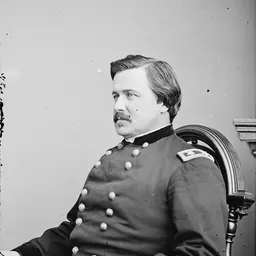

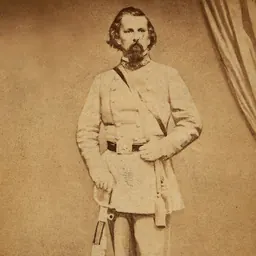
Related people
Same field, nearest in time




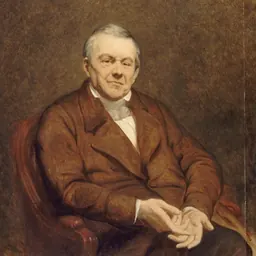
Contemporaries
People whose lives overlapped George W. Johnson's




Frequently asked questions
Who was George W. Johnson?
American politician (1811-1862)
When was George W. Johnson born?
George W. Johnson was born on 27 May 1811 in Scott County.
When did George W. Johnson die?
George W. Johnson died on 8 April 1862 in Battle of Shiloh.
What was George W. Johnson's occupation?
George W. Johnson was a politician.
What nationality was George W. Johnson?
George W. Johnson was American.
Sources & further reading
· Wikipedia: George W. Johnson
· DBpedia: George W. Johnson (governor)
Cite this page
APA: Biography.guide. (2026). George W. Johnson. https://biography.guide/george-w-johnson/
MLA: "George W. Johnson." Biography.guide, https://biography.guide/george-w-johnson/.
Chicago: "George W. Johnson." Biography.guide. https://biography.guide/george-w-johnson/.
Data last updated: 2026-09-20 · Spot an error? Report a correction.
Page generated 2026-09-27 05:26 UTC