
About John Allen
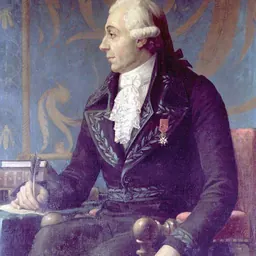
Lived 1771 – 1843 (aged 72). John Allen was a British historian, writer, physician and author.
John Allen (3 February 1771 – 10 April 1843) was an eighteenth and nineteenth century political and historical writer, and Master of the College of God's Gift in Dulwich (then colloquially called "Dulwich College"). More than one street in Kensington, London, is named after him.
Early life John Allen was born at Redfoord in the parish of Colinton near Edinburgh. His father, James Allen, was the owner of the small estate of Redfoord and was a writer to the Signet. When his father became bankrupt his mother's family and his stepfather ensured that he had a good education. In time he was apprenticed to an Edinburgh surgeon by the name of Arnot. Whilst there his companion in instruction was Professor Thomson who would be a lifelong friend. John Allen took up the position and accompanied Holland's family remaining abroad until 1805. When he returned he spent much of his time at Holland House in Kensington. For a brief time in 1806 he held an official position as undersecretary to the commissioners for treating with America. In 1808 he again accompanied Lord Holland to Spain and made a study of the history and social characteristics of the Spanish people. His work towards a volume illustrating the different causes that had checked Spain's progress was never finished. However, in April 1810 two articles were published in the Edinburgh Review on Spanish America. Lord Holland treated him with uniform consideration, affection, and amenity; [Lady Holland] worried, bullied, flattered, and cajoled him by turns. He was a mixture of pride, humility, and independence; he was disinterested, warm-hearted, and choleric, very liberal in his political, still more in his religious opinions, in fact, a universal sceptic. He used for a long time in derision to be called "Lady Holland's Atheist", and in point of fact I do not know whether he believed in the existence of a First Cause, or whether, like Dupuis, he regarded the world as l'univers Dieu. Though not, I think, feeling quite certain on the point, he was inclined to believe that the history of Jesus Christ was altogether fabulous or mythical, and that no such man had ever existed. He told me he could not get over the total silence of Josephus as to the existence and history of Christ. ... Allen's learning and still more his general information were prodigious, and as he lived amongst books, the stock was continually increasing. He was the oracle of Holland House on all literary subjects, and in every discussion some reference was sure to be made to Allen for information, upon which he never was at fault. He was not accustomed to take much part in general conversation, but was always ready to converse with anybody who sought him, and when warmed up would often argue away with great vigour and animation, and sometimes with no little excitement.
He spent much time helping Lord Holland find materials for his speeches in the House of Lords and supplying criticism of those speeches. He sat at the dinner table and carved. He was known to join the family at dinner parties. So associated was he with the house that he had his own large room, on the ground floor, known as "Allen's Room".
During his time at Holland House he came into contact with many of the most prominent citizens of London at the time. Byron referred to him as "the best informed and one of the ablest men" that he knew. Others, such as Macaulay, Lord Brougham and Charles Greville are laudatory of him. he was elected as Warden of the College of God's Gift and from 1820 was the Master of that establishment until his death in 1843. He is not considered one of the great Masters of the College as he spent little time there and did little to further the aims of its founder Edward Alleyn. However, he did leave his Spanish and Italian books to the school.
Later life Apart from the Mastership of the College of God's Gift, he was also auditor of the Duchy of Lancaster from 1841 until his death. He died on 10 April 1843 at 33 South Street (the residence of Lady Holland) and was buried at Millbrook, Bedfordshire close to the third Lord Holland. His great friend Professor Thomson received his medical books and manuscripts, and Major-General Charles Richard Fox was left his other manuscripts and diaries.
Publications It is believed that, had he not spent so much time at Holland House, his contributions to literature would have been more prolific.
Articles for the Edinburgh Review including: Constitution of Parliament (June 1816) Review of Warden's letters from St. Helena (December 1816) – Napoleon was said to have been surprised by its intimate knowledge of his early life Criticisms of John Lingard's History of England (April 1825 and June 1826) Dissertation on creating peers for life (October 1834) Enquiry into the Rise and Growth of the Royal Prerogative in England (1830) Vindication of the Ancient Independence of Scotland
The Memorials and Correspondence of Charles James Fox had large portions written by Allen, although Lord John Russell is considered the editor. The life of Fox in the 7th and 8th editions of Encyclopædia Britannica were written by Allen who was steeped in the history of the Whigs.
Don’t just read it —
keep it.
Full-length biographies made to live with: read them, listen on the way to work, watch them tonight.
- E-book
- Audio
- Video
Instant download · yours to keep · every purchase keeps this site free
Important facts
People in John Allen's life
Named in this biography and alive at the same time


Related people
Same field, nearest in time


Contemporaries
People whose lives overlapped John Allen's




Frequently asked questions
Who was John Allen?
British physician, historian and writer (1771-1843)
When was John Allen born?
John Allen was born on 3 February 1771.
When did John Allen die?
John Allen died on 10 April 1843.
What was John Allen's occupation?
John Allen was a historian, writer, physician and author.
What nationality was John Allen?
John Allen was British.
Sources & further reading
· DBpedia: John Allen (historian)
Cite this page
APA: Biography.guide. (2026). John Allen. https://biography.guide/john-allen-historian/
MLA: "John Allen." Biography.guide, https://biography.guide/john-allen-historian/.
Chicago: "John Allen." Biography.guide. https://biography.guide/john-allen-historian/.
Data last updated: 2026-09-20 · Spot an error? Report a correction.
Page generated 2026-09-27 05:27 UTC