
George Grote
English historian and political radical
About George Grote
Lived 1794 – 1871 (aged 76). George Grote was a British historian, politician, classical scholar, writer and banker.
George Grote (; 17 November 1794 – 18 June 1871) was an English political radical and classical historian. He is now best known for his major work, the voluminous History of Greece.
Early life George Grote was born at Clay Hill near Beckenham in Kent. His grandfather, Andreas, originally a Bremen merchant, was one of the founders (on 1 January 1766) of the banking-house of Grote, Prescott & Company in Threadneedle Street, London (the name of Grote did not disappear from the firm until 1879). His father, another George, married (1793) Selina, daughter of Henry Peckwell (1747–1787), minister of Selina, Countess of Huntingdon's chapel in Westminster, and his wife Bella Blosset (descended from a Huguenot officer Salomon Blosset de Loche who left the Dauphiné on the revocation of the Edict of Nantes), and had one daughter and ten sons, of whom George was the eldest. His brothers were the moral philosopher John Grote and the colonial administrator Arthur Grote. (John Russell RA painted portraits of Henry Peckwell and Bella Blosset.)
Educated at first by his mother, George Grote was sent to Sevenoaks grammar school (1800–1804) and afterwards to Charterhouse School (1804–1810), where he studied under Dr Raine in company with Connop Thirlwall, George and Horace Waddington and Henry Havelock. In spite of Grote's school successes, his father refused to send him to university and sent him to work at the bank. He spent all his spare time in the study of classics, history, metaphysics and political economy and in learning German, French and Italian. Driven by his mother's Puritanism and his father's contempt for academic learning, he sought other friends, one of whom was Charles Hay Cameron, who strengthened him in his love of philosophy.
Through another friend, George W. Norman, he met his wife, Harriet Lewin (1792–1878), a writer and later the biographer of the artist Ary Scheffer. After various difficulties the marriage took place on 5 March 1820, and was a happy one. His wife's nephews were the actor William Terriss (the father of Ellaline Terriss) and administrator Thomas Herbert Lewin.
Work and writing
During these years of active public life, his interest in Greek history and philosophy had increased, and after a trip to Italy in 1842, he severed his connection with the bank and devoted himself to literature. In 1846 the first two volumes of the History appeared. The remaining ten appeared between 1847 and the spring of 1856. In 1845, with William Molesworth and Raikes Currie, he gave money to Auguste Comte, then in financial difficulties. The formation of the Sonderbund (20 July 1847) led him to visit Switzerland and study for himself a condition of things in some sense analogous to that of the ancient Greek states. This visit resulted in the publication in The Spectator of seven weekly letters, collected in book form at the end of 1847 (see a letter to de Tocqueville in Mrs Grote's reprint of the Seven Letters, 1876). Grote was elected a Foreign Honorary Member of the American Academy of Arts and Sciences in 1853.
In 1856, Grote began to prepare his works on Plato and Aristotle. Plato and the Other Companions of Sokrates (3 vols.) appeared in 1865. That work made him known by some as "the greatest nineteenth-century Plato scholar". The work on Aristotle he did not complete. He had finished the Organon and was about to deal with the metaphysical and physical treatises when he died at his home in Mayfair, London, and was buried in Westminster Abbey. A marble bust of Grote was subsequently placed in the Abbey. The house, No. 12 Savile Row, now has a commemorative brown plaque on it.
He is said, in some estimations, to have been a man of strong character and self-control, unfailing courtesy and unswerving devotion to what he considered the best interests of the nation. Other historians, such as Guy MacLean Rogers, consider he can reasonably be accused of anti-clerical bias. Grote's time on the Council at University College London was characterised by his contentious approach to two liberal nonconformists: John Hoppus and James Martineau, both of whom found ways to work around his opposition. Grote's life has attracted a wide variety of biographical comment due to his strong views.
Principal works
1821 – Statement of the Question of Parliamentary Reform 1822 – Analysis of the Influence of Natural Religion on the Temporal Happiness, of Mankind (From Jeremy Bentham's notes) 1831 – Essentials of Parliamentary Reform 1831 – Speech of George Grote, Esq. M.P., delivered April 25th, 1833, in the House of Commons, on moving for the introduction of the vote by ballot at elections 1846–1856 – A History of Greece; from the Earliest Period to the Close of the Generation Contemporary with Alexander the Great (12 vols.) 1847 – Seven Letters on the Recent Politics of Switzerland 1859 – Life, Teachings, and Death of Socrates. From Grote's History of Greece 1860 – Plato's Doctrine Respecting the Rotation of the Earth, and Aristotle's Comment upon that Doctrine. 1865 – Plato, and the Other Companions of Sokrates (3 vols.). 2nd edition, 1867; 3rd edition in 4 volumes with some re-organisation, 1885. 1868 – Review of the Work of Mr. John Stuart Mill Entitled 'Examination of Sir William Hamilton's philosophy' 1872 – Poems, 1815–1823 1872 – Aristotle (ed. by Alexander Bain and George Croom Robertson). A 2nd edition with some extra material but in one volume was published in 1880. 1873 – The Minor Works of George Grote 1876 – Fragments on Ethical Subjects, a Selection from his Posthumous Papers
Collections Senate House Library, University of London holds four notebooks written by Grote on various subjects between 1805 - 1820. University College London holds a manuscript by Grote on the history of Greece from c.1856.
Recognition The Grote prize for outstanding research in Greek History, funded by a legacy from V. L. Ehrenberg and awarded annually by the Institute of Classical Studies at the University of London, is named after George Grote.
Grote Street, a principal business strip in the city of Adelaide, South Australia was named for him.
Don’t just read it —
keep it.
Full-length biographies made to live with: read them, listen on the way to work, watch them tonight.
- E-book
- Audio
- Video
Instant download · yours to keep · every purchase keeps this site free
Important facts
People in George Grote's life
Named in this biography and alive at the same time

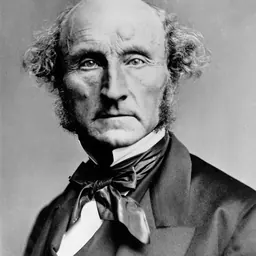
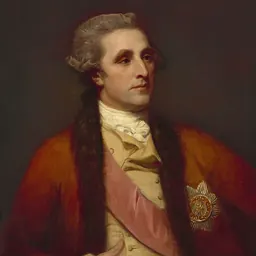



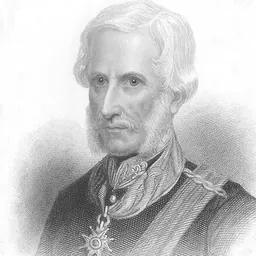
Related people
Same field, nearest in time

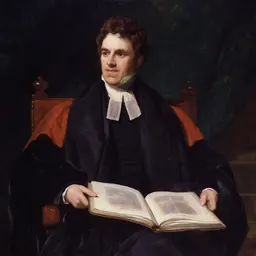

Contemporaries
People whose lives overlapped George Grote's




Frequently asked questions
Who was George Grote?
English historian and political radical (1794–1871)
When was George Grote born?
George Grote was born on 17 November 1794 in Beckenham.
When did George Grote die?
George Grote died on 18 June 1871 in London.
What was George Grote's occupation?
George Grote was a historian, politician, classical scholar, writer and banker.
What nationality was George Grote?
George Grote was British.
Sources & further reading
Cite this page
APA: Biography.guide. (2026). George Grote. https://biography.guide/george-grote/
MLA: "George Grote." Biography.guide, https://biography.guide/george-grote/.
Chicago: "George Grote." Biography.guide. https://biography.guide/george-grote/.
Data last updated: 2026-09-20 · Spot an error? Report a correction.
Page generated 2026-09-27 05:28 UTC