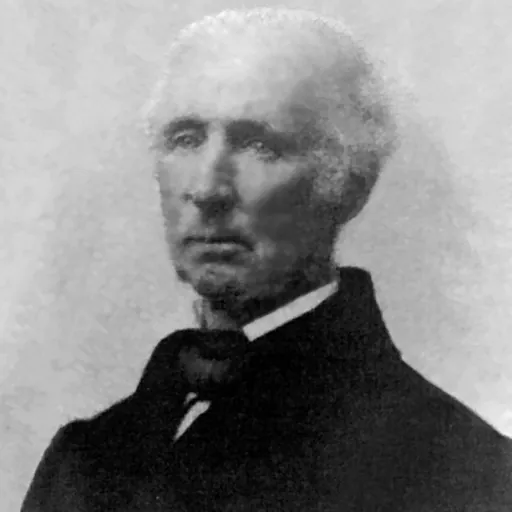
Richard Hawes
United States Representative; Second Confederate governor of Kentucky
About Richard Hawes
Lived 1797 – 1877 (aged 80). Richard Hawes was an American politician, lawyer and judge.
Richard Hawes Jr. (February 6, 1797 – May 25, 1877) was a United States representative from Kentucky and the second Confederate governor of Kentucky. He was part of the politically influential Hawes family. His brother, uncle, and cousin also served as U.S. Representatives, and his grandson Harry B. Hawes was a member of the United States Senate. He was a slaveholder.
Hawes began his political career as an ardent Whig and was a close friend of the party's founder, Henry Clay. When the party declined and dissolved in the 1850s, Hawes became a Democrat, and his relationship with Clay cooled.
At the outbreak of the Civil War, Hawes was a supporter of Kentucky's doctrine of armed neutrality. When the Commonwealth's neutrality was breached in September 1861, Hawes fled to Virginia and enlisted as a brigade commissary under Confederate general Humphrey Marshall. When Kentucky's Confederate government was formed in Russellville, Hawes was offered the position of state auditor, but declined. Months later, he was selected to be Confederate governor of the Commonwealth following George W. Johnson's death at the Battle of Shiloh.
Hawes and the Confederate government traveled with Braxton Bragg's Army of Tennessee, and when Bragg invaded Kentucky in October 1862, he captured Frankfort and held an inauguration ceremony for Hawes. The ceremony was interrupted, however, by forces under Union general Don Carlos Buell, and the Confederates were driven from the Commonwealth following the Battle of Perryville. Hawes relocated to Virginia, where he conducted a Confederate government in exile for Kentucky and continued to lobby President Jefferson Davis to attempt another invasion of the state.
At the end of the war, the Confederate government of Kentucky in exile ceased to exist, and Hawes returned to his home in Paris, Kentucky. He swore an oath of allegiance to the Union, and was allowed to return to his law practice. He was elected county judge of Bourbon County, a post he held until his death in 1877.
Early life Richard Hawes was born on February 6, 1797, near Bowling Green, Caroline County, Virginia. He was one of eleven children born to Richard and Clara Walker Hawes. The Haweses were a political family; Richard's brother, Albert Gallatin Hawes, uncle, Aylett Hawes, and cousin, Aylett Hawes Buckner, all served in the U.S. House of Representatives. Part of Hawes's early education was obtained through the Jessamine County school conducted by Samuel Wilson.
On November 13, 1818, Hawes married Hetty Morrison Nicholas of Lexington. Hawes and Wickliffe became law partners upon the former's admission to the bar in 1818. He was an unsuccessful candidate for U.S. Representative in 1834, but was elected to represent Henry Clay's "Ashland District" three years later, serving from March 4, 1837, to March 3, 1841.
Hawes was once close friends with Clay, though the friendship between them cooled when Hawes supported Zachary Taylor instead of Clay for president in 1848. When the Whig Party dissolved in the 1850s, Hawes became a Democrat, supporting presidential candidates James Buchanan in 1856 and John C. Breckinridge in 1860.
In November 1861, the self-appointed members of the Confederate state sovereignty convention in Russellville, Kentucky appointed Hawes state auditor of the Commonwealth's Confederate government, but he declined in order to continue his military service. The army's leader, General Braxton Bragg, had been considering an invasion of Kentucky. Hawes delivered a lengthy inaugural address in which he declared, "It is now a truth and a fact that the late Union cannot be restored."
The government's financial woes also continued. Hawes was embarrassed to admit that neither he nor anyone else seemed to know what became of approximately $45,000 that had been sent from Columbus to Memphis, Tennessee, during the Confederate occupation of Kentucky. Another major blow was Davis's decision not to allow Hawes to spend $1 million that had been secretly appropriated in August 1861 to help Kentucky maintain its neutrality. On September 18, 1865, Hawes took an oath of allegiance to the United States, and was allowed to return to his previous career as a lawyer. Hawes based this decision on the fact that the Bureau's powers extended only to states that had been part of the rebellion, which Kentucky had not. Hawes was also chosen master commissioner of the circuit court in 1866. In 1871, Hawes was mentioned as a possible candidate for governor of Kentucky. In 1876, he helped frame his party's response to the disputed Hayes–Tilden presidential election. Hawes died in Paris, Kentucky, on May 25, 1877, and was interred in Paris Cemetery.
Don’t just read it —
keep it.
Full-length biographies made to live with: read them, listen on the way to work, watch them tonight.
- E-book
- Audio
- Video
Instant download · yours to keep · every purchase keeps this site free
Important facts
People in Richard Hawes's life
Named in this biography and alive at the same time

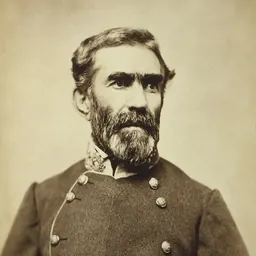

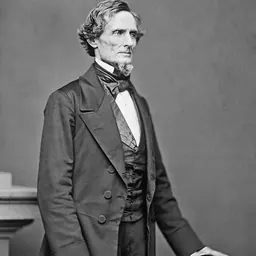
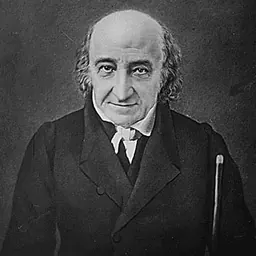

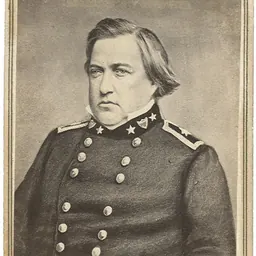
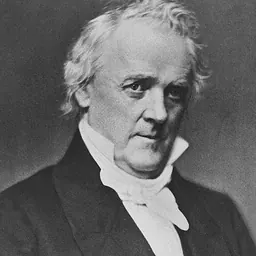
Related people
Same field, nearest in time
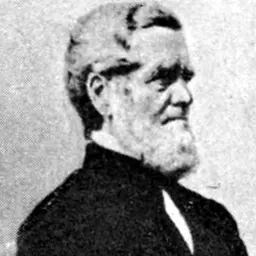

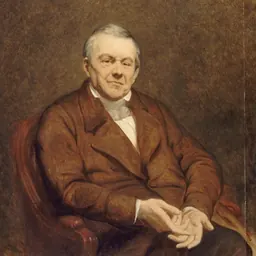


Contemporaries
People whose lives overlapped Richard Hawes's





Frequently asked questions
Who was Richard Hawes?
United States Representative; Second Confederate governor of Kentucky (1797-1877)
When was Richard Hawes born?
Richard Hawes was born on 6 February 1797 in Bowling Green.
When did Richard Hawes die?
Richard Hawes died on 25 May 1877 in Paris.
What was Richard Hawes's occupation?
Richard Hawes was a politician, lawyer and judge.
What nationality was Richard Hawes?
Richard Hawes was American.
Sources & further reading
Cite this page
APA: Biography.guide. (2026). Richard Hawes. https://biography.guide/richard-hawes/
MLA: "Richard Hawes." Biography.guide, https://biography.guide/richard-hawes/.
Chicago: "Richard Hawes." Biography.guide. https://biography.guide/richard-hawes/.
Data last updated: 2026-09-22 · Spot an error? Report a correction.
Portrait: Wikimedia Commons · author & licence
Page generated 2026-09-27 05:02 UTC