
About George Moses Horton
Lived 1797 – 1883 (aged 85–86). George Moses Horton was a poet.
George Moses Horton (c. 1798–after 1867), was an African-American poet from North Carolina who was enslaved until Union troops, carrying the Emancipation Proclamation, reached North Carolina. Horton is the first African-American author to be published in the United States. (Phillis Wheatley's poetry was published earlier, in the United Kingdom.) He is author of the first book of literature published in North Carolina and was known as the "Slave Poet".
Biography
Horton was born into slavery on William Horton's plantation in about 1798 in Northampton County, North Carolina. He was the sixth of ten children; the names of his parents are unknown.
When Horton was six years old (1797), William Horton relocated his family and the people he held in slavery to a farm in Chatham County, North Carolina. This farm is where Horton lived until the end of the Civil War. In 1814 William Horton gave the younger enslaved people as property to his relative James Horton.
Horton began an interest in learning to read and write by listening to the Bible read aloud and the hymns he heard. He learned to read and write based on what he was hearing during revival meetings (which were mainly the Bible), calling them his "reading lessons." Horton began compiling pieces based on the verses that he remembered from the King James Version of the Bible.
Around 1817, Horton began making the approximately 10 mile (16 km) trip north to Chapel Hill in order to sell fruits and farm products for his master. Here, Horton took his ability for composing to write love poems for the University of North Carolina students, selling them for 25 cents or more. The students took an interest in Horton due to his ability to compose verses and his desire for greater knowledge. The students also gave him many books: he tells us of "Murray's English Grammar and its accordant branches [(Murray's studies of other languages)]; Samuel Johnson's Dictionary in miniature, and also Walker's and [Thomas] Sheridan's , and parts of others. And other books of use they gave me, which I had no chance to peruse minutely, Milton's Paradise Lost, [James] Thompson's Seasons, parts of Homer's Iliad and Virgil's Ænead , Beauties of Shakespeare, Beauties of Byron, part of Plutarch, [Jedidiah] Morse's Geography, The Columbian Orator, [Richard] Snowden's History of the [American] Revolution, [Edward] Young's Night Thoughts, and some others".
Caroline Lee Hentz, author and playwright, also took an interest in Horton, teaching him to write and to improve his verses. Teaching Blacks to read and write was legal in North Carolina until 1836, when restrictions were imposed because of fears about slave revolts.
Hentz was highly influential in getting his poems
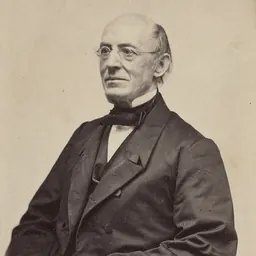
Twice Horton attempted to have others aid in his freedom, In 1844 he wrote a letter to abolitionist William Lloyd Garrison and in 1852 he wrote another letter to Horace Greeley, the editor of the New York Daily Tribune, and included a poem titled "A Poet's Feeble Petition" which expressed his longing for freedom. Neither letter reached their recipient due to the messenger Horton entrusted not passing them along and discarding them. he wrote Sunday school stories on behalf of friends who lived in the city.
Disappointed with the racial discrimination he encountered in Philadelphia, Horton did succeed in emigrating to Bexley, Liberia, This is the last known reference to him. While later death dates are found in some recent publications, his death location, date, and burial are unknown. He may have returned to Philadelphia. Horton was the first Southern Black to publish literature. Though he knew how to read, he published the book before he had learned how to write. As he recalled, "I fell to work in my head, and composed several undigested pieces." right After Horton's first poem was published in the Lancaster, Massachusetts, Gazette, his works were published in other newspapers, such as the Register in Raleigh, North Carolina, and Freedom's Journal in New York City. Horton's poetic style was typical of contemporary European poetry and was similar to poems written by white contemporaries, likely a reflection of his reading and his work for commission.
His first collection, The Hope of Liberty (1829), was focused on the issues of slavery and bondage. He did not gain enough in sales from that book to purchase his freedom; in his second book, he mentions slavery only twice. The change in theme is also likely due to the more restrictive climate in the South in the years leading up to the Civil War. and advertisements for the book were printed in a Hillsborough newspaper from 1852 into 1853. Horton was given direct credit for some poems published in newspapers in 1857 and 1858. A short announcement/review of his last book, Naked Genius appeared in the Raleigh Daily Progress on 31 August 1865.
His later works, especially those written after his emancipation, expressed rural and pastoral themes. Like other early Black American writers such as Jupiter Hammon and Phillis Wheatley, Horton was deeply influenced by the Bible and African-American religion.
The earliest known critical commentary on Horton's writing is from 1909 by University of North Carolina professor Collier Cobb. He dismissed Horton's antislavery themes, claiming without evidence: "George never really cared for more liberty than he had, but was fond of playing to the grandstand."
In 2017 the only known essay by Horton, "Individual Influence", was published for the first time.
Poetry collections
The Hope of Liberty (1829) This was Horton's first true attempt to buy his freedom. Most of the poems in the collection were themed around antislavery either indirect or directly. One was a thank you poem towards his publisher. Three previously published poems of were reworked and put into other poems in the collection. The editorial "Explanation" that opens The Hope of Freedom speaks of Horton's desire to emigrate to the new colony of Liberia; the collection was published so as to encourage donations.
The Museum (never published) Professor William Green of UNC-Chapel Hill, was editing the manuscript but the collection as a whole was never published. Many poems instead were published elsewhere or in his following collections.
Poetical Works (1845)
Published in Raleigh, North Carolina, this collection consisted of 45 poems, none directly about being enslaved or slavery in general. The reason for this was Horton expressed he was no longer inspired to write about slavery. Also due to North Carolina being more actively pro-slavery nearing the Civil War, Horton believed a collection similar to his first would not be published.
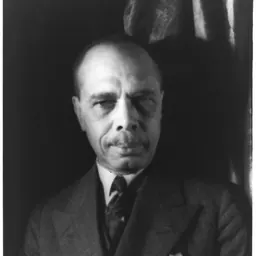
Legacy Building towards his remembrance, biographies began to appear. The first was by Kemp Plummer Battle in May 1888, at that time President of the University of North Carolina. J. Donald Cameron noted Horton among notable North Carolina poets in 1890, in a speech that was reported in several newspapers. Battle reprised his thoughts on Horton in his history of the university, published in 1907. In 1909 UNC professor Collier Cobb wrote a paper on Horton, which he published in 1925 at his own expense. Horton was remembered at the University of North Carolina on the occasion of the visit of James Weldon Johnson. The centennial of his first book was noted in the New York Age after it was noted in Greensboro.
In 1927 Winston-Salem, North Carolina, opened a segregated library for Blacks in a YWCA building; it was named for George Moses Horton. In the 1930s, A Horton School, for Black children, opened in Pittsboro, North Carolina. It later became Horton High School. After integration in the 1970s, it became Horton Middle School. In June 1978, North Carolina Governor Jim Hunt declared June 28 “George Moses Horton Day.” (See photo) In 1996 Horton was inducted into the North Carolina Literary Hall of Fame. In 2015 author/illustrator Don Tate published Poet: The Remarkable Story of George Moses Horton, an illustrated biography for children. The Wilson Library at the University of North Carolina hosted the national launch of the book on September 3, 2015.
Published works
"Love Poems For My Oppressors," a 2026 song on the album "Midwestern Longing" by the band Pony Keg.
Don’t just read it —
keep it.
Full-length biographies made to live with: read them, listen on the way to work, watch them tonight.
- E-book
- Audio
- Video
Instant download · yours to keep · every purchase keeps this site free
Important facts
People in George Moses Horton's life
Named in this biography and alive at the same time


Related people
Same field, nearest in time

Contemporaries
People whose lives overlapped George Moses Horton's





Frequently asked questions
Who was George Moses Horton?
American writer
When was George Moses Horton born?
George Moses Horton was born in 1797 in Northampton County.
When did George Moses Horton die?
George Moses Horton died in 1883.
What was George Moses Horton's occupation?
George Moses Horton was a poet.
Sources & further reading
· Wikipedia: George Moses Horton
· DBpedia: George Moses Horton
Cite this page
APA: Biography.guide. (2026). George Moses Horton. https://biography.guide/george-moses-horton/
MLA: "George Moses Horton." Biography.guide, https://biography.guide/george-moses-horton/.
Chicago: "George Moses Horton." Biography.guide. https://biography.guide/george-moses-horton/.
Data last updated: 2026-09-20 · Spot an error? Report a correction.
Page generated 2026-09-27 05:25 UTC