
About George Forbes, 3rd Earl of Granard
Lived 1685 – 1765 (aged 79). George Forbes, 3rd Earl of Granard was a diplomat and politician.
George Forbes, 3rd Earl of Granard, (21 October 1685 – 19 June 1765 ) was a Royal Navy officer, diplomat, politician, peer and colonial administrator. He was at the Capture of Gibraltar. He took a very valuable prize ship and was briefly a Governor of the Leeward Islands. He took a role in politics, helping to end Robert Walpole's career, but eventually retired.
Early life
Forbes was the son of Arthur Forbes, 2nd Earl of Granard and Mary, daughter of Sir George Rawdon, 1st Baronet, of Moira, County Down, was born in Ireland on 21 October 1685. He was for a time educated in Drogheda Grammar School.
His grandfather, Arthur Forbes, first earl, died when young Forbes was about twelve years of age. Coming to London with his grandmother in 1702, he introduced himself to Admiral George Churchill, then first of the council to the Lord High Admiral, Prince George of Denmark, and sought to enter the navy. Forbes did duty with his troop until appointed to command the Sunderland of 60 guns, part of the western squadron under Lord Dursley, afterwards third Earl Berkeley.
In 1708, Forbes became exempt from his troop and a brother of the Trinity House. In May 1709, he left his ship to do duty with his troop at Windsor, where "his sprightliness of genius and politeness of manner recommended him to Queen Anne", at whose desire he was appointed to the Grafton of 70 guns. Forbes, who in the meantime had married, sailed for the Mediterranean with Sir John Norris in 1710. Charles III of Spain (afterwards the emperor Charles VI) then had his court at Barcelona, and Norris stationed some ships off the coast of Catalonia, the command of which was assigned to Forbes, who was directed to co-operate as much as possible with the Spanish court, and was permitted to reside on shore. Two Genoese ships of war, of 50 and 70 guns respectively, were at Cádiz taking in specie, alleged to be for the use of the French faction in Italy.
The Spanish king proposed that Forbes should put out to sea and seize the vessels on their return voyage. Forbes explained that England was at peace with the Genoese republic; but being pressed by the king, and the queen offering him her sign-manual for his indemnification, he started with his own ship, the Grafton of 70 guns, and the Chatham of 50 guns, Captain Nicholas Haddock, took the Genoese ships into Port Mahon, discharged the officers and crews to shore, landed the specie, amounting to 1,600,000 dollars, and returned with the ships to Barcelona. Charles III, greatly pleased, made Forbes a grant of the duty payable at the mint for coinage of the amount, and urged him to go back to Menorca and fetch the specie.
In January 1711, the Duke of Argyll was appointed to the command in Spain. He set out leaving Forbes, who was to serve with him, in London to solicit supplies for the army, which was short of money. Forbes obtained an order for eight hundred thousand dollars of the Genoese treasure, and set off, riding through the Netherlands, Germany, the Tyrol, and Italy to Genoa, where he took ship, with such despatch that he reached Barcelona in twenty-one days from England. During that year, he served with the army in Spain, at the head of three hundred cavalrymen drafted from home, whom Argyll purposed to form into a new regiment of horse under Forbes's command. The regiment was never completed, as peace negotiations were too far advanced. A return of the army in Spain, dated 19 February 1712, is in Treasury Papers, cxliv. 23, and is the only paper of any interest entered under Forbes's name in the Calendars of State Papers for the period.
In 1712, Forbes was appointed to the Greenwich of 50 guns, and became cornet and major in his troop of horse-guards. After the peace of Utrecht he commanded a small squadron of vessels in the Mediterranean, and took up his residence with his wife and child in Menorca, whence he returned home in 1716. The year after he was appointed lieutenant-governor of the castle of St. Phillipa, Menorca, and acted as governor of the island during the brief hostilities with Spain in 1718. He introduced better order on the island, and abolished the trials for witchcraft, which had been a source of much misery.
On his return home in 1719, Forbes, at the desire of George I, proceeded to Vienna, to carry into effect a long-cherished project of the emperor Charles VI, of forming a naval power either in Naples and Sicily or on the Adriatic, for which purpose Forbes received the rank of vice-admiral in the imperial service with a salary of twelve thousand florins a year, and unlimited powers of organisation. But the imperialist ministers looked coldly on the scheme, and adopted a policy of tacit obstruction, which at the end of two years led Forbes to resign his appointment in a private audience with the emperor, who presented him with a valuable diamond ring in recognition of his services. Forbes joined the king at Hanover, and afterwards returned home. He negotiated and concluded a treaty – the first entered into by the court of St. Petersburg with any European state – for the better regulation of the customs, and for favouring the introduction of British woollen goods. After his return to England in 1734 the czarina, with whom he was a favourite, offered him supreme command of the imperial Russian navy, which he declined. He obtained his flag rank and succeeded to the title of Earl of Granard on the death of his father the same year. When the popular outcry against Spain arose in 1739, he was offered the command of "a stout squadron" for the West Indies, but declined, believing the ministry not to be in earnest; nevertheless when his senior, Admiral Edward Vernon, who had been laid aside, was brought back over his head and sent out, Granard considered himself superseded, and refused to serve again. His name was retained on the flag list, and half-pay was issued for him for some time, but on 31 December 1742 his resignation was finally accepted. By Mary, who died 4 October 1755, Forbes had three children:
George Forbes, 4th Earl of Granard (1710–1769), who saw a good deal of army service in the Mediterranean in his earlier years, raised the old 76th foot, which was disbanded in 1763, and died a major-general and colonel of the 29th Foot in 1769; he married his cousin Letitia Davys, daughter of Arthur Davys, in 1736.
Descendants Through his eldest son, he was a grandfather of George Forbes, 5th Earl of Granard, a Member of Parliament for St Johnstown from 1762 to 1768 who married twice and had issue.
Through his second son, he was a grandfather to twin girls: Katherine Forbes, who married William Wellesley-Pole, 3rd Earl of Mornington, and Maria Forbes, married John Villiers, 3rd Earl of Clarendon.
Legacy Forbes' Battery, a series of artillery batteries on Gibraltar, were named for Forbes and Forbes' Quarry is named after the battery. The Neanderthal skull Gibraltar 1 was found in the quarry. After William Green became Gibraltar's Senior Engineer in 1761, he had the refortified Advance Guard Room renamed Forbes's Barrier.
Coat of arms
Don’t just read it —
keep it.
Full-length biographies made to live with: read them, listen on the way to work, watch them tonight.
- E-book
- Audio
- Video
Instant download · yours to keep · every purchase keeps this site free
Important facts
Family & relationships
People in George Forbes, 3rd Earl of Granard's life
Named in this biography and alive at the same time

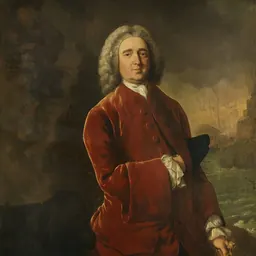
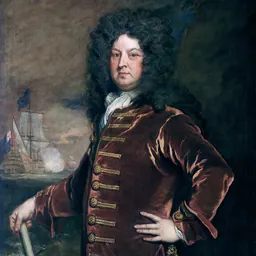
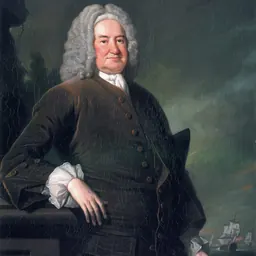


Related people
Same field, nearest in time
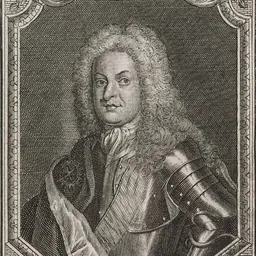



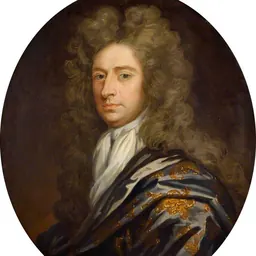
Contemporaries
People whose lives overlapped George Forbes, 3rd Earl of Granard's
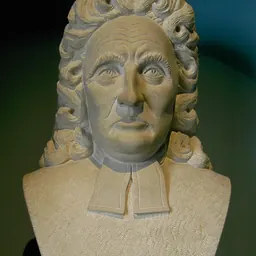



Frequently asked questions
Who was George Forbes, 3rd Earl of Granard?
Royal Navy admiral
When was George Forbes, 3rd Earl of Granard born?
George Forbes, 3rd Earl of Granard was born on 21 October 1685 in Ireland.
When did George Forbes, 3rd Earl of Granard die?
George Forbes, 3rd Earl of Granard died on 19 June 1765 in Ireland.
What was George Forbes, 3rd Earl of Granard's occupation?
George Forbes, 3rd Earl of Granard was a diplomat and politician.
Sources & further reading
· Wikipedia: George Forbes, 3rd Earl of Granard
· DBpedia: George Forbes, 3rd Earl of Granard
Cite this page
APA: Biography.guide. (2026). George Forbes, 3rd Earl of Granard. https://biography.guide/george-forbes-3rd-earl-of-granard/
MLA: "George Forbes, 3rd Earl of Granard." Biography.guide, https://biography.guide/george-forbes-3rd-earl-of-granard/.
Chicago: "George Forbes, 3rd Earl of Granard." Biography.guide. https://biography.guide/george-forbes-3rd-earl-of-granard/.
Data last updated: 2026-09-20 · Spot an error? Report a correction.
Page generated 2026-09-27 05:27 UTC