
About William Green
Lived 1725 – 1811 (aged 85). William Green was a British engineer and military officer.
General Sir William Green, 1st Baronet, (4 April 1725 – 10 January 1811) was a British Army officer, of Marass, Kent. He served as chief engineer at the Great Siege of Gibraltar.
After receiving a private education in Aberdeen, Scotland and a military education at the Royal Military Academy in Woolwich, England, he was appointed as a practitioner engineer in 1743. Green served on the European continent until 1752, after which he was in Canada. There, he continued to advance through both the ordinary military and engineering ranks.
Following his return to England, Green was named senior engineer for Gibraltar about 1761, and the next year promoted to lieutenant colonel. He was promoted to chief engineer for Gibraltar in 1770, and designed and executed a number of military works on the Rock. In 1772, his idea of a regiment of military artificers, to replace the civilian mechanics who had formerly constructed military works, came to fruition in the form of the Soldier Artificer Company, the predecessor of the Corps of Royal Sappers and Miners. Their works included the King's Bastion, which Green designed. Promoted to colonel in 1777, he served as chief engineer throughout the Great Siege of Gibraltar (1779–1783). During the siege, he was promoted to brigadier general, then major general. He returned to England in 1783; three years later a baronetcy was created for him. He was appointed chief engineer of Great Britain in 1786. His promotions included that to lieutenant general in 1793 and full general in 1798. Following his retirement in 1802, he settled in Plumstead, Kent.
Family William Green was born on 4 April 1725, the eldest son of Fairbridge Green and his wife Helen Smith. His mother was the sister of Adam Smith (1723–1790), author of The Theory of Moral Sentiments and An Inquiry into the Nature and Causes of the Wealth of Nations. Green received his education from his mother's sisters at Aberdeen, Scotland. He married Miriam Watson, daughter of Lieutenant Colonel Justly Watson of the Royal Engineers, on 26 February 1754. His wife was also the granddaughter of Colonel Jonas Watson (1663–1741), who led the Royal Artillery at the Siege of Carthagena, where he died.
Prior to 1772, military works in Gibraltar were constructed by civilians from England and the European continent. Those civil mechanics were free to leave the Rock of Gibraltar whenever they decided to do so. Their disorderly behaviour was a source of frustration to the military authorities. The situation induced Lieutenant Colonel William Green to suggest the creation of a company of military artificers, a regiment of trained artisans. On 6 March 1772, a warrant was issued for the creation of a 68-man regiment, the Soldier Artificer Company. It was the predecessor of the Corps of Royal Sappers and Miners. The Soldier Artificer Company built King's Bastion. Green designed the fortification, along with other eighteenth century bastions along the coast.
In 1777, Green was promoted to colonel, after which he was sent by Governor George Augustus Eliott to England to request additional funds to further improve the military works at Gibraltar. His meetings included several with the king and he returned to Gibraltar the following year, authorised to proceed with the new works. He was promoted to director, an engineer rank, on 18 December 1778. During the Great Siege of Gibraltar (1779–1783), Green served in a prominent role as the chief engineer of Gibraltar. In 1781, during the siege, he was promoted to brigadier general. However, the position of his home left his family exposed to enemy fire. After he moved his family into a shelter, his wife Miriam contracted an illness from which she never recovered. She died on 21 June 1782.
On 18 July 1781, the Queen's Battery at Willis's Plateau sustained severe damage from enemy fire. Overnight, Green had it completely rebuilt. In late 1781, he was promoted to major general. The following year, he constructed the Great Siege Tunnels, including St. George's Hall. On 13 September 1782, with Gibraltar under attack from both land and naval forces, his kilns maintained a continuous supply of red hot shot. Green rebuilt the Orange Bastion while under persistent attack. The siege ended in February 1783. He left for England in June of that year, after serving in Gibraltar for twenty-two years, most of it as chief engineer, including throughout the Great Siege.
Legacy
General Sir William Green died on 10 January 1811 at Bifrons, near Canterbury, Kent, although his date of death has also been given as February 1811. He was interred at Plumstead. In addition to an inscribed gravestone in the cemetery, there is also a commemorative plaque to Green in Plumstead Church.
He is also one of the officers depicted in the 1784 painting (pictured at right) by George Carter entitled The Siege of Gibraltar, 1782. The portrait is held by the National Portrait Gallery.
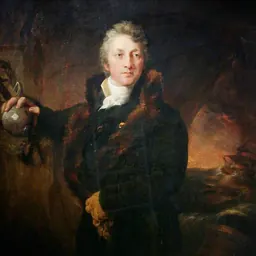
A portrait of Green, oil on canvas, that was executed circa 1785, is held by the Convent, the residence of the Governor of Gibraltar. Part of the Government Art Collection, it is entitled Major-General Sir William Green, Royal Engineers (Chief Engineer during the Siege of Gibraltar 1779–83).
Green's Lodge Battery was named after General Sir William Green, then Lieutenant Colonel Green. The artillery battery was constructed in 1776 at the North Face of the Rock of Gibraltar at the northern end of the Upper Rock Nature Reserve, above Farringdon's Battery. Also referred to as the Superior Battery, it saw action during the Great Siege of Gibraltar. In addition, Green's Lodge Nature Trail extends off Signal Station Road in northern Gibraltar.
Don’t just read it —
keep it.
Full-length biographies made to live with: read them, listen on the way to work, watch them tonight.
- E-book
- Audio
- Video
Instant download · yours to keep · every purchase keeps this site free
Important facts
People in William Green's life
Named in this biography and alive at the same time

Related people
Same field, nearest in time


Contemporaries
People whose lives overlapped William Green's






Frequently asked questions
Who was William Green?
British Army general; (1725-1811)
When was William Green born?
William Green was born on 4 April 1725.
When did William Green die?
William Green died on 10 January 1811 in Canterbury.
What was William Green's occupation?
William Green was an engineer and military officer.
What nationality was William Green?
William Green was British.
Sources & further reading
· DBpedia: Sir William Green, 1st Baronet
Cite this page
APA: Biography.guide. (2026). William Green. https://biography.guide/william-green-engineer/
MLA: "William Green." Biography.guide, https://biography.guide/william-green-engineer/.
Chicago: "William Green." Biography.guide. https://biography.guide/william-green-engineer/.
Data last updated: 2026-09-25 · Spot an error? Report a correction.
Page generated 2026-09-27 05:11 UTC