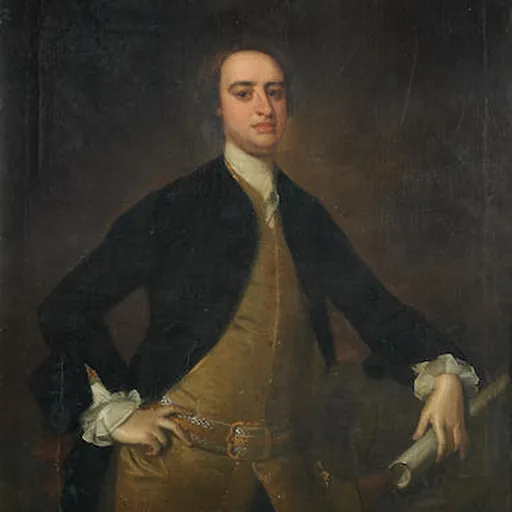
About Justly Watson
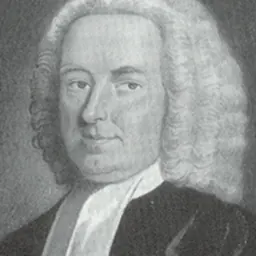
Lived 1710 – 1757 (aged 46–47). Justly Watson was a British military engineer and military officer.
Justly Watson (–1757) was an English army officer and military engineer in the British Army, rising to the rank of lieutenant-colonel in the Royal Engineers. He served beside his father Jonas Watson, an officer in the Royal Artillery, at the Siege of Gibraltar in 1727. He joined the Royal Engineers in 1732, served at Carthagena, and in the futile attempt on Cuba, in 1741, and the attack on Panama in 1742. He was stationed at Jamaica from 1742 to 1744, surveyed Darien and Florida in 1743, and served in the descent on Brittany in 1746. He was appointed chief engineer in the Medway Division in 1748, and reported on the West African stations from 1755 to 1756. He was stationed in Nova Scotia and Newfoundland in 1757, and died there, probably from coffee poisoned by a black female domestic.
Origins
Justly Watson was the son of Colonel Jonas Watson, by his wife Miriam ( 1686, died 1754), daughter of John and Anne West. Jonas Watson (1663–1741), served over fifty years in the Royal Artillery, and after distinguishing himself, first in the campaigns of William III in Ireland and in Flanders, and then in those of Marlborough, succeeded to the command of the artillery of the train. He was promoted lieutenant-colonel on 17 March 1727, and commanded the artillery at the Siege of Gibraltar in that year. He was employed in the command of the artillery on several expeditions until he was killed at the Siege of Carthagena on 30 March 1741.
Life Justly Watson was born about 1710. He entered the ordnance train as a cadet gunner about 1726, and served during the Siege of Gibraltar in 1727 under his father, who commanded the ordnance train there. On 13 June 1732 he received a warrant as practitioner-engineer, and was promoted to be sub-engineer on 1 November 1734. He received a commission as ensign in Harrison's Foot on 3 February 1740, and in June was appointed to the ordnance train of the conjoint expedition, under Lord Cathcart and Sir Chaloner Ogle, to join Vice-admiral Vernon in the West Indies. He spent some months in the Isle of Wight in instructing the men of the train. He sailed on 26 October and arrived at Jamaica on 9 January 1741. This was recorded under date, "Head-quarters, La Quinta, April 10th, 1741", and named him "Lieutenant in Major-General Harrison's Regiment of Foot".
Jamaica, Cuba, Florida
Watson returned to Jamaica on 19 May 1741. He was promoted to be engineer-extraordinary on 11 August, when he was serving in the expedition to Cuba. He returned to Jamaica in November. In March 1742 he sailed from Jamaica in the abortive expedition, under Vernon and Wentworth, to attack Panama, landing at Portobello. Watson made a plan of the town, harbour, and fortifications of Portobello, which is in the King's Library in the British Museum. On his return to Jamaica, and the recall of the expedition to England in September, he took charge of the works at Jamaica as chief engineer there, and his plans of Charles Fort and the Port Royal peninsula are in the archives of the war office.
L'Orient On 30 April 1746 Watson joined the conjoint expedition under Admiral Richard Lestock and Lieutenant-general St. Clair for North America.
The fleet left Plymouth on 14 September 1746, and five days later the troops disembarked at Quimperley Bay, 10 mi (16 km) from L'Orient, and were marched in two columns to the point of attack. St. Clair sent Thomas Armstrong and Justly Watson to reconnoitre the town, and they reported that the place was only defended by a thin loopholed wall without any ditch. They added that they had chosen a site for a battery, from whence they could either make a breach or burn the town in twenty-four hours. In the early morning of the 22nd, St. Clair made his own reconnaissance, accompanied by Armstrong and Watson, who repeated their earlier views. A council of war was held on board the Princessa, the flagship of Admiral Lestock, at which the two engineers and Captain Chalmers, of the artillery, were present. These three officers being of one mind, it was decided to make the attempt, and the orders were given. The result proved that they were in error in their views. Without a proper strength of artillery, and with insufficient ammunition and stores, they fired away almost all their shot without causing any real damage to the works. Watson was also present at the attack on Quiberon and the capture of forts Houat and Heydie, and returned to England with the expedition.
North America, West Africa
On 17 December 1754 he was promoted to be director of engineers, and was sent to Annapolis Royal as chief engineer of Nova Scotia and of the settlements in Newfoundland. His did not stay long in North America, as he was specially selected for service on the west coast of Africa, where he arrived before December 1755. Watson visited the military stations along the Gold Coast at Whydah, James's Island, Accra, Prampram, Tantumquerry, Winnebah, Annamaboe, Secondee, Dixcove, and Cape Coast Castle.
Personal life Watson married, on 15 November 1733, Susan Curtis, at Pagham, Sussex.
Don’t just read it —
keep it.
Full-length biographies made to live with: read them, listen on the way to work, watch them tonight.
- E-book
- Audio
- Video
Instant download · yours to keep · every purchase keeps this site free
Important facts
People in Justly Watson's life
Named in this biography and alive at the same time

Related people
Same field, nearest in time



Contemporaries
People whose lives overlapped Justly Watson's



Frequently asked questions
Who was Justly Watson?
British military engineer
When was Justly Watson born?
Justly Watson was born in 1710.
When did Justly Watson die?
Justly Watson died in 1757.
What was Justly Watson's occupation?
Justly Watson was a military engineer and military officer.
What nationality was Justly Watson?
Justly Watson was British.
Sources & further reading
Cite this page
APA: Biography.guide. (2026). Justly Watson. https://biography.guide/justly-watson/
MLA: "Justly Watson." Biography.guide, https://biography.guide/justly-watson/.
Chicago: "Justly Watson." Biography.guide. https://biography.guide/justly-watson/.
Data last updated: 2026-09-20 · Spot an error? Report a correction.
Page generated 2026-09-27 05:10 UTC