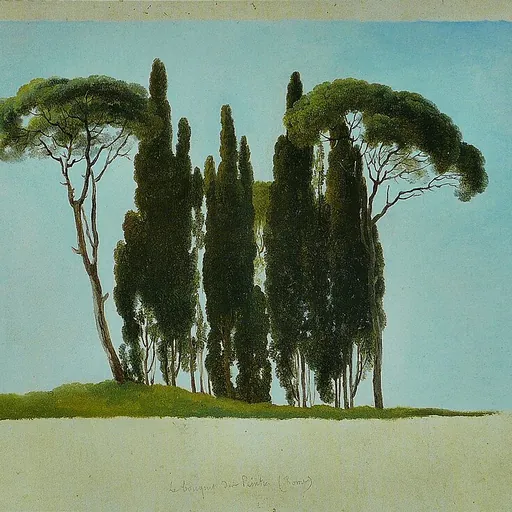
About George Augustus Wallis
Lived 1770 – 1847 (aged 77). George Augustus Wallis was a British painter.
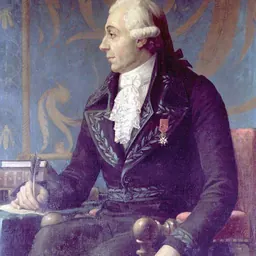
George Augustus Wallis, Self Portrait, c. 1805, oil on canvas, 57.5 x 37.6 cm., Sold Heidelberg, Winterburg-Kunst, 11 April 1997, lot 607.
George Augustus Wallis (Merton, Surrey, 1761 - Florence, 1847) was an English painter, active in Italy.
Wallis began his career as a protégé of George Greville, 2nd Earl of Warwick, a serious patron of the arts who supported the artist financially from at least 1787. It has been suggested that a painting now in Salisbury House, Des Moines, Iowa, acquired from Warwick Castle in 1925, may be an early self-portrait of the artist. In 1788 Wallis began a tour of Italy, a trip likely to have been funded by the Earl, and visited Rome, Naples and Sicily.
He trained in the environment of neoclassical German artists, first in Naples, where he met Philipp Hackert, then in Rome, where around 1794 he frequented Asmus Jacob Carstens, Gottlieb Schick
He also operated as an art dealer during his time in Italy, and later in Spain, during the Peninsular War, where he frequently worked for British clients. In fact, he also worked for the Scottish dealer William Buchanan, acquiring, amongst other works, Velázquez’s celebrated Rokeby Venus.
He died in Florence, in 1847.
Style
Initially his style was neoclassical with German influences. The work, The castle of Heidelberg (1812, private collection) is strongly influenced by the German canons and makes Wallis a pioneer of the romantic landscape. Later he developed his own style, characterized by a particular treatment of light. Examples of this are the numerous drawings and watercolours, many of which are undated, preserved in the Thorvaldsen Museum, in Copenhagen, as well as several letters, due to the close relationship between the English painter and the Danish sculptor.
From 1817 Wallis exhibited continuously at the Academy of Florence, his city of choice (from which he moved away only for a period between 1820 and 1829), imposing his particular kind of view where the influences of the protoromanticism of Salvator Rosa were grafted on the canonical schemes proposed by Nicolas Poussin, Claude Lorrain and Gaspard Dughet.
His oil sketches show him to have been one of the more important figures in the development of painting directly from nature.
He had a son, Trajan, also a painter, who in 1819 executed "The Martyrdom of Santa Cristina", currently in Florence, in the Church of Santi Vito e Modesto in Bellosguardo.
Collections Wallis' work is held in the collections of the British Museum
Don’t just read it —
keep it.
Full-length biographies made to live with: read them, listen on the way to work, watch them tonight.
- E-book
- Audio
- Video
Instant download · yours to keep · every purchase keeps this site free
Important facts
People in George Augustus Wallis's life
Named in this biography and alive at the same time


Related people
Same field, nearest in time



Contemporaries
People whose lives overlapped George Augustus Wallis's




Frequently asked questions
Who was George Augustus Wallis?
British painter (1770-1847)
When was George Augustus Wallis born?
George Augustus Wallis was born on 15 February 1770 in London Borough of Merton.
When did George Augustus Wallis die?
George Augustus Wallis died on 15 March 1847 in Florence.
What was George Augustus Wallis's occupation?
George Augustus Wallis was a painter.
What nationality was George Augustus Wallis?
George Augustus Wallis was British.
Sources & further reading
· Wikipedia: George Augustus Wallis
· DBpedia: George Augustus Wallis
Cite this page
APA: Biography.guide. (2026). George Augustus Wallis. https://biography.guide/george-augustus-wallis/
MLA: "George Augustus Wallis." Biography.guide, https://biography.guide/george-augustus-wallis/.
Chicago: "George Augustus Wallis." Biography.guide. https://biography.guide/george-augustus-wallis/.
Data last updated: 2026-09-23 · Spot an error? Report a correction.
Portrait: Wikimedia Commons · author & licence
Page generated 2026-09-27 05:07 UTC