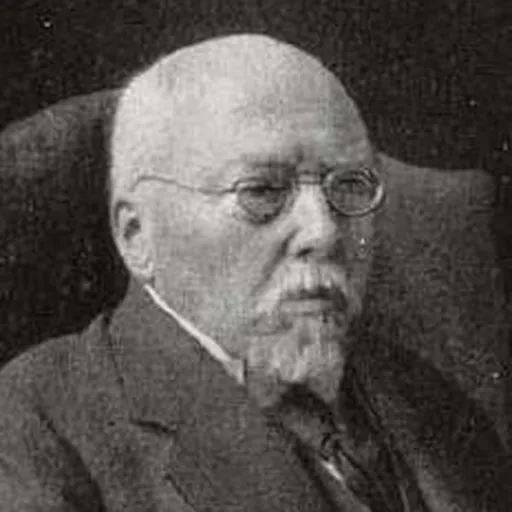
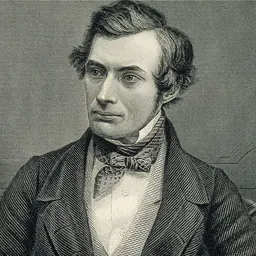
Georg von Hertling
German chancellor
About Georg von Hertling
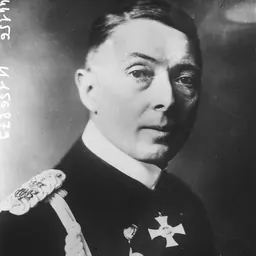
Lived 1843 – 1919 (aged 75). Georg von Hertling was a German politician, professor of philosophy, head of government, author, philosopher and minister.
Georg Friedrich Karl Freiherr von Hertling, from 1914 Count von Hertling, (31 August 1843 – 4 January 1919) was a German politician of the Catholic Centre Party. He was foreign minister and minister president of Bavaria, then imperial chancellor of the German Reich and minister president of Prussia from 1 November 1917 to 30 September 1918. He was the first party politician to hold the two offices; all of his predecessors were career civil servants or military men.
Hertling's Catholicism played an important role in both his academic and political life. He belonged to the conservative wing of the Centre Party and resisted moves towards making the government dependent on the will of parliament rather than on the emperor, a stance that helped bring down his government in the final months of World War I.
Education and non-political activities Hertling came from a Catholic family of civil servants from the Grand Duchy of Hesse. He was born in Darmstadt, the son of the Hessian court councilor Jakob Freiherr von Hertling and his wife Antonie (née von Guaita).
The religious education he received through his mother made him consider becoming a priest. He attended the Ludwig-Georgs-Gymnasium where he was a student under a principal who preserved the institute's humanistic character against the emerging natural sciences. He then studied philosophy at the Ludwig-Maximilians-Universität München, the University of Münster, and the Friedrich Wilhelm University of Berlin, where he received his doctorate in 1864.
He qualified at the University of Bonn in 1867 to teach at the university level, but because he was a professing Catholic it was not until 1880 that he was appointed to an associate professorship. The delay was due to the Kulturkampf (culture struggle) taking place in Prussia between the government under Otto von Bismarck and the Catholic Church, primarily over issues of clerical control of education and ecclesiastical appointments. The experience contributed to Hertling taking a leading role in the 1876 founding of the Görres Society, a learned association for the cultivation of science in Catholic Germany. He remained its president until his death in 1919. Hertling received a full professorship at the Ludwig-Maximilians-Universität München in 1882. Before that he published books on Aristotle in 1871 and Albertus Magnus in 1880.
Hertling was one of the pioneers of the movement for Catholic student fraternities. He joined the Catholic German Student Fraternity Aenania in Munich in 1862 and later the Catholic Student Association Arminia in Bonn. His speech at the 1863 Catholic Congress in Frankfurt, in which he presented religion, science, and friendship as the guiding principles of the Catholic fraternity student, is considered the catalyst for the founding of the Würzburg Federation, an association of Catholic student groups that still exists today as the .
Hertling was president of the German Society for Christian Art from its founding in 1893 until 1911.
He was married to Anna Freiin von Biegeleben (1845–1919), from an influential family of civil servants. The Hertlings had one son and five daughters, one of whom died young. Hertling was a great-nephew of the Romantic writer Bettina von Arnim and the poet Clemens Brentano. The actress Gila von Weitershausen (born 1944) is a great-granddaughter.
Member of parliament and Bavarian minister president From 1875 to 1890 and 1896 to 1912, Hertling was a member of the German Reichstag as a representative of the Catholic Centre Party. He devoted himself first to sociopolitical issues and later primarily to foreign and financial policy. From 1909 to 1912 he was chairman of the centre's parliamentary group, advocating the reconciliation of German Catholicism with the predominantly Protestant and Prussian-influenced national state. In 1891 Prince Regent Luitpold of Bavaria made him a , a life member of the House of Councillors , the upper house of the Bavarian Landtag, or state parliament.
On 9 February 1912 the prince regent appointed Hertling chairman of the Bavarian Ministry of State and Bavarian foreign minister, i.e., as minister president, at which time the former regent, then King Ludwig III, also made him a count. take over the offices of Reich chancellor and minister president of Prussia on 1 November 1917. He was the first party politician to hold the combined posts; all of his predecessors had been career civil servants or military men. It was initially planned to have Michaelis continue in office as Prussian minister president, but he did not have the necessary votes in parliament. In Bavaria Hertling was succeeded in office by the independent Otto von Dandl.
German chancellor and Prussian minister president
With the left-wing liberal Friedrich von Payer of the Progressive People's Party as vice chancellor and Robert Friedberg of the National Liberal Party as deputy Prussian prime minister, two veteran parliamentarians were included in the cabinets as liaison men to the parties. The Social Democrats remained on the outside in order not to complicate the formation of a government. Friedrich von Payer was responsible for liaising between the SPD and the government.
During Hertling's term in office, some important steps were taken toward parliamentarization and democratization, such as an envisaged electoral reform with elements of proportional representation. Overall, however, the SPD was dissatisfied with him because the influence of the Supreme Army Command remained strong and reforms were slow. By the end of September 1918, Hertling had lost the confidence of the SPD, which wanted to enter the government only under a change of policy. The governments of Bavaria and Baden also thought that Hertling was not the right man to develop a consistent peace policy. The Progressive People's Party thought the same but did not want to endanger the coalition.
In view of the deteriorating military situation, the parties of the Inter-Party Committee, including Hertling's Centre Party, called for negotiations for a separate peace with the Allies that would not include annexations, as well as for parliamentarization of the Reich. Through a constitutional amendment, the government was to be made dependent on the confidence of the Reichstag. Hertling was determined to resist these demands. On 26 September 1918, however, department heads in the General Staff informed Paul von Hintze, state secretary in the Foreign Ministry, of the hopeless military situation, bypassing Quartermaster General Erich Ludendorff, but also failing to involve Reich Chancellor Hertling. Hintze worked out a concept for a revolution from above. When the Supreme Army Command also demanded a broader base for the government on 28 September – probably in order to place the responsibility for the defeat on the democratic parties – Hertling had no way out. The end of his chancellorship was sealed on 29 September at the army's general headquarters in Spa, Belgium. Hertling was succeeded on 3 October by Prince Maximilian of Baden, the preferred candidate of his vice chancellor, Payer.
Georg von Hertling died three months later in his adopted home of Ruhpolding, Bavaria, where he was buried.
Orders and decorations Knight of the Order of Merit of the Bavarian Crown, 1898 Grand Cross of the Royal Merit Order of Saint Michael, 1912 Knight of the Royal Order of Saint Hubert King Ludwig Cross Grand Cross of the Order of Berthold the First, with Golden Collar Grand Cross of the Austrian Imperial Order of Leopold, 1913; in Diamonds, 1914 Grand Cross of the Royal Hungarian Order of Saint Stephen, 1917 Holy See: Grand Cross of the Order of Pope Pius IX Grand Cross of the Order of Saint Gregory the Great Grand Cross of the Order of the Cross of Liberty
Don’t just read it —
keep it.
Full-length biographies made to live with: read them, listen on the way to work, watch them tonight.
- E-book
- Audio
- Video
Instant download · yours to keep · every purchase keeps this site free
Important facts
People in Georg von Hertling's life
Named in this biography and alive at the same time

Related people
Same field, nearest in time



Contemporaries
People whose lives overlapped Georg von Hertling's

Frequently asked questions
Who was Georg von Hertling?
German chancellor (1843–1919)
When was Georg von Hertling born?
Georg von Hertling was born on 31 August 1843 in Darmstadt.
When did Georg von Hertling die?
Georg von Hertling died on 4 January 1919 in Ruhpolding.
What was Georg von Hertling's occupation?
Georg von Hertling was a politician, professor of philosophy, head of government, author, philosopher and minister.
What nationality was Georg von Hertling?
Georg von Hertling was German.
Sources & further reading
· Wikipedia: Georg von Hertling
Cite this page
APA: Biography.guide. (2026). Georg von Hertling. https://biography.guide/georg-von-hertling/
MLA: "Georg von Hertling." Biography.guide, https://biography.guide/georg-von-hertling/.
Chicago: "Georg von Hertling." Biography.guide. https://biography.guide/georg-von-hertling/.
Data last updated: 2026-09-23 · Spot an error? Report a correction.
Portrait: Wikimedia Commons · author & licence
Page generated 2026-09-27 05:08 UTC