
Georg Schreiber
German politician, church historian and theologian
About Georg Schreiber
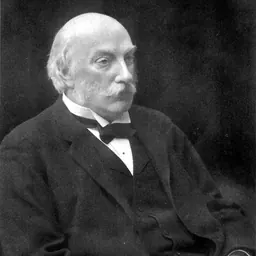
Lived 1882 – 1963 (aged 81). Georg Schreiber was a German politician, church historian, university teacher, prelate, editor and priest.
Georg Schreiber (5 January 1882 – 24 February 1963) was a German politician (Catholic Centre party) and church historian. He spent fifteen years as a student which, even by the standards of Wilhelmine Germany, was exceptional. Following ordination he increasingly combined his student career with chaplaincy work. He nevertheless ended up with an unusually broad university-level education. He held a full "ordinary" professorship at the University of Münster between 1917 and 1935, and again between 1945 and 1951, also serving as University Rector during 1945/46. He served as a Member of Parliament, representing electoral district 19 – later 17 (Westphalia North) – between 1920 and 1933. The next year he was elected to chair the university student committee. On 7 April 1905 Georg Schreiber was ordained into the priesthood at Heidesheim. He now broadened the scope of his university education, studying History and Germanistics. and then in 1911 - still at Berlin - switched to the study of Jurisprudence. Throughout this period, between 1909 and 1913, Schreiber was also undertaking priestly duties at the Royal St. Joseph Hospital in Potsdam. On 29 November 1913 he received his Doctorate in Theology from the University of Freiburg. The qualification was provided in return for work on "the use of language in the Medieval Oblation System: a contribution to the History of the Church Taxation System and Church Law". Unusually, he submitted his dissertation and received his Theology doctorate at Freiburg University despite never having enrolled as a student there or studied there. That was followed up in 1929 with the establishment of an "Emigration Advice Centre", also at Münster. In March 1933 he founded a "Deutsche Institut für Volkskunde e.V" (German Folklore Institute), closely linked to the "Auslandsdeutschtum und Auslandkunde" research centre. The government plan was for a simple job swap with Joseph Lortz who had held the Braunsberg job since 1929. With the help of friends who still retained some influence in academic circles, notably Karl Haushofer and Ferdinand Sauerbruch, Schreiber was able to defer his transfer by taking an extended leave of absence from Münster. Then, in 1936, he was able to take early retirement "due to illness".
Schreiber remained under intense government surveillance. Schreiber avoided capture in the aftermath of the assassination attempt, already aware that he was likely to be at heightened risk of detention, and having evidently received timely warnings from insiders. There are references to security service reports describing him as "passionately opposed to Nazism" (though it is not clear precisely what he might have done to attract such comments). In any event, during the second half of the summer in 1944 he fled south, taking refuge initially in Osterhofen and nearby Arbing. It seems reasonable to suppose that his choice of location was connected with the still dominant role of the church in the district.
Münster after the war In July 1945 Schreiber was able to return to Münster. The southern part of Germany in which he had been hiding for more than six months had been part of the US occupation zone since May 1945, and his return was mediated through the intervention of the US News agency across the Swiss frontier in Bern. His home in Münster had been badly damaged by Anglo-American aerial bombing, and he lived for the time being in a seminary in the Cathedral Square. It was only when he got back to Münster that he discovered that he had been elected University Rector earlier in the month, at a meeting of a hastily convened "emergency" University Senate, held on 16 July 1945. Between 15 February 1946 and 23 June 1962 he chaired the Westphalia Historical Commission, following which, during the final months of his life, he retained his link in his capacity as honorary chairman.
Politics Towards the end of 1918, with old certainties dissolving in the dismal aftermath of a catastrophic war, George Schreiber launched himself as a politician of the Centre Party, which was seen by many as the political manifestation of Catholic Germany. He embarked on his political career by authoring a succession of newspaper articles, sometimes using the pseudonym "Richard Richardy", and by delivering speeches at party meetings. A broadly sympathetic commentator implies unambiguously that Schreiber's "big ... speeches" could be a little too carefully prepared: when he improvised, the impact of his oratory was sometimes greater. His speeches may not have been to the taste of everyone, but his position as a youthful energetic professor of church history evidently appealed to Catholic voters. On 19 November 1918 he published an article in the widely read (in the region) Kölnische Volkszeitung (newspaper) calling for a "strong political coming together" of the formerly Prussian provinces of Westphalia and Rhineland into a new German federal state. This campaign was ended in 1919 when the Weimar National Assembly (pre-parliament) produced a new constitution that provided for the establishment of new federal states through the roguish device of a referendum, but it had significantly helped raise Schreiber's public profile in the regions concerned. The first national election of the new Republican Germany was held early in June 1920. Schreiber stood as a candidate for the "Westphalia North" electoral district (which included his home region of Münster) and was directly elected (without recourse to the "second preference votes" of losing candidates). As a Centre party Member of Parliament between 1920 and 1933, Georg Schreiber's focus was on cultural issues, broadly defined. He sought to improve collaboration between religious and worldly elements. Naturally he also represented church interests. He was an influential member of the parliamentary budget committee. At the same time he tried to reduce what he saw as an unnecessary distancing between Centre Party and the universities establishment, to stand up for the interests of "intellectual and spiritual workers", and to reconcile the traditionalist church community with the new republican order. Schreiber was centrally engaged, virtually throughout the 1920s, in the extensive preparatory work for the so-called Prussian Concordat signed in 1929 and designed to place the relationship between the German republic and the Holy See on a regular legal footing. That was something that had been lacking since the abrupt termination of the Prussian monarchy back in 1918. Most of the provisions of the concordat – which was given effect by means of papal bull in 1930, remain in force as part of the instrument regulating relations between the church and modern Germany today.
In the summer of 1933, facing intolerable pressure from various levels of the National Socialist government, the Centre Party dissolved itself. When Georg Schreiber thereby lost his parliamentary mandate, he lost a number of other representative role and responsibilities at the same time. But as a respected former member of the former Centre Party he remained in the sites of the security services, and his name soon appeared on a list of persons against whom further "appropriate measures" should be taken. He also produced several important works on German administrative history and on socio-cultural themes. His work on the history of wine making in Germany and central Europe was a case in point. In respect of church history, his writings on the history of the church tax system, the history of miracles and of popular piety, all deserve particular mention. All his work is characterised by a careful combining of different approaches, in ways which at the time were far from usual, notably in terms of the way he incorporates folkloric material, giving rise to a pioneering interdisciplinary view of historical research.
Published output (selection) Mutter und Kind in der Kultur der Kirche. Studien zur Quellenkunde und Geschichte der Caritas, Sozialhygiene und Bevölkerungspolitik. Herder, Freiburg im Breisgau 1918. Deutsche Kulturpolitik und der Katholizismus. Herder, Freiburg im Breisgau 1922. Deutsches Beamtentum und deutsche Kulturpolitik. In: Werner Friedrich Bruck, Heinrich Weber (Caritaswissenschaftler)|Heinrich Weber (Hrsg.): Beamtenschaft und Verwaltungsakademie: Festschrift zur Tagung des Reichsverbandes Deutscher Verwaltungsakademien am 1. und 2. Juni 1928 in Münster i. W. und Bochum. Westfälische Vereinsdruckerei, Münster 1928, pp. 81–90. Das Auslandsdeutschtum als Kulturfrage. Aschendorff, Münster 1929. Nationale und internationale Volkskunde. Schwann, Düsseldorf 1930. Volkstum und Kulturpolitik: Eine Sammlung von Aufsätzen. Gewidmet Georg Schreiber zum fünfzigsten Geburtstage. Hrsg. von Heinrich Konen und Johann Peter Steffes. Gilde, Köln 1932. Deutsche Bauernfrömmigkeit in volkskundlicher Sicht. Schwann, Düsseldorf 1937. Die Sakrallandschaft des Abendlandes mit besonderer Berücksichtigung von Pyrenäen, Rhein und Donau. Schwann, Düsseldorf 1937. Digitalisat Deutsche Mirakelbücher: Zur Quellenkunde und Sinngebung. Schwann, Düsseldorf 1938. Zwischen Demokratie und Diktatur. Persönliche Erinnerungen an die Politik und Kultur des Reiches 1919–1944. Regensbergsche Verlagsbuchhandlung, Münster 1949. Iroschottische und angelsächsische Wanderkulte in Westfalen. In: Heinrich Börsting, Alois Schröer (as compilers): Westfalia sacra. Quellen und Forschungen zur Kirchengeschichte Westfalens. vol. 2. Aschendorff, Münster 1950, pp. 1–132. Das Weltkonzil von Trient. Sein Werden und Wirken. 2 vols. Herder, Freiburg im Breisgau 1951. Deutsche Wissenschaftspolitik von Bismarck bis zum Atomwissenschaftler Otto Hahn. Westdeutscher Verlag, Köln 1954. Westdeutsche Charaktere. Daten und Erinnerungen an die Wissenschaftsgeschichte und Sozialpolitik der letzten Jahrzehnte. In: Westfälische Forschungen. vol. 9, 1956, pp. 54–82. Deutsche Weingeschichte. Der Wein in Volksleben, Kult und Wirtschaft. Rheinland-Verlag, Köln 1980. Bernd Haunfelder: Die Rektoren, Kuratoren und Kanzler der Universität Münster 1826–2016. Ein biographisches Handbuch. (= Veröffentlichungen des Universitätsarchivs Münster. 14). Aschendorff, Münster 2020, , pp. 224–228. Rudolf Morsey: Schriftenverzeichnis Georg Schreiber (Catalogue of the writings of Georg Schreiber). Alber, München/ Freiburg 1953.
Awards and honours (selection)
Don’t just read it —
keep it.
Full-length biographies made to live with: read them, listen on the way to work, watch them tonight.
- E-book
- Audio
- Video
Instant download · yours to keep · every purchase keeps this site free
Important facts
People in Georg Schreiber's life
Named in this biography and alive at the same time


Related people
Same field, nearest in time





Contemporaries
People whose lives overlapped Georg Schreiber's





Frequently asked questions
Who was Georg Schreiber?
German politician, church historian and theologian (1882-1963)
When was Georg Schreiber born?
Georg Schreiber was born on 5 January 1882 in Rüdershausen.
When did Georg Schreiber die?
Georg Schreiber died on 24 February 1963 in Münster.
What was Georg Schreiber's occupation?
Georg Schreiber was a politician, church historian, university teacher, prelate, editor and priest.
What nationality was Georg Schreiber?
Georg Schreiber was German.
Sources & further reading
Cite this page
APA: Biography.guide. (2026). Georg Schreiber. https://biography.guide/georg-schreiber/
MLA: "Georg Schreiber." Biography.guide, https://biography.guide/georg-schreiber/.
Chicago: "Georg Schreiber." Biography.guide. https://biography.guide/georg-schreiber/.
Data last updated: 2026-09-20 · Spot an error? Report a correction.
Page generated 2026-09-27 05:18 UTC