
About Georg Schmitt
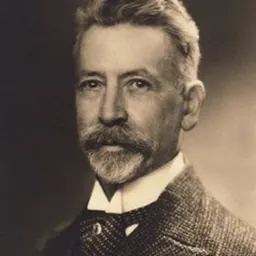
Lived 1821 – 1900 (aged 79). Georg Schmitt was a German organist, composer and musician.
Johann Georg Gerhard Schmitt (11 March 1821 – 7 December 1900), in French Jean-Georges Gérard Schmitt, was a Paris-based composer and organist, originally from the Prussian Lower Rhine province. He was only 14 when he took over as organist at Trier Cathedral: the position had fallen vacant three years earlier through the early death of the previous incumbent, his father.
Life Johann Georg Gerhard Schmitt was born at , a riverside fishing hamlet on the northern edge of Trier (into which it has subsequently been subsumed). His birth took place in the little hotel run by his parents, Johann Georg Schmitt (1787–1832) and his wife, born Catharina Marx (1809–1868). Two hundred years later, there is still a hotel on the site: it is now named "Gasthaus Mosellied", after a song which during the nineteenth century became one of Schmitt's more widely appreciated compositions. The elder Johann Georg Schmitt combined his business as an hotelier with the post of Trier Cathedral organist between 1810 and his death in 1832. During his final illness his son frequently deputised for him, despite being aged only 11 at the time of the father's death. Over the next two years the boy, whose early music lessons had been provided by his father, was sent to Münster in order to master the craft of a cathedral organist, studying with the Münster organist and choirmaster, Franz Joseph Antony (1790–1837). His study was funded by the Trier cathedral chapter. He promoted the incorporation of sixteenth century masses and motets by Palestrina and Lassus as well as contemporary works by Mendelssohn. Schmitt was involved in exploiting and reworking much of the old music, and quickly became a prolific adaptor of existing works. The period was important for his development as a composer, but there was much scope for differences of approach, interpretation and opinion. When Schneider reacted to these "artistic differences" by complaining to the cathedral authorities he generally found them supportive, and in 1842 Schmitt was summarily dismissed. The song is a setting of "Im weiten deutschen Lande" (loosely, "In the wide German lands"), a poem by Theodor Reck (1815–1873), which amounts to a hymn celebrating the beauty of the Mosel valley and the people living there. It was written in response to a competition organised by the casino at the health resort of Traben-Trarbach which attracted 171 entries. Schmitt's submission only came second in the competition, and the prize of 1350 bottles of local wine was accordingly shipped to Dresden, home of , the composer of the winning melody (which according to one possibly scurrilous suggestion he had "borrowed" from his father). The song has also served to ensure that the composer continues to enjoy a significant posthumous reputation with Schlager fans in Germany. He settled, briefly, in Louisiana and was employed for a time as the organist or the assistant organist (sources differ) at the St. Louis Cathedral in New Orleans. He remained at the cathedral for long enough to supervise the installation of a new three manual organ at the cathedral, build and installed by Matthias Schwab (1808–1862) of Cincinnati. Schmitt's incumbency commenced, formally, on 1 January 1850 and lasted slightly more than 13 years. It was at Schmitt's instigation that between 1857 and 1862 the organ was greatly enlarged by Aristide Cavaillé-Coll, a celebrity among nineteenth century organ builders among. The resulting 100 register instrument was sufficiently impressive to persuade one of Schmitt's most illustrious successors at Saint-Sulpice, Charles-Marie Widor, to remain in post for more than 60 years, and can still be enjoyed today (2021): it has "never been electrified", though necessary maintenance has been undertaken during the intervening century and a half: most notably a meticulous and "respectful" dusting exercise was performed between 1988 and 1991.
When Schmitt left his job at Saint-Sulpice at the end of April 1863, the move was made at the instigation of Aristide Cavaillé-Coll, who indicate that he would prefer that his "masterwork of an instrument" should be entrusted to the hands (and feet) of his friend Alfred Lefébure-Wély. There were suggestions that Schmitt's style was considered too classical-contrapuntal (so "too German"?) for the "operatic" style that had by this time become fashionable in post-revolutionary Paris in the Second French Empire.
Death and celebration Schmitt died in Paris on 7 December 1900. His body was buried in what would become a family grave in the city's Père Lachaise Cemetery.
An organ recital was given at Saint-Sulpice in October 2000 by , the organist from the Trier Cathedral in order to celebrate the (then imminent) centenary of Schmitt's death. The programme included three pieces by Schmitt and two more by Eugène Gigout and Théodore Dubois, two of Schmitt's pupils. For most purposes, however, Georges Schmitt is little remembered in France.
Don’t just read it —
keep it.
Full-length biographies made to live with: read them, listen on the way to work, watch them tonight.
- E-book
- Audio
- Video
Instant download · yours to keep · every purchase keeps this site free
Important facts
People in Georg Schmitt's life
Named in this biography and alive at the same time

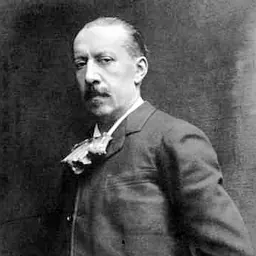
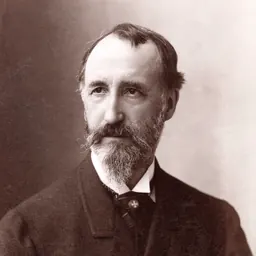
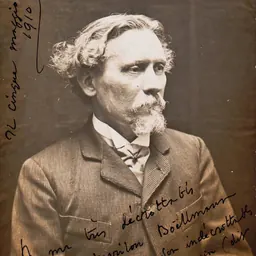
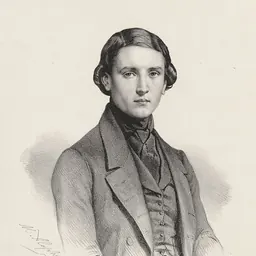

Related people
Same field, nearest in time
Contemporaries
People whose lives overlapped Georg Schmitt's




Frequently asked questions
Who was Georg Schmitt?
German organist and composer (1821-1900)
When was Georg Schmitt born?
Georg Schmitt was born on 11 March 1821 in Trier.
When did Georg Schmitt die?
Georg Schmitt died on 7 December 1900 in Paris.
What was Georg Schmitt's occupation?
Georg Schmitt was an organist, composer and musician.
What nationality was Georg Schmitt?
Georg Schmitt was German.
Sources & further reading
Cite this page
APA: Biography.guide. (2026). Georg Schmitt. https://biography.guide/georg-schmitt/
MLA: "Georg Schmitt." Biography.guide, https://biography.guide/georg-schmitt/.
Chicago: "Georg Schmitt." Biography.guide. https://biography.guide/georg-schmitt/.
Data last updated: 2026-09-26 · Spot an error? Report a correction.
Page generated 2026-09-27 05:13 UTC