
About Aristide Cavaillé-Coll
Lived 1811 – 1899 (aged 88). Aristide Cavaillé-Coll was a French organ builder and musical instrument maker.
Aristide Cavaillé-Coll (; 4 February 1811 – 13 October 1899) was a French organ builder. He has the reputation of being the most distinguished organ builder of the 19th century. He pioneered innovations in the art and science of organ building that permeated the profession and influenced the course of organ building, composing and improvising through the early 20th century.
As the author of scientific journal articles about the organ construction details, he published the results of his research and experiments.
He was the inventor of the symphonic organ being able to follow smooth and immediate dynamic changes like a symphonic orchestra.
His most famous organs were built in Paris in Saint-Denis Basilica (1841), Église de la Madeleine, Sainte-Clotilde Basilica (1859), Saint-Sulpice church (his largest instrument; behind the classical façade), Notre-Dame Cathedral (behind the classical façade), baron Albert de L'Espée's residence in Biarritz (moved finally to the Sacré-Cœur Basilica ), and many others. The organ reform movement in the 20th century sought to return organ building to a more Baroque style; but since then, Cavaillé-Coll's designs have come back into fashion.
Life
Born in Montpellier, France, to Dominique, one in a line of organ builders, he showed early talent in mechanical innovation. He exhibited an outstanding fine art when designing and building his famous instruments. His organs are "symphonic organs": they can reproduce the sounds of other instruments and combine them as well.
Cavaillé-Coll was also known for his financial problems - he focused mostly on the organ building art, leaving finance less attention. The art of his handcrafted instruments, unparalleled at that time, was not enough to ensure his firm's survival. It was taken over in 1898, shortly before his death, by Charles Mutin, who continued in the organ business, but by the 1940s the firm had almost disappeared.
Cavaillé-Coll died in Paris on 13 October 1899 and is buried in the Montparnasse Cemetery.
Organ building innovations Cavaillé-Coll is responsible for many innovations that revolutionized organ building, performance and composition. Instead of the Positif, Cavaillé-Coll placed the Grand-Orgue manual as the lowest manual, and included couplers that allowed the entire tonal resources of the organ to be played from the Grand-Orgue. He refined the English swell box by devising a spring-loaded (later balanced) pedal with which the organist could operate the swell shutters, thus increasing the organ's potential for expression.
He adjusted pipe making and voicing techniques, thus creating a whole family of harmonic stops (flutes, trompettes, clairons) and stops imitating orchestral instruments such as the bassoon, the oboe and the english horn. He popularized the harmonic flute stop, which, together with the montre (principals), the gambe (strings) and the bourdon (flutes), formed the fonds (foundations) of the organ. He designed the "orchestral quartet" which referred to orchestral four colours of sound - principals, flutes, strings and reeds.
Legacy Featuring 102 stops and five manuals, the Saint-Sulpice instrument, which unlike many others remains practically unaltered, is a candidate to become a UNESCO World Heritage Site.
Marcel Dupré stated that "composing for an orchestra is quite different from composing for an organ... with exception of Master Cavaillé-Coll's symphonic organs: in that case one has to observe an extreme attention when writing for such kind of instruments."
Almost a century beforehand, César Franck had ecstatically said of the modest Cavaillé-Coll instrument at l'Église St.-Jean-St.-François in Paris with words that summed up everything the builder was trying to do: "Mon nouvel orgue ? C'est un orchestre !" ("My new organ? It's an orchestra!").
Franck later became organist of a much larger Cavaillé-Coll organ at St Clotilde in Paris. In 1878 Franck was featured recitalist on the four-manual Cavaillé-Coll organ at the Palais du Trocadéro in Paris; this organ was subsequently rebuilt by V. & F. Gonzalez in 1939 and reinstalled in the Palais de Chaillot which replaced the Palais de Trocadéro, then rebuilt in 1975 by Gonzalez-Danion and relocated to the Auditorium Maurice Ravel in Lyon. Franck's Trois Pièces were premiered on the Trocadéro organ.
Film A documentary film titled The Genius of Cavaillé-Coll was released in 2012 by Fugue State Films to mark both the 200th anniversary of Cavaillé-Coll's birth in 2011 and the 150th anniversary of his organ at St Sulpice. It won the DVD Documentary Award of the BBC Music Awards 2014.
Existing Cavaillé-Coll organs
In Europe In France Bergerac: Saint Jacques Bonsecours: Basilique Notre-Dame Caen: Abbey of Saint-Étienne (50 stops, 3 manuals) Carcassonne: Cathedral Castelnau-d'Estrétefonds: Saint-Martin Dinan: Basilica of Saint-Sauveur Dreux: Chapelle royale Épernay: Saint-Pierre Saint-Paul Lavaur: Cathedral Lisieux: Lisieux Cathedral Luçon: Cathedral Lyon: Saint-François-de-Sales Orléans: Cathedral Mazamet: Saint-Sauveur Nancy: Cathedral (65 stops, 4 manuals) Paris: American Cathedral (72 stops, 4 manuals) Paris: Saint-Roch Paris: La Madeleine (58 stops, 3 manuals) Paris: Notre-Dame-de-la-Croix (26 stops, 2 manuals) Paris: Notre Dame Paris: Notre-Dame-de-l'Assomption Paris: Pentemont Abbey Paris: Saint-Antoine-des-Quinze-Vingts Paris: Sainte-Clotilde Basilica (71 stops, 3 manuals) Paris: Saint-Sulpice (102 stops, 5 manuals) Paris: Saint-Vincent-de-Paul (66 stops, 3 manuals) Paris: Sainte-Trinité (61 stops, 3 manuals) Paris: Saint-Jean-de-Montmartre (28 stops, 2 manuals) Paris: Sacré-Cœur (78 stops, 4 manuals) Paris: Val-de-Grâce Courbevoie (near Paris): Saint-Maurice de Bécon Perpignan: Cathedral Rabastens: Notre-Dame-du-Bourg Church (smallest, with only 20 stops) Rouen: Church of St. Ouen. (64 stops, 4 manuals) Saint-Denis: Basilica (47 stops, 4 manuals) Saint-Germain-en-Laye: Saint-Germain church Saint-Omer: Cathedral (49 stops, 4 manuals) Saint-Yrieix-la-Perche: Collégiale du Moustier Toulouse: Saint-Sernin Basilica (51 stops, 3 manuals) Trouville-sur-Mer: Notre-Dame des Victoires Vimoutiers: Notre-Dame Yport: Eglise saint-Martin
In Spain Alegia: San Juan Azkoitia: Santa María Azpeitia: Basílica de Loyola Barcelona: Crypt of Sagrada Família Bilbao: Santa María de Begoña Getaria (Guetaria): San Salvador Irún: Santa María Lekeitio: Madrid: Basílica de San Francisco el Grande Mutriku (Motrico): Santa Catalina Oiartzun: San Esteban Pasaia (Pasajes) San Sebastián (Donostia): Résidence de Zorroaga San Sebastián (Donostia): San Marcial d’Altza San Sebastián (Donostia): Santa María del Coro San Sebastián (Donostia): Santa Teresa San Sebastián (Donostia): San Vicente Sevilla: Escuela de Cristo Urnieta: San Miguel Vidania (Bidegoyan), San Bartolomé
In the United Kingdom Channel Islands, Jersey: Highlands College Cheshire, Warrington: Parr Hall Hampshire, Farnborough: St Michael's Abbey Hampshire, Isle of Wight: Quarr Abbey Manchester: The Town Hall Renfrewshire, Paisley: Paisley Abbey
In the Netherlands Amsterdam: Augustinuskerk Amsterdam: Joannes en Ursulakapel Begijnhof Haarlem: Philharmonie The Hague: Walloon Church
In Belgium Brussels: Royal Conservatory of Music Gesves : Saint Maximin (50 stops, 4 manuals) Ghent: Saint Nicholas' Church, Ghent Hasselt: Sacred Heart Church Leuven: Jesuit Church Heverlee Leuven: Saint Joseph's Church
In Portugal Lisbon, Portugal: Igreja de São Luís dos Franceses Lisbon, Portugal: Igreja de São Mamede Évora, Portugal: Igreja do Espírito Santo (Évora)
In Italy Rome, Italy: Chapel of the Casa Santa Maria of the Pontifical North American College In addition, Cavaillé-Coll designed a large but never-built pipe organ for Saint Peter's Basilica, where a 1/10 scale model is preserved.
In Denmark Copenhagen, Denmark: Jesus Church (1890)
In Russia
Moscow, Russia: Bolshoi Hall of Moscow Conservatory, Russia (installed by Charles Mutin)
In Latin America
In Venezuela Caracas: Iglesia de la Parroquia San Francisco. Used for regular service. Caracas: Iglesia de la Parroquia Altagracia (Inoperative) Caracas: Iglesia de la Parroquia Santa Teresa. Used for regular service. Caracas: Iglesia de la Parroquia San José (In a delicate situation) Caracas: Parroquia La Encarnación del Valle. After several decades of silence, it's been played regularly since in 2011. Los Teques: Catedral (Inoperative)
In Brazil Belém: Catedral da Sé (1882) Campinas: Catedral Metropolitana (1883) Campo Largo: Igreja Matriz de Nossa Senhora da Piedade (1892) Itu: Igreja Matriz Nossa Senhora da Candelária (1882) Jundiaí: Catedral de Nossa Senhora do Desterro (1895) Lorena: Catedral Nossa Senhora da Piedade (1889) Rio de Janeiro: Igreja Nossa Senhora do Carmo da Lapa (1898) Rio de Janeiro: Capela do Colégio Sion do Cosme Velhos (Mutin) Rio de Janeiro: Igreja de Nossa Senhora de Bonsucesso (Mutin) Rio de Janeiro: Capela da Santa Casa (1882) Salvador: Igreja da Ordem Terceira do Carmo (1888) São Paulo: Igreja de São José do Ipiranga (1863) São Paulo: Igreja do Senhor Bom Jesus do Brás (1875)
In Mexico Mazatlán, Mexico: Catedral Basílica de la Inmaculada Concepción
In Chile Valparaíso, Chile: Iglesia de los Sagrados Corazones (French Fathers Church) (1872)
In Argentina Most of the instruments in this list were sold and installed by Mutin-Cavaillé Coll, successor of Cavaillé Coll business after his death in 1899. Argentina was a strong demander of pipe organs in the first decades of XXth century, in such degree that the company installed a branch in Buenos Aires city at that time, with two shops: one located in street Estados Unidos number 3199, the other one in street 24 de Noviembre number 884. Lujan, Basilica de Lujan Basílica del Santísimo Sacramento (1912) Capilla del Colegio "La Salle" (1926) Iglesia de San Juan Bautista (ca. 1920) Basílica del Sagrado Corazón de Jesús (ca. 1906) Basílica de San Nicolás de Bari (órgano principal) Basílica de San Nicolás de Bari (órgano de la cripta) Capilla de la "Casa de la empleada" Parroquia de "Nuestra Señora del Valle" Parroquia de "San Martín de Tours" (ca. 1910) Parroquia de "San Cristobal" Catedral de San Isidro (1906) Parroquia de "Nuestra Señora de Aránzazu" (San Fernando) (1907) Parroquia de "San Francisco Solano" (Bella Vista) (1906)
In Costa Rica Parroquia Inmaculada Concepción (Heredia) (ca. 1904) Parroquia Nuestra Señora de la Soledad (San José) (ca. 1906)
In Asia Fuji, Japan: Haus Sonnenschein Beijing, China: Beitang (in regular use through at least 1938)
Asteroid Cavaillé-Coll's name was given to an asteroid: 5184 Cavaillé-Coll.
Don’t just read it —
keep it.
Full-length biographies made to live with: read them, listen on the way to work, watch them tonight.
- E-book
- Audio
- Video
Instant download · yours to keep · every purchase keeps this site free
Important facts
People in Aristide Cavaillé-Coll's life
Named in this biography and alive at the same time


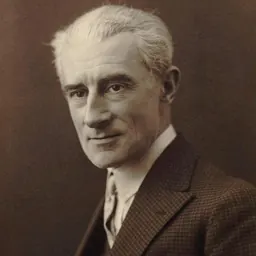
Related people
Same field, nearest in time

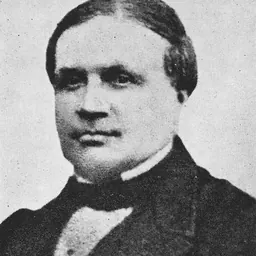
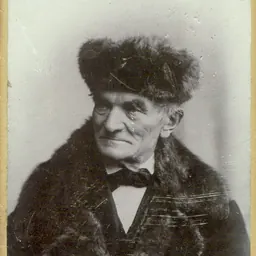

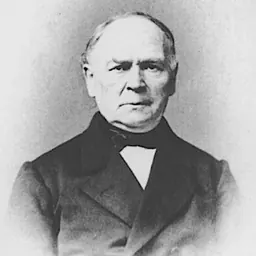
Contemporaries
People whose lives overlapped Aristide Cavaillé-Coll's



Frequently asked questions
Who was Aristide Cavaillé-Coll?
French organ builder (1811–1899)
When was Aristide Cavaillé-Coll born?
Aristide Cavaillé-Coll was born on 4 February 1811 in Montpellier.
When did Aristide Cavaillé-Coll die?
Aristide Cavaillé-Coll died on 13 October 1899 in Paris.
What was Aristide Cavaillé-Coll's occupation?
Aristide Cavaillé-Coll was an organ builder and musical instrument maker.
What nationality was Aristide Cavaillé-Coll?
Aristide Cavaillé-Coll was French.
Sources & further reading
· Wikipedia: Aristide Cavaillé-Coll
· DBpedia: Aristide Cavaillé-Coll
Cite this page
APA: Biography.guide. (2026). Aristide Cavaillé-Coll. https://biography.guide/aristide-cavaille-coll/
MLA: "Aristide Cavaillé-Coll." Biography.guide, https://biography.guide/aristide-cavaille-coll/.
Chicago: "Aristide Cavaillé-Coll." Biography.guide. https://biography.guide/aristide-cavaille-coll/.
Data last updated: 2026-09-20 · Spot an error? Report a correction.
Page generated 2026-09-27 05:34 UTC