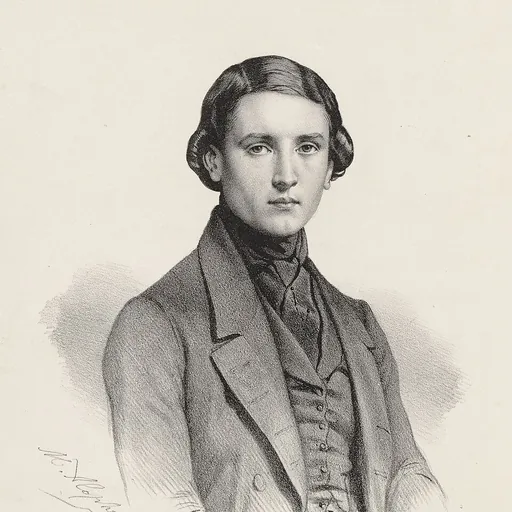
About Alfred Lefébure-Wély
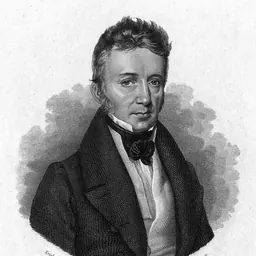
Lived 1817 – 1869 (aged 52). Alfred Lefébure-Wély was a French composer, organist and pianist.
Louis-James Alfred Lefébure-Wély (13 November 1817 – 31 December 1869) was a French organist and composer. He played a major role in the development of the French symphonic organ style and was closely associated with the organ builder Aristide Cavaillé-Coll, inaugurating many new Cavaillé-Coll organs.
Biography Lefébure-Wély was born in Paris, son of an organist. He studied with his father, Isaac-François-Antoine Lefebvre (1756–1831), who had changed his name to Antoine Lefébure-Wely after being appointed organist of the church of Saint-Roch in the 1st arrondissement. In the manuscript of an unpublished Mass by his father is a note: This Mass was played on Easter Tuesday 1826 by my little boy Alfrede, age eight years and four months, on the organ of Saint-Roch to the satisfaction of everyone present. He retained throughout the Mass an extraordinary presence that surprised the people who were near him at the organ. A reviewer in La France musicale praised Lefébure-Wely's technical skill, but advised him to play music of a more serious style than he had developed. Lefébure-Wely, however, continued to perform music of a popular operatic type. When a new Cavaillé-Coll organ was installed at Saint-Roch in 1842, Lefébure-Wely incurred critical disapproval for playing a fantasia on themes from Meyerbeer's popular opera Robert le diable.
He is an author of a manual for harmonium playing technique. In 1847 Lefébure-Wely moved to the Église de la Madeleine, exchanging posts with the previous organist, Charles-Alexandre Fessy. In 1849 he was in charge of the music for the funeral of Frédéric Chopin, for which he transcribed some of Chopin's piano works for the organ, attracting critical praise.
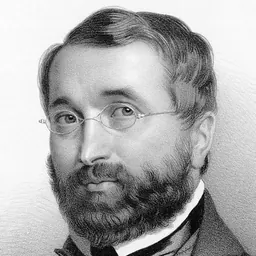
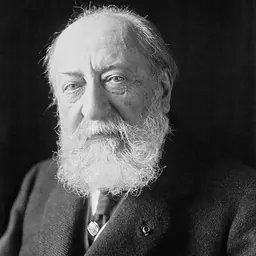
Lefébure-Wely was awarded the Légion d'honneur in 1850. Adolphe Adam commented that "Lefébure-Wely is the most skilful artist I know"; Camille Saint-Saëns, Lefébure-Wely's successor at the Madeleine, observed, "Lefébure-Wely was a wonderful improviser … but he left only a few unimportant compositions for the organ." He was the dedicatee of "12 études pour les pieds seulement" by Charles-Valentin Alkan and of "Final en si bémol" for organ, op. 21 by César Franck.
Among his 200 compositions, Lefébure-Wely wrote works for choir, piano, chamber ensemble, and symphony orchestra as well as an opéra comique, Les recruteurs (1861, libretto by Amédée de Jallais and Alphonse Vulpian). His organ pieces include pastorales, versets, élevations, communions, offertories, marches, and sorties."
Lefébure-Wely's compositions include: Boléro de concert, op. 166. Régnier-Canaux (1865) Meditaciones religiosas op. 122. À sa majesté la reine Doña Isabel II (1858) Les Cloches du Monastère, op. 54. Hofmeister's Monatsbericht (1853 or earlier) L’Office catholique. 120 Morceaux divisés en dix suites composés pour l'harmonium ou l'orgue à tuyaux, op. 148. Hommage à Monseigneur de la Bouillerie, Évêque de Carcassonne. Régnier-Canaux (1861) L’organiste moderne. Collection de morceaux d'orgue dans tous les genres. En 12 livraisons. Hommage à Mr. l'Abbé Hamon, Curé de St. Sulpice. Ces Morceaux ont été écrits sur les Motifs improvisés aux Offices de St. Sulpice (1867–69) Six offertoires, op. 34 (ca. 1857) Six grands offertoires, op. 35. (ca. 1857) Six morceaux pour l'orgue, contenant 3 marches et 3 élévations, op. 36. Graff (1863) Six grands offertoires Vade-mecum de l'Organiste, op. 187. Entrées et Sorties de Chœur, Versets, Préludes pour Amen, Élévations et Communions, Offertoires, Marches brillantes pour Processions composés pour l'harmonium ou l'orgue à tuyaux (1869)
Don’t just read it —
keep it.
Full-length biographies made to live with: read them, listen on the way to work, watch them tonight.
- E-book
- Audio
- Video
Instant download · yours to keep · every purchase keeps this site free
Important facts
People in Alfred Lefébure-Wély's life
Named in this biography and alive at the same time



Related people
Same field, nearest in time
Contemporaries
People whose lives overlapped Alfred Lefébure-Wély's




Frequently asked questions
Who was Alfred Lefébure-Wély?
French composer and organist (1817–1869)
When was Alfred Lefébure-Wély born?
Alfred Lefébure-Wély was born on 13 November 1817 in Paris.
When did Alfred Lefébure-Wély die?
Alfred Lefébure-Wély died on 31 December 1869 in 18th arrondissement of Paris.
What was Alfred Lefébure-Wély's occupation?
Alfred Lefébure-Wély was a composer, organist and pianist.
What nationality was Alfred Lefébure-Wély?
Alfred Lefébure-Wély was French.
Sources & further reading
· Wikipedia: Alfred Lefébure-Wély
· DBpedia: Alfred Lefébure-Wély
Cite this page
APA: Biography.guide. (2026). Alfred Lefébure-Wély. https://biography.guide/alfred-lefebure-wely/
MLA: "Alfred Lefébure-Wély." Biography.guide, https://biography.guide/alfred-lefebure-wely/.
Chicago: "Alfred Lefébure-Wély." Biography.guide. https://biography.guide/alfred-lefebure-wely/.
Data last updated: 2026-09-21 · Spot an error? Report a correction.
Portrait: Wikimedia Commons · author & licence
Page generated 2026-09-27 04:58 UTC