
Geoffrey Douglas Hale Carpenter
British entomologist
About Geoffrey Douglas Hale Carpenter
Lived 1882 – 1953 (aged 70). Geoffrey Douglas Hale Carpenter was a British physician, entomologist and scientific collector.
G.D. Hale Carpenter MBE (26 October 1882 in Eton, Berkshire – 30 January 1953 in Oxford) was a British entomologist and medical doctor. He worked first at the London School of Hygiene and Tropical Medicine, and in Uganda, on tse-tse flies and sleeping sickness. His main work in zoology was on mimicry in butterflies, an interest he developed in Uganda and Tanganyika. He succeeded E.B. Poulton as Hope Professor of Zoology at Oxford University from 1933 to 1948.
Biography
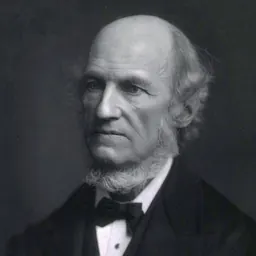
Douglas was a son of Philip Herbert Carpenter DSc FRS, a schoolmaster at Eton College; a grandson of the naturalist and physiologist William Benjamin Carpenter; and a great-grandson of Lant Carpenter, a Unitarian minister.
Carpenter attended St Catherine's College, Oxford, graduating in 1904. He studied medicine at St George's Hospital, London, graduating as a Bachelor of Medicine, Bachelor of Surgery (the standard combined medical degree at the University of London at that time) in 1908. He then joined the London School of Hygiene and Tropical Medicine, and became a Doctor of Medicine in 1913 with a dissertation on the tsetse fly (Glossina palpalis) and sleeping sickness.
In 1919 he married Amy Frances Thomas-Peter from Cornwall. The marriage had no issue.
Career In 1910 he joined the Colonial Medical Service, where he worked in Uganda on the north shore of Lake Victoria. Upon the outbreak of World War I, Carpenter was called to service in the British Army Medical Corps. He was stationed with the troops at the border between Uganda and German East Africa. In December 1914 he was appointed Medical Officer at the fort in Kakindu, southern Uganda. As it turned out, he had plenty of spare time, and spent it studying the local butterflies. "The hosts of butterflies at Kakindu passed beyond anything I had ever see; some days are quite unforgettable".
From May 1916 to January 1918, he worked in Tanganyika (former German E. Africa), 276 miles south to south-east of Lake Victoria. Here he conducted experiments on palatability with young insectivorous monkeys. He tested the edibility of cryptic and aposematic insects. This was propitious, because later, back at Oxford, both he and E.B. Poulton worked on the role of predators in shaping mimicry. The standard theory was that cryptic forms were palatable, and aposematic forms were distasteful, implying that palatable mimics of distasteful forms could gain protection from predation. The question at stake was whether the observations, which dated from work by naturalists in the 19th century, could be accounted for by natural selection.
Mimicry
In England the geneticist R.C. Punnett, and in America the ornithologist W.L. McAtee, doubted both that birds could distinguish distasteful forms, and that their predation was heavy enough to bring about the colour forms found in butterflies. Punnett's 1915 Mimicry in butterflies rejected selection as the main cause of mimicry. He noted: 1. The absence of transitional forms and the frequent lack of mimicry in male butterflies were unexplained by selectionist theory. 2. The enigma of polymorphic mimicry. Some species of butterfly mimicked not merely one, but several models. In breeding experiments these polymorphs cleanly segregated according to Mendel’s law of segregation. 3. Evidence of birds as selective agents was slight and little was known of birds' discriminatory powers, and 4. The gradual accumulation of minute variations did not fit with the facts of heredity.
For Punnett, none of these observations were explained by gradual selectionism. Instead he thought mimicry had arisen from sudden mutational jumps (saltations). Once a mimic was formed by mutation, natural selection might play a conservative role.
However, one by one, each of these objections were shown to be without substance. Evidence from field observations and experiments showed that birds were often the agents of selection in insects. Evidence that small-scale mutations were common arrived as soon as breeding experiments were designed to detect them: it was a consequence of experimental methods that early mutations were so noteworthy. Explanations for polymorphism were advanced by E.B. Ford and Dobzhansky and colleagues, who developed experimental methods for populations in the wild. The question of polymorphism is discussed further in polymorphism (biology).
The gradual coming-together of field observations and experimental genetics is part of the evolutionary synthesis which took place in the middle of the twentieth century. The small 1933 book on mimicry by Carpenter and E.B. Ford
Obituaries
Hobby, B.M. (1953). "Geoffrey Douglas Hale Carpenter". British Medical Journal 1: 406. Remington, Charles L. (1954). "Geoffrey Douglas Hale Carpenter". Lepidopterist's News 8: 31–43.
Don’t just read it —
keep it.
Full-length biographies made to live with: read them, listen on the way to work, watch them tonight.
- E-book
- Audio
- Video
Instant download · yours to keep · every purchase keeps this site free
Important facts
People in Geoffrey Douglas Hale Carpenter's life
Named in this biography and alive at the same time


Related people
Same field, nearest in time



Contemporaries
People whose lives overlapped Geoffrey Douglas Hale Carpenter's




Frequently asked questions
Who was Geoffrey Douglas Hale Carpenter?
British entomologist (1882-1953)
When was Geoffrey Douglas Hale Carpenter born?
Geoffrey Douglas Hale Carpenter was born on 26 October 1882 in Eton College.
When did Geoffrey Douglas Hale Carpenter die?
Geoffrey Douglas Hale Carpenter died on 30 January 1953 in Oxford.
What was Geoffrey Douglas Hale Carpenter's occupation?
Geoffrey Douglas Hale Carpenter was a physician, entomologist and scientific collector.
What nationality was Geoffrey Douglas Hale Carpenter?
Geoffrey Douglas Hale Carpenter was British.
Sources & further reading
· Wikipedia: Geoffrey Douglas Hale Carpenter
· DBpedia: Geoffrey Douglas Hale Carpenter
Cite this page
APA: Biography.guide. (2026). Geoffrey Douglas Hale Carpenter. https://biography.guide/geoffrey-douglas-hale-carpenter/
MLA: "Geoffrey Douglas Hale Carpenter." Biography.guide, https://biography.guide/geoffrey-douglas-hale-carpenter/.
Chicago: "Geoffrey Douglas Hale Carpenter." Biography.guide. https://biography.guide/geoffrey-douglas-hale-carpenter/.
Data last updated: 2026-09-20 · Spot an error? Report a correction.
Page generated 2026-09-27 05:02 UTC