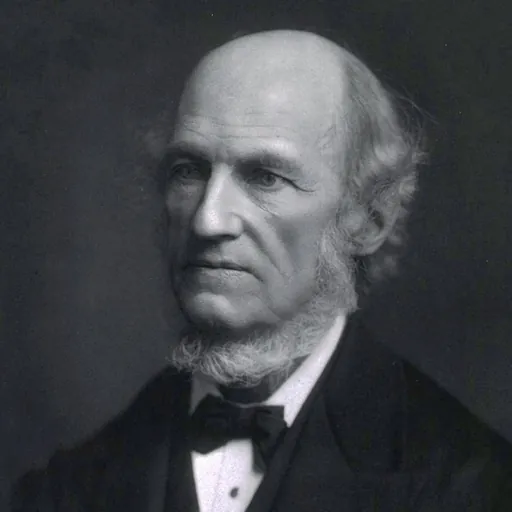
About William Benjamin Carpenter
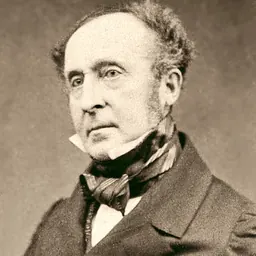
Lived 1813 – 1885 (aged 72). William Benjamin Carpenter was a British botanist, zoologist, biologist, physiologist, naturalist and physician.
William Benjamin Carpenter CB FRS (29 October 1813 – 19 November 1885) was an English physician, invertebrate zoologist, and physiologist. He was instrumental in the early stages of the unified University of London.
Life Carpenter was born on 29 October 1813 in Exeter, the eldest son of Dr. Lant Carpenter and his wife, Anna Carpenter (née Penn). His father was an important Unitarian preacher who, according to Adrian Desmond, influenced a "rising generation of Unitarian intellectuals, including James Martineau and the Westminster Review'''s John Bowring." From his father, Carpenter learned to believe in the essential lawfulness of creation and that explanations of the world were to be found in physical causes. He embraced this "naturalistic cosmogony" as his starting point.
Carpenter was apprenticed in 1828 to the eye surgeon John Bishop Estlin, who was also the son of a Unitarian minister. He attended lectures at Bristol Medical School, then studied at University College London between 1834 and 1835, and then went to the University of Edinburgh, where he received his MD in 1839. He was elected as a member to the American Philosophical Society in 1845. In 1871, he received an LL.D. from the University of Edinburgh. His work in comparative neurology was recognised in 1844 by his election as a Fellow of the Royal Society. His appointment as Fullerian Professor of Physiology at the Royal Institution in 1845 enabled him to exhibit his prowess as a teacher and lecturer. He was credited with having a gift of ready speech and luminous interpretation that placed him in the front rank of exponents, at a time when the popularisation of science was in its infancy.
He was appointed the first Swiney lecturer in Geology at the British Museum in 1847.
He worked hard as investigator, author, editor, demonstrator and lecturer throughout his life; but it was his researches in marine zoology, notably in the lower organisms, as foraminifera and crinoids, that were most valuable. This research gave an impetus to deep-sea exploration and led to Carpenter's role, alongside the naturalist Charles Wyville Thomson, in leading the exploration missions of HMS Lightning and HMS Porcupine in northern Scotland from 1868 to 1870. The analysis of the physical observations made during these first cruises allowed Carpenter to sketch a new theory of the global ocean circulation, which differed in several points from the pioneering theory of the hydrographer Matthew Fontaine Maury. Based on the context of the time, including the development of underwater telegraphy, It was one of the first temperance books to promote the view that alcoholism is a disease. He also demonstrated his commitment to the education of women, by teaching at the newly founded Bedford College, London in 1849 and 1850.
Adaptive unconscious Carpenter is considered one of the founders of the modern theory of the adaptive unconscious. Together with William Hamilton and Thomas Laycock they provided the foundations on which adaptive unconscious is based today. They observed that the human perceptual system almost completely operates outside of conscious awareness. These same observations have been made by Hermann Helmholtz. Because these views were in conflict with the theories of Descartes, they were largely neglected, until the cognitive revolution of the 1950s. In 1874 Carpenter noticed that the more he studied the mechanism of thought, the more clear it became that it operates largely outside awareness. He noticed that the unconscious prejudices can be stronger than conscious thought and that they are more dangerous since they happen outside of conscious.
He also asserted both the freedom of the will and the existence of the ego.
He was the author of the book Mesmerism, Spiritualism, Etc: Historically and Scientifically Considered'' (1877), which is seen as an early text on anomalistic psychology. According to Carpenter, Spiritualist practices could be explained by psychological factors such as hypnotism and suggestion.
Carpenter identified as a rationalist and a Unitarian. Although critical of spiritualism, he was interested in the subject of "thought reading". Louisa was born about 1814 in Exeter and died in 1887 in London. Among their children were: Philip Herbert Carpenter (1852–1891), zoologist and a master at Eton College. He assisted his father and wrote extensively on fossils. Joseph Estlin Carpenter (1844–1927), theologian and Unitarian.
Works
Don’t just read it —
keep it.
Full-length biographies made to live with: read them, listen on the way to work, watch them tonight.
- E-book
- Audio
- Video
Instant download · yours to keep · every purchase keeps this site free
Important facts
Family & relationships
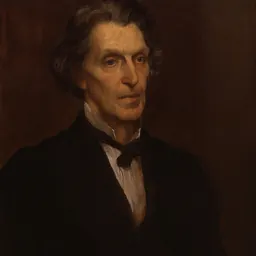
People in William Benjamin Carpenter's life
Named in this biography and alive at the same time



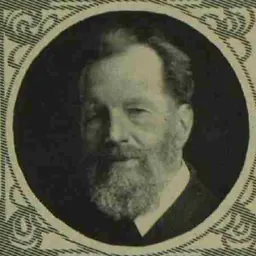
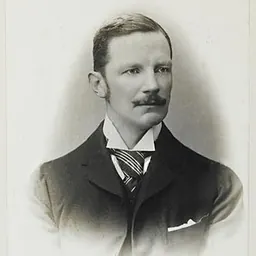
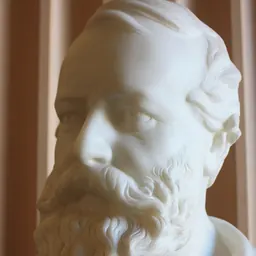
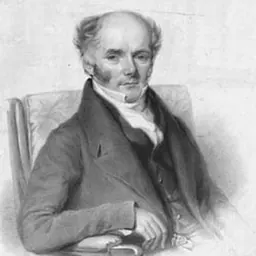
Related people
Same field, nearest in time
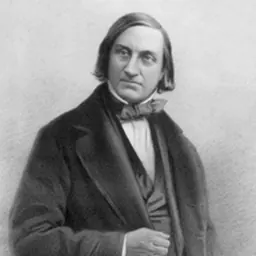

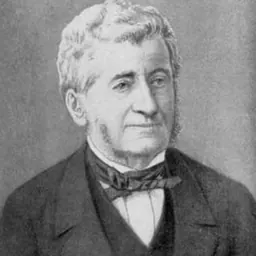
Contemporaries
People whose lives overlapped William Benjamin Carpenter's





Frequently asked questions
Who was William Benjamin Carpenter?
English biologist (1813–1885)
When was William Benjamin Carpenter born?
William Benjamin Carpenter was born on 29 October 1813 in Exeter.
When did William Benjamin Carpenter die?
William Benjamin Carpenter died on 19 November 1885 in London.
What was William Benjamin Carpenter's occupation?
William Benjamin Carpenter was a botanist, zoologist, biologist, physiologist, naturalist and physician.
What nationality was William Benjamin Carpenter?
William Benjamin Carpenter was British.
Sources & further reading
· Wikipedia: William Benjamin Carpenter
· DBpedia: William Benjamin Carpenter
Cite this page
APA: Biography.guide. (2026). William Benjamin Carpenter. https://biography.guide/william-benjamin-carpenter/
MLA: "William Benjamin Carpenter." Biography.guide, https://biography.guide/william-benjamin-carpenter/.
Chicago: "William Benjamin Carpenter." Biography.guide. https://biography.guide/william-benjamin-carpenter/.
Data last updated: 2026-09-20 · Spot an error? Report a correction.
Portrait: Wikimedia Commons · author & licence
Page generated 2026-09-27 04:57 UTC