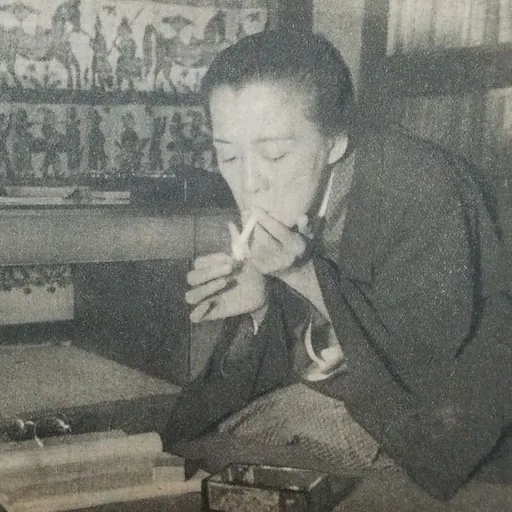
About Fusako Fujima
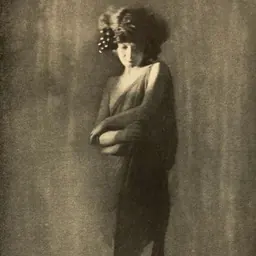
Lived 1882 – 1954 (aged 71). Fusako Fujima was a Japanese dancer and actor.
, born Ginko Yanoshima, was a Japanese actress, dancer, and singer. She was with the Imperial Theatre in the 1910s, and appeared in Japanese films in the 1930s and 1940s, including Mikio Naruse's Sincerity and Akira Kurosawa's No Regrets for Our Youth (1946).
Early life and education Ginko Yanoshima was born in Tokyo, the daughter of a paper merchant. She studied art, music, and dance, and trained for the theatre at the school of Sada Yakko. She began her stage career in the Imperial Theatre.
Stage career Fujima's early career was on the stage. She played Mistress Quickly in The Merry Wives of Windsor in Tokyo in 1912. "The fearlessness and scorn of the samurai mother, played by Miss Fusako Fujima, was a revelation of what the shy, sophisticated Japanese women can do in simulating passion," wrote an American reviewer in 1914, in Overland Monthly. She was described as "the best Japanese dancer among the actresses", in a 1915 report in The Far East, about the Imperial Theatre's "Toy Ballet". She was noted for her "comical" skills, in a 1918 article about fellow actress Ritsuko Mori, and she was described as a singer in a 1926 newspaper photo with Mori and Irish tenor John McCormack.
Filmography Fujima often played older women, wives, mothers, and grandmothers, in Japanese films made in the 1930s and 1940s by directors including Akira Kurosawa, Masahiro Makino, Teinosuke Kinugasa, Mikio Naruse, Osamu Fushimizu, Hakui no kajin (1936) Kokyo (1937, Hometown) Gonzo to Sukejyu (1937) Ôma no tsuji (1938) Magokoro (1939, Sincerity) Nizuma Kagame (1940) Shina no yoru (1940, China Night, both parts) Zoku Hebihimesama (1940, The Snake Princess) Kinō kieta otoko (1941, The Man Who Disappeared Yesterday) Ani no hanayome (1941) Waga ai no ki (1941) Otoko no hanamichi (1941) Midori no daichi (1942) Hanako-san (1943) Tokkan ekichō (1945, Station Chief of the Nonstop Train) Tokyo gonin otoko (1945, Five Tokyo Men) Hometown in Green (1946) Waga seishun ni kuinashi (1946, No Regrets for Our Youth) Waga ai wa yama no kanata ni (1948) Ojōsan kampai (1949, Here's to the Young Lady) Hakuchû no kettō (1950, Duel in the Sun)
Don’t just read it —
keep it.
Full-length biographies made to live with: read them, listen on the way to work, watch them tonight.
- E-book
- Audio
- Video
Instant download · yours to keep · every purchase keeps this site free
Important facts
People in Fusako Fujima's life
Named in this biography and alive at the same time



Related people
Same field, nearest in time

Contemporaries
People whose lives overlapped Fusako Fujima's




Frequently asked questions
Who was Fusako Fujima?
Japanese actress
When was Fusako Fujima born?
Fusako Fujima was born on 21 August 1882 in Chūō.
When did Fusako Fujima die?
Fusako Fujima died on 9 January 1954.
What was Fusako Fujima's occupation?
Fusako Fujima was a dancer and actor.
What nationality was Fusako Fujima?
Fusako Fujima was Japanese.
Sources & further reading
Cite this page
APA: Biography.guide. (2026). Fusako Fujima. https://biography.guide/fusako-fujima/
MLA: "Fusako Fujima." Biography.guide, https://biography.guide/fusako-fujima/.
Chicago: "Fusako Fujima." Biography.guide. https://biography.guide/fusako-fujima/.
Data last updated: 2026-09-23 · Spot an error? Report a correction.
Portrait: Wikimedia Commons · author & licence
Page generated 2026-09-27 05:07 UTC