
Fritz Grünbaum
Austrian cabaret artist, art collector and Holocaust victim
About Fritz Grünbaum
Lived 1880 – 1941 (aged 60). Fritz Grünbaum was an Austrian actor, screenwriter, composer, film actor, art collector and cabaret performer.
Franz Friedrich "Fritz" Grünbaum (7 April 1880 – 14 January 1941) was an Austrian Jewish cabaret artist, operetta and popular song writer, actor, and master of ceremonies whose art collection was looted by Nazis before he was murdered in the Holocaust.
Early life and education Grünbaum was born and grew up in Brünn, then the capital of the Margraviate of Moravia (now Brno, Czech Republic). He later stated his father's occupation as "art dealer". From 4 October 1899 to 31 July 1903, he studied at the Law Faculty of the University of Vienna, lodging in the 2nd district like the majority of Jewish migrants to Vienna. He did not complete a doctorate in law, so could not practise, but left with the equivalent of a master's degree. He then returned to Vienna, where he worked at Die Hölle for two more years and then at Simplicissimus (now ). He was now well known for rhymed monologues, libretti, and song lyrics.
Following the Nazi seizure of power in 1933, Jewish performers were forbidden to appear in Germany, and many moved to Vienna. Grünbaum was the subject of an article in Der Stürmer the following year. His and Farkas' last revue, Metro Grünbaum – Farkas tönende Wochenschau, premièred on 29 February 1938; on 12 March, the Nazis marched into Austria and the show closed after two weeks. After a final performance on New Year's Eve for his fellow inmates, he died on 14 January 1941. He then married singer Mizzi Dressl. On 10 November 1919 he was married for the last time, to Elisabeth "Lilly" Herzl. She was evicted from their flat in Vienna on 15 July 1938, moving in with a friend, Elsa Klauber; after several forced relocations, they were both deported on 5 October 1942 to the Maly Trostenets extermination camp, where she died on 9 October.
Restitution The heirs of Fritz Grünbaum have pursued an extensive legal campaign to recover artworks they assert were looted by the Nazis from their ancestor's collection, facing multiple court battles over decades. This ongoing restitution effort gained new momentum following the enactment of the Holocaust Expropriated Art Recovery Act (HEAR Act) in 2016, which provided enhanced legal tools for claimants seeking to reclaim stolen cultural property.
Tote Stadt III The Grünbaum family initiated legal proceedings in 1999 to recover Egon Schiele's 1911 work Dead City III, which they discovered was being exhibited at New York's Museum of Modern Art. The painting had originally belonged to Fritz Grünbaum's art collection. At the time of the dispute, the Leopold Museum Private Foundation had loaned the artwork to MoMA for display.
Legal representatives for the Grünbaum estate filed claims asserting that the work had been confiscated by the Nazis and constituted looted art that should be returned to the family. The Museum of Modern Art invoked protections under New York's Arts and Cultural Affairs Law, which shields artworks from seizure while they are part of museum exhibitions. Although prosecutors in New York attempted to prevent the painting's departure from the United States, these efforts proved unsuccessful. The artwork was subsequently shipped back to Austria, and the Grünbaum family's restitution case did not achieve its intended outcome.
Seated Woman With Bent Left Leg A 1917 Schiele drawing titled Seated Woman with Bent Left Leg (Torso) became the subject of the initial ownership dispute involving Fritz Grünbaum's descendants. During the 1960s, an American sculptor had purchased this work and added it to his personal collection. Nearly four decades later, in 2004, the collector decided to sell the piece through Sotheby's auction house.
The sale process was interrupted when Grünbaum's heirs challenged the legitimacy of the current owner's claim to the artwork. In response to this challenge, the holder of the drawing sought judicial resolution by filing suit in New York's federal court system to establish clear legal ownership. The court proceedings concluded with a ruling that upheld the defendant's rights to the work, thereby rejecting the family's attempt to reclaim the drawing.
Restitution claims involving Austria museums Restitution proceedings in Austria concerning works from Fritz Grünbaum's collection have addressed drawings held in both the Leopold Museum Private Foundation and the Albertina. The central questions have been whether specific Schiele works can be securely identified as part of Grünbaum's pre-war collection, how they reappeared on the Swiss art market in the 1950s through sales by his sister-in-law Mathilde Lukacs, and whether such sales should be considered valid transactions or the consequence of Nazi persecution. Under Austria's Art Restitution Act, the decisive issue has been whether the works were demonstrably seized or lost through void legal acts during the Nazi period.
Leopold Museum In November 2010, the Restitution Advisory Board considered two Schiele works in the Leopold Museum Foundation. The Board accepted that Grünbaum and his wife were persecuted and that his collection was inventoried under Nazi rule, but found no proof that the specific works in question had been confiscated or forcibly transferred. It noted that the works surfaced in Switzerland in the 1950s through sales by Grünbaum's sister-in-law, Mathilde Lukacs. As the evidence did not demonstrate a direct expropriation or void legal act under the 1946 Annulment Law, restitution was not recommended.
Albertina In October 2015, the Restitution Advisory Board reviewed two Schiele drawings in the Albertina: Sitzender weiblicher Rückenakt mit rotem Rock and Edith Schiele mit ihrem Neffen. The Board reiterated that Grünbaum's collection was extensive and persecutory circumstances were clear, but concluded that the works had come into the Albertina via sales made in the 1950s by Mathilde Lukacs to Swiss dealers and later transfers to Austrian collections. While it acknowledged reasons to believe the works once belonged to Grünbaum, the Board held that there was insufficient evidence of confiscation or unlawful seizure during the Nazi period, and thus no basis for restitution under the Art Restitution Act.
Restitution claims involving US museums In 2023 and early 2024, several American museums relinquished works by Egon Schiele that had once belonged to Fritz Grünbaum. Acting on seizure warrants issued by the Manhattan District Attorney's Antiquities Trafficking Unit, institutions across the United States agreed to return drawings that had long been the subject of restitution claims by Grünbaum's heirs. Among them were Oberlin College’s Allen Memorial Art Museum, the Carnegie Museum of Art in Pittsburgh, the Santa Barbara Museum of Art in California, the Morgan Library & Museum, and the Museum of Modern Art in New York.
Allen Memorial Art Museum In September 2023, the Manhattan District Attorney's office seized Egon Schiele's Girl with Black Hair from the Allen Memorial Art Museum at Oberlin College. In response to the seizure warrant, the Allen stated that it had purchased the drawing in 1958 from Galerie St. Etienne in New York, which had obtained it from the Bern gallery Gutekunst & Klipstein. According to the museum, the Swiss gallery recorded its purchase in 1956 from Mathilde Lukacs, Lilly Grünbaum's sister. The museum noted that Lukacs had fled Austria for Belgium in 1938, but that “exactly how Lukacs acquired it is not clear; the crucial facts as to how she came to possess it and other artworks she sold remain unknown, and died with her in 1979.” The Allen further stated that, despite this lack of clarity, it resolved to hand over the drawing to the Grünbaum heirs: “While we believe it has not been definitively established that the drawing was looted from Grünbaum's collection, the College has voluntarily turned it over, hoping that this will provide some measure of closure to the family.” The Grünbaum heirs subsequently sold Girl with Black Hair at a Christie's auction.
Art Institute of Chicago The Art Institute of Chicago became the sole major museum to challenge the Manhattan DA's approach when it refused to comply with a September 2023 seizure warrant for Egon Schiele's Russian War Prisoner (1916). Unlike other institutions that voluntarily surrendered works from Grünbaum's collection, the Art Institute mounted a legal defense on multiple fronts. The museum argued that the painting was never looted by Nazis but remained within the family, claiming Grünbaum's sister-in-law Mathilde Lukacs legally inherited and sold the work to Swiss dealer Eberhard Kornfeld in 1956. The museum also challenged the Manhattan District Attorney's jurisdiction over artwork located in Illinois, contending that criminal proceedings were inappropriate for what they characterized as a civil ownership dispute.
Carnegie Museums of Pittsburgh In Pittsburgh, the Carnegie Museum of Art relinquished Schiele's Portrait of a Man after it was seized by the Manhattan District Attorney's office and returned in January 2024. In its statement, the museum emphasized that it had never considered the work to be Nazi-looted: “To date, we have relied on a finding confirmed and upheld in federal court that the collection to which this drawing belonged was not, in fact, stolen by the Nazis.” Despite maintaining that its ownership had been legitimate, the Carnegie elected not to challenge the criminal proceedings and handed the drawing over for restitution. The painting was subsequently sold through Christie's.
Morgan Library and Museum In September 2023, the Morgan Library and Museum returned Egon Schiele's Self-Portrait (1910) to the heirs of Fritz Grünbaum, following its seizure by the Manhattan District Attorney's Antiquities Trafficking Unit. The museum had acquired the work through the 2005 bequest of Broadway lyricist Fred Ebb, who died in 2004. The Morgan did not comment publicly on the return, and the drawing was subsequently sold at auction at Christie's.
Museum of Modern Art In September 2023, the Manhattan District Attorney's Antiquities Trafficking Unit seized from the Museum of Modern Art (MoMA) two Egon Schiele works: Prostitute (1912) and Girl Putting on Shoe (1910). MoMA voluntarily surrendered both works but did not issue a public statement. After the works were returned to the heirs, while Girl Putting on Shoe was privately sold to an anonymous buyer, Prostitute was sold at Christie's November 2023 evening sale along with other restituted works.
Santa Barbara Museum In September 2023, the Santa Barbara Museum of Art returned Egon Schiele's Portrait of the Artist's Wife, Edith to the heirs of Fritz Grünbaum. The drawing had been donated to the museum in 1957 by founding member Wright S. Ludington. The heirs had sought restitution since 2006, filing a lawsuit in 2022. Following the seizure of the drawing by the Manhattan District Attorney's Antiquities Trafficking Unit, the museum resolved to return the drawing. According to a public statement by the museum, this decision was taken after Manhattan prosecutors presented them with “relevant information concerning the provenance.” The heirs subsequently sold the work through Christie's.
Dispute with Christie's In August 2025, Czech national Milos Vavra filed a petition against the auction house Christie's in the Supreme Court of Manhattan. Vavra, who identified himself as a legal heir to Grünbaum's art collection, requested that Christie's disclose documentation relating to works by Egon Schiele formerly belonging to the collection. The petition sought access to sales contracts, appraisals, expert reports, correspondence, and information about current ownership in order to support potential restitution claims.
According to a report by Artnews, Christie's opposed the request, stating that it adheres to strict legal and ethical standards in matters of provenance research and restitution. The auction house had previously handled sales of six Schiele works connected to the collection, each reportedly achieving prices of around US $1 million. Court filings indicated that Christie's was also approached by a Swiss family seeking to collaborate with Grünbaum's heirs in the sale of three additional Schiele paintings. Two of these works were described by Christie's experts as among the most significant Schieles they had encountered.
Selected works Phryne (Operetta by Edmund Eysler, 1906, with Robert Bodanzky) (operetta by Franz Lehár, 1906, with Bodanzky) Die Dollarprinzessin (Operetta by Leo Fall, 1907, with A. M. Willner) The Dollar Princess (Operetta by Leo Fall, 1909, with A. M. Willner, English adaptation by Basil Hood) Der Liebeswalzer (Operetta by Karl Michael Ziehrer, 1908, with Robert Bodanzky) Der Zigeunerprimas (Operetta by Emmerich Kálmán, 1912, with ) Sturmidyll (Comedy, 1914, with ) Der Favorit (Operetta by Robert Stolz, with Wilhelm Sterk, 1916) Die Csikósbaroness (Operetta by Georg Jarno, 1920) Dorine und der Zufall (Musical comedy by Jean Gilbert, 1922, with Wilhelm Sterk) Traumexpress (Operetta by , 1931, with Karl Farkas) Die Schöpfung (Cabaret) Die Hölle im Himmel (Cabaret) Die Schöpfung und andere Kabarettstücke, Vienna/Munich: Löcker Verlag, 1984, Der leise Weise. Gedichte und Monologue aus dem Repertoire, ed. Hans Veigl, Vienna, 1992, Hallo, hier Grünbaum!, Vienna/Munich: Löcker Verlag, 2001,
Lyrics "Draußen in Schönbrunn" "Ich hab das Fräuln Helen baden sehn"
Filmography Rich, Young and Beautiful, directed by Fritz Freisler (1928, based on the musical comedy Dorine und der Zufall) The Gypsy Chief, directed by Carl Wilhelm (1929, based on the operetta Der Zigeunerprimas) Die Csikósbaroness, directed by Jacob Fleck and Luise Fleck (1930, based on the operetta Die Csikósbaroness)
Screenwriter Everyone Asks for Erika, directed by Frederic Zelnik (1931) , directed by Géza von Bolváry (1931) , directed by Géza von Bolváry (1932)
Actor The Theft of the Mona Lisa (1931) My Wife, the Impostor (1931), as Silbermann The Virtuous Sinner (1931), as Kalapka Poor as a Church Mouse (1931), as Schünzl For Once I'd Like to Have No Troubles (1932) (1932), as Adolph Münzer Man Without a Name (1932), as Erwin Gablinky Things Are Getting Better Already (1932), as Justizrat Feldacker Girls to Marry (1932), as Sigurd Bernstein
Don’t just read it —
keep it.
Full-length biographies made to live with: read them, listen on the way to work, watch them tonight.
- E-book
- Audio
- Video
Instant download · yours to keep · every purchase keeps this site free
Important facts
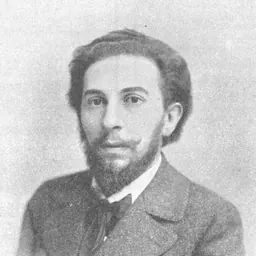
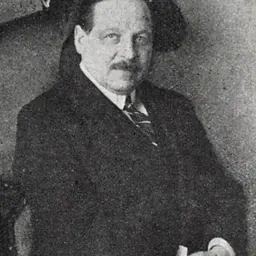
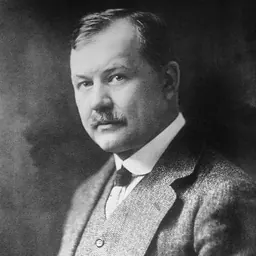
People in Fritz Grünbaum's life
Named in this biography and alive at the same time
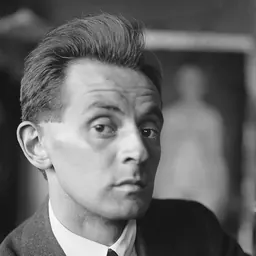
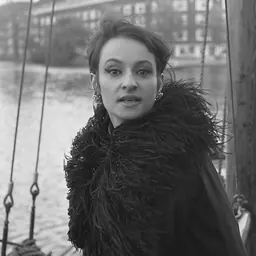

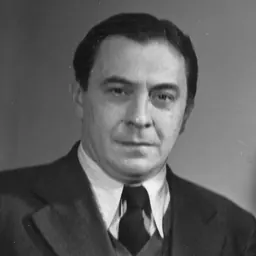
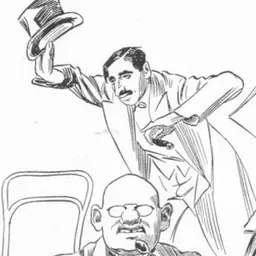
Related people
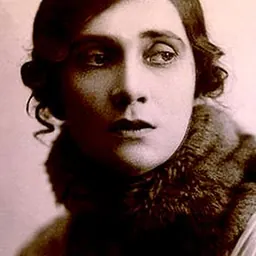
Same field, nearest in time


Contemporaries
People whose lives overlapped Fritz Grünbaum's




Frequently asked questions
Who was Fritz Grünbaum?
Austrian cabaret artist, art collector and Holocaust victim (1880–1941)
When was Fritz Grünbaum born?
Fritz Grünbaum was born on 7 April 1880 in Brno.
When did Fritz Grünbaum die?
Fritz Grünbaum died on 14 January 1941 in Dachau concentration camp, Dachau.
What was Fritz Grünbaum's occupation?
Fritz Grünbaum was an actor, screenwriter, composer, film actor, art collector and cabaret performer.
What nationality was Fritz Grünbaum?
Fritz Grünbaum was Austrian.
Sources & further reading
Cite this page
APA: Biography.guide. (2026). Fritz Grünbaum. https://biography.guide/fritz-grunbaum/
MLA: "Fritz Grünbaum." Biography.guide, https://biography.guide/fritz-grunbaum/.
Chicago: "Fritz Grünbaum." Biography.guide. https://biography.guide/fritz-grunbaum/.
Data last updated: 2026-09-20 · Spot an error? Report a correction.
Page generated 2026-09-27 05:33 UTC