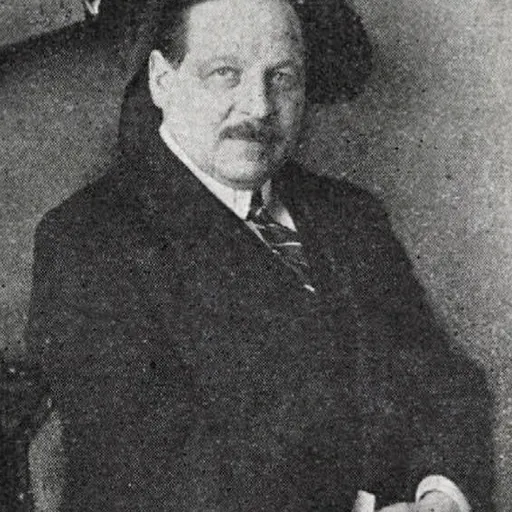
Emmerich Kálmán
Hungarian-born composer of operettas
About Emmerich Kálmán
Lived 1882 – 1953 (aged 71). Emmerich Kálmán was a Hungarian, Austrian and American composer, conductor, film score composer and musician.
Emmerich Kálmán ( ; 24 October 1882 – 30 October 1953) was a Hungarian composer of operettas and a prominent figure in the development of Viennese operetta in the 20th century. Among his most popular works are Die Csárdásfürstin and Gräfin Mariza (1924). Influences on his compositional style include Hungarian folk music (such as the csárdás), the Viennese style of precursors such as Johann Strauss II and Franz Lehár, and, in his later works, American jazz. As a result of the Anschluss, Kálmán and his family fled to Paris and then to the United States. He eventually returned to Europe in 1949 and died in Paris in 1953.
Biography
Kálmán was born Imre Koppstein in Siófok, then in Austria-Hungary, on the southern shore of Lake Balaton, to a Jewish family. Kálmán initially intended to become a concert pianist, but because of early-onset arthritis, he focused on composition instead. He studied music theory and composition at the National Hungarian Royal Academy of Music (then the Budapest Academy of Music), where he was a fellow student of Béla Bartók and Zoltán Kodály under Hans Kössler.
His early symphonic poems Saturnalia and Endre és Johanna were well-received, although he failed to achieve publication. He also composed piano music and wrote many songs: a song cycle on poems by Ludwig Jacobowski and a song collection published under the title Dalai.
However, the popularity of his humorous cabaret songs led him towards the composition of operettas. His first great success was Tatárjárás – Ein Herbstmanöver in German, meaning Autumn maneuver, although the English title is The Gay Hussars, which was first staged at the in Budapest, on 22 February 1908. Thereafter he moved to Vienna, where he achieved worldwide fame through his operettas Der Zigeunerprimas, Die Csárdásfürstin, Gräfin Mariza, and Die Zirkusprinzessin.
Kálmán and Franz Lehár were the leading composers of what has been called the "Silver Age" of Viennese operetta during the first quarter of the 20th century. He became well known for his fusion of Viennese waltz with Hungarian csárdás. Even so, polyphonically and melodically, Kálmán was a devoted follower of Giacomo Puccini, while in his orchestration methods he employed principles characteristic of Tchaikovsky's music.
In 1929, his first child (with Vera Mendelsohn), Charles Kalman (1929–2015) was born and would later on be also a composer. His daughter Elisabeth Kalman Daunis (1931–1973) was found murdered in Paris, aged 41. His youngest daughter Yvonne Kálmán was born in 1937 and died in November 2025.
Despite his Jewish origins he was one of Adolf Hitler's favorite composers. After the Anschluss, he rejected Hitler's offer to become an 'honorary Aryan' and was forced to move first to Paris, then to the United States, settling in California in 1940.
Last years and death Following his emigration, performances of his works were prohibited in Nazi Germany. He emigrated back to Vienna from New York in 1949 before moving in 1951 to Paris, where he died.
Popular culture In 1958 a West German biopic The Csardas King was made of his life, starring Gerhard Riedmann in the lead role.
The supporters of both the national football and handball teams of Iceland use a version of the song from his operetta Das Veilchen vom Montmartre as an anthem, with Icelandic lyrics .
The overnight sleeper train from Stuttgart to Budapest is named The Kalman Imre.
Operettas Tatárjárás (The Mongol Invasion) – Budapest, 1908 Ein Herbstmanöver – Vienna, 1909 (German version of Tatárjárás) The Gay Hussars – Knickerbocker Theatre, Broadway, New York, 1909 (American version of Tatárjárás) Autumn Manoeuvres – London, 1912 (English version of Tatárjárás) Az obsitos (The Veteran) – Budapest, 1910 Der gute Kamerad – Vienna, 1911 (German revision of Az Obsitos) Gold gab ich für Eisen – Vienna, 1914 (revision of Der gute Kamerad) Her Soldier Boy – Astor Theatre, Lyric Theastre, Shubert Theatre, New York, 1916/17 Soldier Boy – London, 1918 Der Zigeunerprimas (The Gypsy Band Leader) – Vienna, 1912 Sari – Liberty Theatre, New Amsterdam Theatre, New York, 1914 The Blue House – London, 1912 Der kleine König (The Little King) – Vienna, 1912 Zsuzsi kisasszony – Budapest, 1915 Miss Springtime – New Amsterdam Theatre, New York, 1916/17 Die Faschingsfee – Vienna, 1917 (German revision of Zsuzsi kisasszony) Die Csárdásfürstin – Vienna, 1915 The Riviera Girl – New Amsterdam Theatre, New York, 1917 The Gipsy Princess – London, 1921 Das Hollandweibchen – Vienna, 1920 A Little Dutch Girl – London, 1920 La Holandesita – Spain, 1921 (Spanish version by Casimiro Giralt) The Dutch Girl – U.S., 1925 Die Bajadere – Vienna, 1921 The Yankee Princess – Knickerbocker Theatre, New York, 1922 Gräfin Mariza – Vienna, 1924 Countess Maritza – Shubert Theatre, New York, 1926/27, with Yvonne d'Arle in the title role. Maritza – London, 1938 Die Zirkusprinzessin – Vienna, 1926 The Circus Princess – Winter Garden Theatre, New York, 1927 Golden Dawn – Hammerstein's Theatre, New York, 1927/28 Die Herzogin von Chicago – Vienna, 1928 The Duchess of Chicago – U.S., 1929 Das Veilchen vom Montmartre – Vienna, 1930 Paris in Spring – U.S., 1930 A Kiss in Spring – London, 1932 Der Teufelsreiter (Az ördöglovas – The Devil Rider) – Vienna, 1932 Kaiserin Josephine – Zurich, 1936 Miss Underground – written 1942, unproduced Marinka – Winter Garden Theatre, Ethel Barrymore Theatre, New York, 1945 Arizona Lady – Bern, 1954
Don’t just read it —
keep it.
Full-length biographies made to live with: read them, listen on the way to work, watch them tonight.
- E-book
- Audio
- Video
Instant download · yours to keep · every purchase keeps this site free
Important facts
People in Emmerich Kálmán's life
Named in this biography and alive at the same time
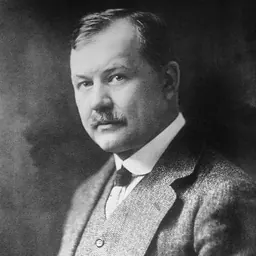
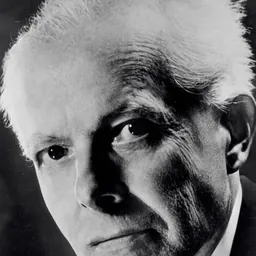


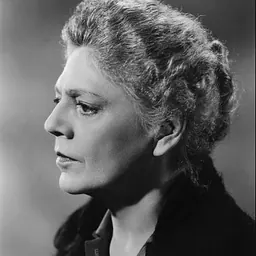
Related people
Same field, nearest in time



Contemporaries
People whose lives overlapped Emmerich Kálmán's



Frequently asked questions
Who was Emmerich Kálmán?
Hungarian-born composer of operettas (1882–1953)
When was Emmerich Kálmán born?
Emmerich Kálmán was born on 24 October 1882 in Siófok.
When did Emmerich Kálmán die?
Emmerich Kálmán died on 30 October 1953 in Paris.
What was Emmerich Kálmán's occupation?
Emmerich Kálmán was a composer, conductor, film score composer and musician.
What nationality was Emmerich Kálmán?
Emmerich Kálmán was Hungarian, Austrian and American.
Sources & further reading
Cite this page
APA: Biography.guide. (2026). Emmerich Kálmán. https://biography.guide/emmerich-kalman/
MLA: "Emmerich Kálmán." Biography.guide, https://biography.guide/emmerich-kalman/.
Chicago: "Emmerich Kálmán." Biography.guide. https://biography.guide/emmerich-kalman/.
Data last updated: 2026-09-22 · Spot an error? Report a correction.
Portrait: Wikimedia Commons · author & licence
Page generated 2026-09-27 05:04 UTC