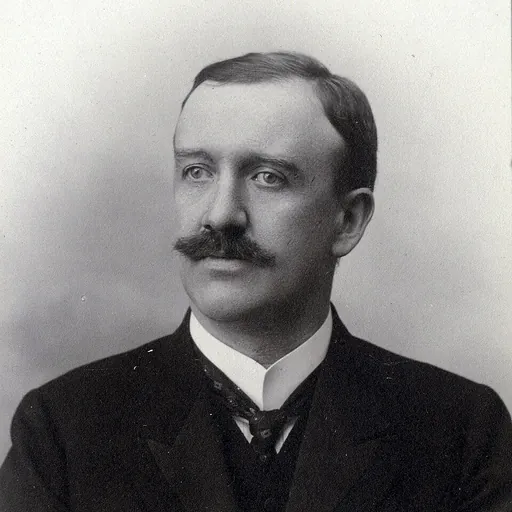
About Friedrich Hasenöhrl
Lived 1874 – 1915 (aged 40). Friedrich Hasenöhrl was an Austrian physicist and university teacher, known for Electromagnetic mass.
Friedrich Hasenöhrl (; 30 November 1874 – 7 October 1915) was an Austrian physicist and professor of the University of Vienna. He postulated a relation between electromagnetic mass and energy, close to the modern mass–energy equivalence.
He was killed in action during World War I.
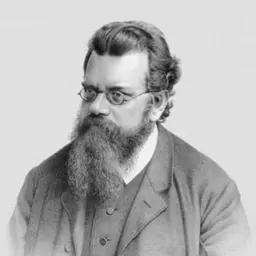
Life Friedrich Hasenöhrl was born in Vienna, Austria-Hungary in 1874. His father was a lawyer and his mother belonged to a prominent aristocratic family. After his elementary education, he studied natural science and mathematics at the University of Vienna under Joseph Stefan (1835–1893) and Ludwig Boltzmann (1844–1906). In 1896, he attained a doctorate under Franz-Serafin Exner with a thesis titled "Über den Temperaturkoeffizienten der Dielektrizitätskonstante in Flüssigkeiten und die Mosotti-Clausius'sche Formel".
He worked under Heike Kamerlingh Onnes in Leiden at the low temperature laboratory, and there he also befriended H. A. Lorentz.
In 1907 he became Boltzmann's successor at the University of Vienna as the head of the Department of Theoretical Physics. He had a number of illustrious pupils there and had an especially significant impact on Erwin Schrödinger, who later won the Nobel Prize for Physics for his contributions to quantum mechanics.
In an autobiography, Schrödinger claimed "no other human being had a greater influence on me than Fritz Hasenöhrl, except perhaps my father Rudolph".
When the First World War broke out in 1914, he volunteered at once into the Austria-Hungarian army. He fought as Oberleutnant against the Italians in Tyrol. He was wounded, recovered and returned to the front. He was then killed by a grenade in an attack on Mount Plaut (Folgaria) on 7 October 1915 at the age of 40.
Cavity radiation
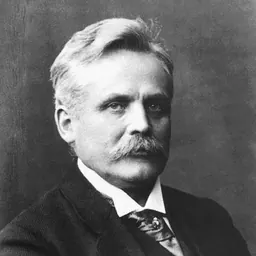
Since J. J. Thomson in 1881, many physicists like Wilhelm Wien (1900), Max Abraham (1902), and Hendrik Lorentz (1904) used equations equivalent to
for the so-called "electromagnetic mass", which expresses how much electromagnetic energy contributes to the mass of bodies.
Following this line of thought, Hasenöhrl (1904, 1905) published several papers on the inertia of a cavity containing radiation.
In some additional papers (1907, 1908)
Afterwards, several authors gave credit to Hasenöhrl for his 1904 achievements on cavity radiation.
Explanations There are different explanations for this result and its deviation from the relativistic formula . Enrico Fermi and others argued that this problem is analogous to the so-called 4/3 problem of electromagnetic mass. That is, if Hasenöhrl had included the shell in his calculations in a way consistent with relativity, the pre-factor of 4/3 would have been 1, so yielding . He could not have done this, since he did not have relativistic mechanics, with which he could model the shell.
On the other hand, Stephen Boughn and Tony Rothman in 2011 (and Boughn in 2012 ), who gave a historical account of different solutions to the problem, argued that the above explanation is insufficient. After providing a complete relativistic description and solution of the cavity problem (in the "constant velocity case" and "slow acceleration case"), they wrote:
Hasenöhrl and Einstein
The equations for electromagnetic mass, like those of Hasenöhrl's (for example, Oliver Heaviside (1889), Henri Poincaré (1900), Abraham (1902)), formally similar to the famous Einstein's (1905) equation for mass–energy equivalence,
that of which the special case of a stationary massive body is widely known as , have often prompted uninformed questioning of Einstein's priority of the discovery, starting soon after his publication and continuing to this day.
Max von Laue clarified as early as 1921 that, while the inertia of electromagnetic energy had been known long before Hasenöhrlt, Einstein was indeed the first to establish the equivalence of real mass and the total energy-momentum content and understand the deep implications of this principle in relativity.
Known Family Married Ella Brückner and had at least one known son, Victor Hasenohrl (? - 1982) who married Elizabeth Sayre (? - 1968) Victor Hasenohrl (? - 1982) who married Elizabeth Sayre (? - 1968) had three adopted children: Frederick Hasenohrl [deceased] who married Victoria ? (?-?) who had two children: Children: Frederick Hasenohrl (?- ) Issca (?- ) Elizabeth Sayre Reich (1937-2015) who married Joseph D. Reich (1928-2000) who had two adopted children: Children: Daniel Stuart Reich (1964- ) who lives in Lutherville, Maryland, USA. Eric Kent Reich (1966- ) who lives in Boyds, Maryland, USA. Margaret Hasenohrl (1942- ) who never married and resides in Silver Spring, Maryland, USA.
Publications Hasenöhrl's papers on cavity radiation and thermodynamics
Don’t just read it —
keep it.
Full-length biographies made to live with: read them, listen on the way to work, watch them tonight.
- E-book
- Audio
- Video
Instant download · yours to keep · every purchase keeps this site free
Important facts
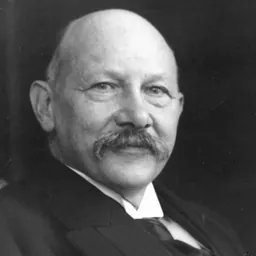
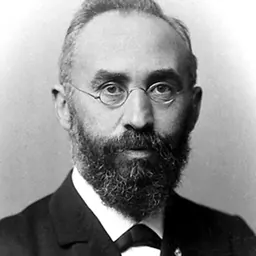
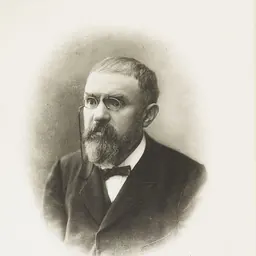
People in Friedrich Hasenöhrl's life
Named in this biography and alive at the same time

Related people
Same field, nearest in time


Contemporaries
People whose lives overlapped Friedrich Hasenöhrl's

Frequently asked questions
Who was Friedrich Hasenöhrl?
Austrian physicist (1874–1915)
When was Friedrich Hasenöhrl born?
Friedrich Hasenöhrl was born on 30 November 1874 in Vienna.
When did Friedrich Hasenöhrl die?
Friedrich Hasenöhrl died on 7 October 1915 in Folgaria.
What was Friedrich Hasenöhrl's occupation?
Friedrich Hasenöhrl was a physicist and university teacher.
What was Friedrich Hasenöhrl known for?
Friedrich Hasenöhrl was known for Electromagnetic mass.
What nationality was Friedrich Hasenöhrl?
Friedrich Hasenöhrl was Austrian.
Sources & further reading
· Wikipedia: Friedrich Hasenöhrl
· DBpedia: Friedrich Hasenöhrl
Cite this page
APA: Biography.guide. (2026). Friedrich Hasenöhrl. https://biography.guide/friedrich-hasenohrl/
MLA: "Friedrich Hasenöhrl." Biography.guide, https://biography.guide/friedrich-hasenohrl/.
Chicago: "Friedrich Hasenöhrl." Biography.guide. https://biography.guide/friedrich-hasenohrl/.
Data last updated: 2026-09-22 · Spot an error? Report a correction.
Portrait: Wikimedia Commons · author & licence
Page generated 2026-09-27 05:04 UTC