
About Fredrik Kayser
Lived 1918 – 2009 (aged 90). Fredrik Kayser was a Norwegian politician, businessperson, military officer and actor.
Fredrik Thorbjørn Kayser, (25 May 1918 – 2 February 2009) was a Norwegian resistance member during World War II. He was especially noted for his role in the Norwegian heavy water sabotage, and has been referred to as "Western Norway's Gunnar Sønsteby".
Early life Kayser grew up at Paradis in Bergen. Among his youth experiences was a period as a Boy Scout, under later resistance member Fredrik Rieber-Mohn. When drafted for compulsory military service after finishing school, he enrolled in the His Majesty The King's Guard, finishing his eight months of service in 1938. In 1939, reportedly after attending a performance of the symphonic poem Finlandia, he volunteered to fight on Finland's side in the Winter War, a war between the Soviet Union and Finland. In 1998 he stated that he "wanted to defeat the Communist system". He also stated that he never actually fired a gunshot.
World War II Norway was invaded by Germany on 9 April 1940. Coincidentally, Kayser returned to Norway from Finland on this date, crying as he found the capital city Oslo invaded. He became involved in the fighting that ensued elsewhere in Norway. On 25 April he fought in the Battle of Skjervet in Granvin. The Norwegian forces lost, and retreated to Gudvangen.
Heavy water sabotage The Vemork hydroelectric plant in 1935. The heavy water was produced in the front building (the Hydrogen Production Plant).
In 1942 the British Operation Freshman, directed against the heavy water production facility at Vemork, failed miserably. Kayser was one of the first two saboteurs to enter the Vemork facility on 27 February, crawling through a cable shaft, the other being the team leader, Joachim Rønneberg. They surprised the person who guarded the heavy water cylinders in the factory—in retrospect the guard was described as "a good Norwegian". and Rønneberg went on to place explosive charges on the heavy water cylinders in the factory. Two more members of the Gunnerside team later joined Kayser and Rønneberg by climbing through a window. During the operation a Norwegian watchman was temporarily detained, and guarded by Kayser, being released 30 seconds before the explosives went off. The saboteurs of Operation Gunnerside escaped unharmed, even though the German occupying authorities deployed thousands of soldiers to search Hardangervidda for the saboteurs. Kayser made his way to Sweden
For his role in the heavy water sabotage Kayser was awarded the Military Medal by King George VI of the United Kingdom. Kayser, then a lieutenant, was second-in-command of the base Bjørn West at Matre in Masfjorden Municipality and took part in the 28 April–3 May 1945 fighting after the base was discovered by the Germans. Kayser had arrived in Masfjorden in October 1944 with a fellow Norwegian Independent Company 1 soldier, second lieutenant Severin Synnes. The two had been transported to Masfjorden from the UK on the Royal Norwegian Navy submarine chaser HNoMS Vigra with orders to establish Bjørn West.
Awards and honours In total, Kayser received fourteen decorations for his wartime efforts. In addition to the Military Medal, he received the Légion d'honneur and twice the St. Olav's Medal With Oak Branch. Thus he was referred to as "Western Norway's Gunnar Sønsteby".
St. Olav's Medal With Oak Branch awarded twiceDefence Medal 1940–1945 Military Medal Chevalier of the Légion d'honneur
Post-war life Kayser left the military after the war, and spent the rest of his professional career working in the private business sector. He was a member of the municipal council of Fana Municipality for eight years during the 1950s, representing the Conservative Party, although he was not formally a member of the party. He also became a devout Christian after the war. He cited recurring nightmares as the reason for his unwillingness to recapitulate the war period. Ultimately, the writer Kjell Harald Lunde got Kayser's consent, and in 1997 Lunde published the book Sabotøren ('The Saboteur'). Kayser had participated in a Norwegian Broadcasting Corporation production on Bjørn West in the spring of 1994. Kayser's son, Johan Fr. Kayser, played his father in the television production.
Fredrik Kayser died on 2 February 2009, having suffered from failing health for four months. He had lived in Ågotnes since 1974.
Don’t just read it —
keep it.
Full-length biographies made to live with: read them, listen on the way to work, watch them tonight.
- E-book
- Audio
- Video
Instant download · yours to keep · every purchase keeps this site free
Important facts
People in Fredrik Kayser's life
Named in this biography and alive at the same time
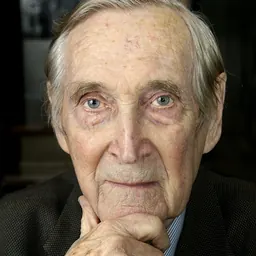

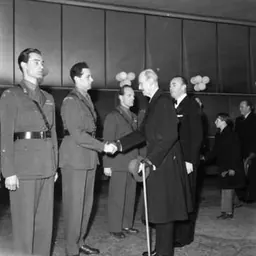
Related people
Same field, nearest in time





Contemporaries
People whose lives overlapped Fredrik Kayser's

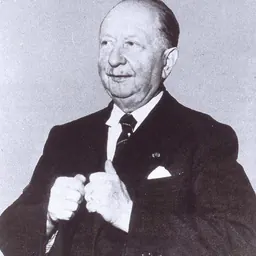
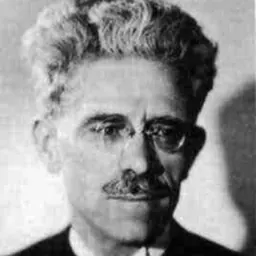

Frequently asked questions
Who was Fredrik Kayser?
Norwegian politician (1918-2009)
When was Fredrik Kayser born?
Fredrik Kayser was born on 25 May 1918 in Bergen.
When did Fredrik Kayser die?
Fredrik Kayser died on 2 February 2009 in Bergen.
What was Fredrik Kayser's occupation?
Fredrik Kayser was a politician, businessperson, military officer and actor.
What nationality was Fredrik Kayser?
Fredrik Kayser was Norwegian.
Sources & further reading
Cite this page
APA: Biography.guide. (2026). Fredrik Kayser. https://biography.guide/fredrik-kayser/
MLA: "Fredrik Kayser." Biography.guide, https://biography.guide/fredrik-kayser/.
Chicago: "Fredrik Kayser." Biography.guide. https://biography.guide/fredrik-kayser/.
Data last updated: 2026-09-20 · Spot an error? Report a correction.
Page generated 2026-09-27 05:06 UTC