
About Fred S. Keller
Lived 1899 – 1996 (aged 97). Fred S. Keller was an American psychologist and educator, known for Behavior analysis, Keller Plan and Operant conditioning.
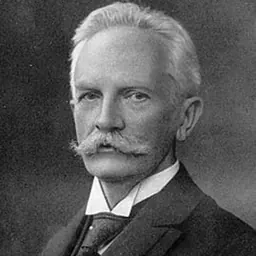
Fred Simmons Keller (January 2, 1899 – February 2, 1996) was an American psychologist and a pioneer in experimental psychology. He taught at Columbia University for 26 years and gave his name to the Keller Plan, also known as Personalized System of Instruction, an individually paced, mastery-oriented teaching method that has had a significant impact on college-level science education system. He died at home, age 97, on February 2, 1996, in Chapel Hill, North Carolina.
Life Keller was born on January 2, 1899, on a farm near Rural Grove, New York, in Montgomery County. He was the only child to Vrooming Barney Keller and Minnie Vanderveer Simmons. Due to instability in his childhood, he left school at an early age to pursue employment as a Western Union telegrapher in Saranac Lake, New York. He enlisted in the U.S. Army in 1918 during World War I and served in Camp Jackson, South Carolina, in addition to active duty overseas in France and Germany. While in France, he served in battle five times, and in Germany he participated in the Army of Occupation. Keller exited the military ranking as a sergeant in August 1919.
Keller attended Goddard Seminary, Originally Keller had left school due to discrepancies with his attendance. During his time off of at school, he read John Watson's Psychology from the Standpoint of a Behaviorist, in which he returned to Tufts with a focus in psychology a few years later. He earned a B.S. from Tufts College in 1926 and was awarded an academic position in which he was employed for, for two years. Keller attended Harvard University for graduate school following his bachelor's degree in addition to teaching at Tufts.
Additionally, he took part in a position at Harvard College as a laboratory assistant and a tutor. Keller received his master's degree in 1928 and left Harvard College in 1931. During his time in Harvard, Keller took classes under E.G. Boring, who was the peak of Keller's career. Also, Keller met fellow graduate and famous psychologist, B.F. Skinner, in which they roomed together and became long-life friends. He found a job at Colgate University during the Great Depression and remained there for seven years until 1938. Following Colgate University he was offered a position at Columbia University; he was named assistant professor in 1942, associate professor in 1946, and professor of psychology in 1950. He also served as chairman of the department from 1959 to 1962 and became professor emeritus of psychology in 1964, the same year he retired from the university. In 1963 Keller was invited to Brazil to São Paulo to incorporate his new psychology into their existing academics. Keller returned to the U.S. and was invited back to Brazil, this time to the University of Brazila, where he was instructed to continue the development of his new findings. Upon returning for good, Keller found employment at the Institute for Behavioral Research, as well as Western Michigan University, Texas Christian University, and Georgetown University. Keller spent his time as a visiting professor, adjunct professor, as well as the chair at the listed universities. He retired in May 1976 from Georgetown University. It was seen as a possible plan to increase academic performance and often singled out his students to denote praise. He was recognized throughout his life and was liked by many. After his death, a memorial was held in San Francisco by the Association for Behavior Analysis, in which over two hundred people took part in. Keller was also recognized for his "effects of his lectures on one student's behavior ... efficacy of his teaching" and "graceful flow of sentence into paragraph".
Brazil Concluding his years at Columbia University, he was invited to the University of São Paulo by Fulbright–Hays, in which he attended as a visiting professor. He spent one year in Brazil during 1961, establishing his reinforcement theory into the psychological presence. Keller constructed multiple experimental instruments used to test reinforcement, such as living cages that were constructed from ordinary resources. He used hard-wire cloths, wooden frames, bent wire that acted as levers, pencils, watches, and cocktail stirrers. Keller initiated a new psychology in the city of Brazil and was recognized heavily for it. His influence at the university initiated multiple students to travel to the US to continue the work of Keller. This lead later to "Mastery learning" plan.
When Keller returned to the US, he continued the work he had started in Brazil dealing with the personalized system of instruction. His work was developed in collaboration with J. G. Sherman at Arizona State University, where he remained for three years. During his time, J. G. Sherman and Keller advanced principles associated with the PSI. These included "(1) The semester's work was divided into, let's say, twenty units, in a logical progression such as the necessary background for each unit, was contained in the units that went before. (2) Repeated tests were given, administered by student "proctors" selected from those who had been most successful during the previous semester, and each student would continue testing on a given unit of the material until he had demonstrated satisfactory proficiency. Erroneous answers could be discussed, or even debated with the student proctor until a clear understanding was achieved. (3) The criterion for moving on to the next unit was not a particular understanding, but 'mastery' of a given unit of material. Eventually, all students, if they persisted, were expected to turn in a performance. (4) Each student worked at his own pace".
Students were encouraged to master each concept before moving on to a subsequent concept. This allowed each student to work at their own pace without fear of falling behind.
Following Arizona State, Keller attended in 1967 the Institute for Behavioral Research located in Silver Spring, Maryland. During his attendance, he developed several additional concepts in regards to the PSI and published a well-known paper called "Good-bye Teacher...." where the concept of PSI was first presented. In 1970 he had received the Distinguished Teacher Award given to him by the APA, as well as the honorary Doctor of Science degree from Long Island University in addition to Colgate University in 1976. Additionally, he was given the Behavioral Scientist medal in 1973 from the Institute for Behavioral Research and the Doctor of Humane Letters degree in 1976.
Don’t just read it —
keep it.
Full-length biographies made to live with: read them, listen on the way to work, watch them tonight.
- E-book
- Audio
- Video
Instant download · yours to keep · every purchase keeps this site free
Important facts
People in Fred S. Keller's life
Named in this biography and alive at the same time




Related people
Same field, nearest in time


Contemporaries
People whose lives overlapped Fred S. Keller's


Frequently asked questions
Who was Fred S. Keller?
American psychologist
When was Fred S. Keller born?
Fred S. Keller was born on 2 January 1899 in Rural Grove.
When did Fred S. Keller die?
Fred S. Keller died on 2 February 1996 in Chapel Hill.
What was Fred S. Keller's occupation?
Fred S. Keller was a psychologist and educator.
What was Fred S. Keller known for?
Fred S. Keller was known for Behavior analysis, Keller Plan and Operant conditioning.
What nationality was Fred S. Keller?
Fred S. Keller was American.
Sources & further reading
Cite this page
APA: Biography.guide. (2026). Fred S. Keller. https://biography.guide/fred-s-keller/
MLA: "Fred S. Keller." Biography.guide, https://biography.guide/fred-s-keller/.
Chicago: "Fred S. Keller." Biography.guide. https://biography.guide/fred-s-keller/.
Data last updated: 2026-09-20 · Spot an error? Report a correction.
Page generated 2026-09-27 05:02 UTC