
Frans de Waal
Dutch primatologist and ethologist
About Frans de Waal
Lived 1948 – 2024 (aged 75). Frans de Waal was a Dutch university teacher, primatologist, ethologist, zoologist, photographer and author.
Franciscus Bernardus Maria de Waal (29 October 1948 – 14 March 2024) was a Dutch-American primatologist and ethologist. He was the Charles Howard Candler Professor of Primate Behavior in the Department of Psychology at Emory University in Atlanta, Georgia, director of the Living Links Center at the Emory National Primate Research Center, and author of numerous books including Chimpanzee Politics and Our Inner Ape (2005). His research centered on primate social behavior, including conflict resolution, cooperation, inequity aversion, and food-sharing. He was a member of the United States National Academy of Sciences and the Royal Netherlands Academy of Arts and Sciences.
According to Raymond Corbey's The Metaphysics of Apes, De Waal's work "helped to combat the widespread inclination to see the bad habits of humans as exclusively animal and their good ones as exclusively human."
Early life and education De Waal was born in 's-Hertogenbosch on 29 October 1948, to Jo and Cis de Waal. He grew up with five brothers in Waalwijk.
He studied at Radboud University Nijmegen, University of Groningen, and Utrecht University in the Netherlands. In 1977, De Waal received his doctorate in biology from Utrecht University after training as a zoologist and ethologist with professor Jan van Hooff, a well-known expert on emotional facial expression in primates. His dissertation, titled "Agonistic interactions and relations among Java-monkeys", concerned aggressive behavior and alliance formation in macaques.
He remarked many times that fellow Dutch biologist and 1973 Nobel Prize co-laureate Niko Tinbergen was an inspiration to his career as a scientist.
Career In 1975, De Waal began a six-year project on the world's largest captive colony of chimpanzees at the Arnhem Zoo. The study resulted in many scientific papers and the publication of his first book, Chimpanzee Politics, in 1982. This book described primates' planned social strategies. De Waal was the first to introduce the thinking of Machiavelli to primatology, leading to the term Machiavellian intelligence. In the mid 1990’s, the book was included on a reading list for US Republican House freshmen. De Waal's later work emphasized nonhuman animal empathy and the origins of morality. His most widely cited paper, written with his former student Stephanie Preston, concerns the evolutionary origin and neuroscience of empathy, not just in primates, but in mammals generally.
In the 1990s, De Waal published a book about his work on bonobos, Bonobo: The Forgotten Ape in 1997, including details on bonobo's colorful sex lives. This work, including a 1995 Scientific American article, helped popularize bonobos. In mainstream media, bonobos developed a "make love – not war" reputation.
De Waal's larger goal was understanding what binds primate societies together rather than how competition structures them. However, competition is not ignored in his work: the original focus of de Waal's research was aggressive behavior and social dominance. Whereas his research focused on the behavior of nonhuman primates (mostly chimpanzees, bonobos, macaques, and capuchin monkeys), his popular books gave de Waal worldwide visibility by relating the insights he has gained from monkey and ape behavior to human society. With his students, he also worked on elephants, which were increasingly featured in his writings.
De Waal's research into the innate capacity for empathy among primates led him to the conclusion that non-human great apes and humans are simply different types of apes, and that empathic and cooperative tendencies are continuous between these species. His belief is illustrated in the following quote from The Age of Empathy: "We start out postulating sharp boundaries, such as between humans and apes, or between apes and monkeys, but are in fact dealing with sand castles that lose much of their structure when the sea of knowledge washes over them. They turn into hills, leveled ever more, until we are back to where evolutionary theory always leads us: a gently sloping beach."
This is quite opposite to the view of some economists and anthropologists, who postulate the differences between humans and other animals. However, recent work on prosocial tendencies in apes and monkeys supports de Waal's position. See, for example, the research of Felix Warneken, a psychologist at the Max Planck Institute for Evolutionary Anthropology in Leipzig, Germany. In 2011, de Waal and his co-workers were the first to report that chimpanzees given a free choice between helping only themselves or helping themselves plus a partner, prefer the latter. In fact, de Waal does not believe these tendencies to be restricted to humans and apes, but views empathy and sympathy as universal mammalian characteristics, a view that over the past decade has gained support from studies on rodents and other mammals, such as dogs. He and his students have extensively worked on such cooperation and fairness in animals. In 2011 de Waal gave a TED Talk entitled "Moral behavior in animals". Part of the talk dealt with inequity aversion among capuchin monkeys, and a video extract of this went viral. It showed the furious reaction of one monkey given a less desirable treat than another. The most recent work in this area was the first demonstration that given a chance to play the ultimatum game, chimpanzees respond in the same way as children and human adults by preferring the equitable outcome.
In 1981, de Waal moved to the United States for a position at the Wisconsin National Primate Research Center, and in 1991 took a position at Emory University, in Atlanta, Georgia. He was C.H. Candler Professor in the Psychology Department at Emory University and director of the Living Links Center at the Yerkes National Primate Research Center at Emory. He became an American citizen in 2008.
In 2005 he coined the term Veneer theory. His 2013 book The Bonobo and the Atheist examines human behavior through the eyes of a primatologist, and explores to what extent God and religion are needed for human morality. The main conclusion is that morality comes from within, and is part of human nature. The role of religion is secondary.
De Waal also wrote a column for Psychologie Magazine, a popular Dutch monthly.
From 1 September 2013, de Waal was a distinguished professor (universiteitshoogleraar) at Utrecht University. This was a part-time appointment whilst he remained in his position at Emory University, in Atlanta.
In October 2016, de Waal was the guest on the BBC Radio Four program The Life Scientific.
In June 2018, de Waal was awarded the NAT Award, established by the Museum of Natural Sciences of Barcelona. It was awarded to de Waal "for his vision regarding the evolution of animal behaviour in establishing a parallel between primate and human behaviour in aspects such as politics, empathy, morality and justice."
At least two of de Waal’s later books, Are We Smart Enough to Know How Smart Animals Are? (2016) and Mama’s Last Hug: Animal Emotions and What They Tell Us About Ourselves (2019), were best sellers. Different: Gender through the Eyes of a Primatologist (2022) was a Kirkus Best Science and Medicine Book of 2022.
De Waal died of stomach cancer on 14 March 2024 in Stone Mountain, Georgia. He was 75.
Awards
2021 Doctor Honoris Causa, Université Jean-Monnet-Saint-Étienne (France) 2020 PEN / EO Wilson Literary Science Writing Award (US) 2018 Doctor Honoris Causa, Yale University (US) 2018 NAT Award for the Dissemination of Natural Science, Barcelona (Spain) 2017 Doctor Honoris Causa, Radboud University (Netherlands) 2015 ASP Distinguished Primatologist (American Society of Primatologists) 2015 Eugène Dubois Chair, Maastricht University (Netherlands) 2014 Galileo Prize (Premio Letterario Galileo), Padua (Italy) 2013 Edward O. Wilson Biodiversity Technology Pioneer Award 2013 Foreign Member, Royal Holland Society of Sciences and Humanities 2013 Doctor Honoris Causa, Utrecht University (Netherlands) 2012 Ig Nobel Prize winner, in the Anatomy category 2011 Discover magazine's "47 (all time) Great Minds of Science" 2011 Doctor Honoris Causa, Colgate University (US) 2009 Medal, Società di Medicina & Scienze Naturali, Parma (Italy) 2007 Time 100 world's most influential people 2005 Member of the American Philosophical Society (APS) 2005 Arthur W. Staats Award, American Psychological Foundation 2004 Member of the (US) National Academy of Sciences (NAS) 1993 Corresponding member of the Royal Netherlands Academy of Arts and Sciences (KNAW) 1989 Los Angeles Times Book Award for Peacemaking among Primates
Selected bibliography Books Chimpanzee Politics: Power and Sex Among Apes. New York: Harper & Row, 1982. Peacemaking Among Primates. Cambridge: Harvard University Press, 1989. Chimpanzee Cultures, Edited with Richard Wrangham, W.C. McGrew, and Paul Heltne. Foreword by Jane Goodall. Cambridge: Harvard University Press, 1994. . Good Natured: The Origins of Right and Wrong in Humans and Other Animals. Cambridge: Harvard University Press, 1996. Bonobo: The Forgotten Ape. Berkeley: University of California Press, 1997. (with Frans Lanting) Chimpanzee Politics: Power and Sex Among Apes (revised ed.). Baltimore, Md.: Johns Hopkins University Press, 1998. Natural Conflict Resolution. 2000 (with Filippo Aureli) Tree of Origin: What Primate Behavior Can Tell Us about Human Social Evolution, Harvard University Press, 2001. . The Ape and the Sushi Master, Cultural reflections by a primatologist. New York: Basic Books, 2001. Animal Social Complexity: Intelligence, Culture, and Individualized Societies, Edited with Peter L. Tyack. Cambridge: Harvard University Press, 2003. . My Family Album, Thirty Years of Primate Photography 2003. Our Inner Ape. New York: Riverhead Books, 2005. Primates and Philosophers: How Morality Evolved, 2006. Chimpanzee Politics: Power and Sex Among Apes (25th Anniversary ed.). Baltimore, Md.: Johns Hopkins University Press, 2007. .
Articles 2022 de Waal, Frans B.M. and K. Andrews. "The question of animal emotions." Science 375 (6587): 1351–1352. 25 March 2022. 2015 Opinion piece about the discovery of Homo naledi in The New York Times 2013 Opinion piece about animal intelligence in The Wall Street Journal 2010 Opinion piece about God and morality in The New York Times 2010 2009, 2008 2007, "Bonobos, Left & Right" Skeptic, (8 August 2007). 2006, 2005, "The empathic ape", New Scientist, 8 October 2005 2001, "Do Humans Alone 'Feel Your Pain'?" (Chronicle.com, 26 October 2001) 1999, 1995,
Don’t just read it —
keep it.
Full-length biographies made to live with: read them, listen on the way to work, watch them tonight.
- E-book
- Audio
- Video
Instant download · yours to keep · every purchase keeps this site free
Important facts
People in Frans de Waal's life
Named in this biography and alive at the same time
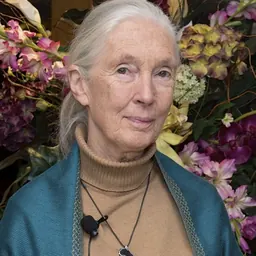
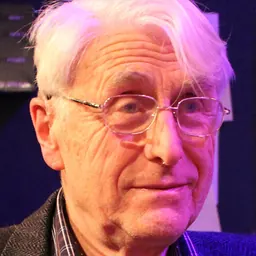



Related people
Same field, nearest in time

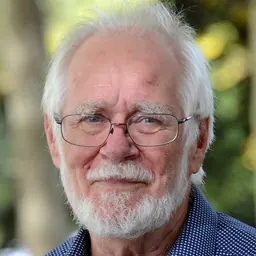
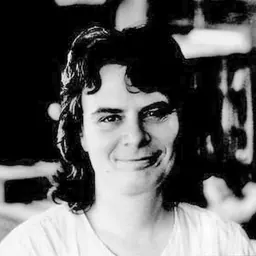


Contemporaries
People whose lives overlapped Frans de Waal's


Frequently asked questions
Who was Frans de Waal?
Dutch primatologist and ethologist (1948–2024)
When was Frans de Waal born?
Frans de Waal was born on 29 October 1948 in 's-Hertogenbosch, North Brabant.
When did Frans de Waal die?
Frans de Waal died on 14 March 2024 in Atlanta.
What was Frans de Waal's occupation?
Frans de Waal was a university teacher, primatologist, ethologist, zoologist, photographer and author.
What nationality was Frans de Waal?
Frans de Waal was Dutch.
Sources & further reading
Cite this page
APA: Biography.guide. (2026). Frans de Waal. https://biography.guide/frans-de-waal/
MLA: "Frans de Waal." Biography.guide, https://biography.guide/frans-de-waal/.
Chicago: "Frans de Waal." Biography.guide. https://biography.guide/frans-de-waal/.
Data last updated: 2026-09-20 · Spot an error? Report a correction.
Page generated 2026-09-27 05:24 UTC