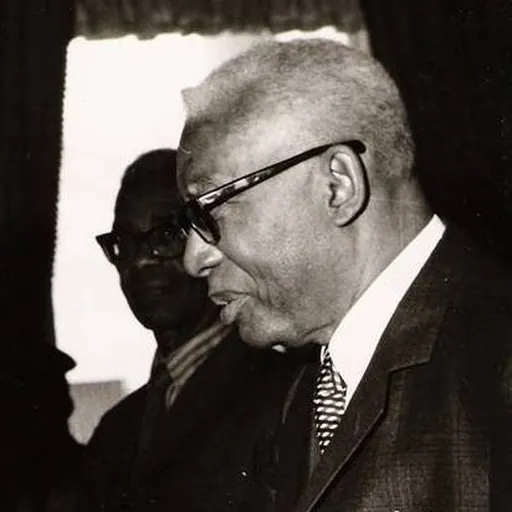
About François Duvalier
Lived 1907 – 1971 (aged 64). François Duvalier was a Haitian politician and physician.
François Duvalier (14 April 190721 April 1971), also known as Papa Doc, was a Haitian politician, dictator and physician who served as president of Haiti from 1957 until his death in 1971.
Duvalier completed a degree in medicine from the University of Haiti in 1934 and spent a year at the University of Michigan studying public health. In 1943 he became active in a campaign to control the spread of contagious tropical diseases in Haiti. His patients affectionately called him "Papa Doc," a moniker that he used throughout his life. Duvalier served as Minister for Public Health and Labor under the administration of Dumarsais Estimé.
Duvalier was elected president in the 1957 general election on a populist and black nationalist platform. After thwarting a military coup d'état in July 1958, his regime rapidly became more autocratic and eventually totalitarian. Duvalier was unanimously "re-elected" in a 1961 presidential election in which he was the only candidate. Afterwards, he consolidated his power step by step, culminating in 1964 when he declared himself president for life after another sham referendum and election.
An undercover government death squad, the Tonton Macoute , indiscriminately tortured or killed Duvalier's opponents; the Tonton Macoute was thought to be so pervasive that Haitians became highly fearful of expressing any form of dissent, even in private. The Tonton Macoute eventually came to number 300,000 and more than half of the government budget was allocated to the group as well as the Presidential Guard. whose family came from Martinique, and His aunt, Madame Florestal, raised him as a child. and served as staff physician at several local hospitals. He spent a year at the University of Michigan studying public health
The racism and violence that occurred during the United States occupation of Haiti, which began in 1915, inspired black nationalism among Haitians and left a powerful impression on the young Duvalier. He was also aware of the latent political power of the poor black majority and their resentment against the small mulatto elite. Duvalier supported Pan-African ideals, and became involved in the movement of Haitian author , both of which led to his advocacy of Haitian Vodou, an ethnological study of which later paid enormous political dividends for him. In 1938, Duvalier co-founded the journal Les Griots. On 27 December 1939, he married Simone Ovide, a mulatto nurse's aide. They had four children: Marie‑Denise, Nicole, Simone, and Jean‑Claude.
Political rise In 1946, Duvalier aligned himself with President Dumarsais Estimé and was appointed Director General of the National Public Health Service. In 1949, he served as Minister of Health and Labor, but when Duvalier opposed Paul Magloire's 1950 coup d'état, he left the government and resumed practicing medicine. His practice included taking part in campaigns to prevent yaws and other diseases. In 1954, Duvalier abandoned medicine, hiding out in Haiti's countryside from the Magloire regime. In 1956, the Magloire government was failing, and although still in hiding, Duvalier announced his candidacy to replace him as president. and on 12 December 1956, Magloire conceded defeat.
François Duvalier was elected president on 22 September 1957. Duvalier received 679,884 votes to Déjoie's 266,992. Even in this election, however, there are multiple first-hand accounts of voter fraud and voter
Presidency
Consolidation of power After being elected president in 1957, Duvalier exiled most of the major supporters of Déjoie. Although the army and its leaders had quashed the coup attempt, the incident deepened Duvalier's distrust of the army, an important Haitian institution over which he did not have firm control. He replaced the chief-of-staff with a more reliable officer and then proceeded to create his own power base within the army by turning the Presidential Guard into an elite corps aimed at maintaining his power. After this, Duvalier dismissed the entire general staff and replaced it with officers who owed their positions, and their loyalty, to him.
In 1959, Duvalier created a rural militia, the (, )—commonly referred to as the after a bogeyman—to extend and bolster support for the regime in the countryside. The Macoute, which by 1961 was twice as big as the army, never developed into a real military force but was more than just a secret police.
In the early years of his rule, Duvalier was able to take advantage of the strategic weaknesses of his powerful opponents, mostly from the mulatto elite. These weaknesses included their inability to coordinate their actions against the regime, whose power had grown increasingly strong. In the name of nationalism, Duvalier expelled almost all of Haiti's foreign-born bishops, an act that earned him excommunication from the Catholic Church. Duvalier now exercised more power in Haiti than ever.
Heart attack and Barbot affair On 24 May 1959, Duvalier suffered a massive heart attack, possibly due to an insulin overdose; he had been a diabetic since early adulthood and also suffered from heart disease and associated circulatory problems. During the heart attack, he was comatose for nowrap|nine hours. The captured and killed Barbot in July 1963. In other incidents, Duvalier ordered the head of an executed rebel packed in ice and brought to him so he could commune with the dead man's spirit. Peepholes were carved into the walls of the interrogation chambers, through which Duvalier watched Haitian detainees being tortured and submerged in baths of sulfuric acid; sometimes, he was in the room during the torture.
Constitutional changes
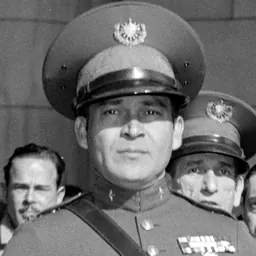
In 1961, Duvalier began violating the provisions of the 1957 constitution. First, he replaced the bicameral legislature with a unicameral body. Then he called a new presidential election in which he was the sole candidate. His term was to expire in 1963 and the constitution prohibited re-election, but the referendum sought to extend his term until 1967. The election was flagrantly rigged; the official tally showed a total of 1,320,748 "yes" votes for allowing Duvalier to stay in office, with none opposed. He transferred this money to personal accounts. Another of Duvalier's methods of obtaining foreign money was to gain foreign loans, including US$4 million from nowrap|Cuban dictator Fulgencio Batista. the U.S. eased its pressure on Duvalier, grudgingly accepting him as a bulwark against communism. Duvalier attempted to exploit tensions between the U.S. and Cuba, emphasizing his anti-communist credentials and Haiti's strategic location as a means of winning U.S. support:
Cuba After Fulgencio Batista (a friend of Duvalier) This move severed Haitian relations with Cuba for 38 years until the two countries re-established relations in 1997.
Dominican Republic Duvalier's relationship with the neighboring Dominican Republic was always tense: in his early years, Duvalier emphasized the differences between the two countries. In April 1963, relations were brought to the edge of war by the political enmity between Duvalier and Dominican president Juan Bosch. Bosch, a leftist, provided asylum and support to Haitian exiles who had plotted against the Duvalier regime. Duvalier ordered his Presidential Guard to occupy the Dominican Embassy in Pétion-Ville, with the goal of arresting a Haitian army officer believed to have been involved in Barbot's plot to kidnap Duvalier's children. The Dominican president reacted with outrage, publicly threatened to invade Haiti, and ordered army units to the border. However, as Dominican military commanders expressed little support for an invasion of Haiti, Bosch refrained from the invasion and sought mediation through nowrap|the . The entire Jesuit Order was expelled in 1964.
The Vatican sought to strike a deal with Duvalier in order to end his persecution of the church, culminating in a concordat signed on August 15, 1966. This concordat lifted Duvalier's excommunication, and gave him the ability to nominate indigenous Haitians to the country's hierarchy. Within days after the signing of the concordat, the country's six bishops and archbishop were replaced by indigenous Haitian clerics loyal to Duvalier. Duvalier's promotion of Vodou also waned after he assumed control of the Haitian Church. This state of affairs lasted until 1984, when the concordat was amended by the Vatican. However, the bishops nominated by Duvalier remained in office, with the Archbishop of Port-au-Prince, François-Wolff Ligondé, being particularly well-known as an ally of the Duvaliers until his toppling in 1991.
Nigeria and Biafra During the Nigerian Civil War, Duvalier granted diplomatic recognition to Biafra during its war against Nigeria, making Haiti one of few countries that recognized Biafra. Duvalier's decision to recognize Biafra was influenced by his anti-communist foreign policy and by Haiti's historical connection to the Igbo people, the predominant ethnic group of Biafra.
Internal policies
Repression
Duvalier's government was one of the most repressive in the Western Hemisphere. During his 14-year rule, his regime murdered and exiled many political opponents; estimates of those killed, not only political opponents, range from 30,000 to 60,000. Attacks on Duvalier from within the military were treated as especially serious. When bombs were detonated near the Presidential Palace in 1967, Duvalier had nineteen officers of the Presidential Guard executed in Fort Dimanche.
Social and economic policies Duvalier employed intimidation, repression, and patronage to supplant the old mulatto elites with a new elite of his own making. Corruption—in the form of government rake-offs of industries, bribery, extortion of domestic businesses, and stolen government funds—enriched the dictator's closest supporters. Most of them held sufficient power to intimidate the members of the old elite, who were gradually co-opted or eliminated. The regime's propaganda stated that "Papa Doc was one with the lwa, Jesus Christ and God himself". Duvalier declared himself an "immaterial being" as well as "the Haitian flag" soon after his first election. In 1964, he published a catechism in which the Lord's Prayer was heavily reworded to praise Duvalier instead of God.
Duvalier also held in his closet the head of former opponent Blucher Philogenes, who tried to overthrow him in 1963.
Death and succession François Duvalier died of heart disease and diabetes on 21 April 1971 aged 64. His 19-year-old son , nicknamed "Baby Doc", succeeded him as president. His Catholic funeral was held inside of the Hall of Statues in the National Palace on April 25, presided over by Archbishop Ligondé and the other bishops of Haiti and attended by a multitude of dignitaries, including American ambassador Clinton Knox. Initially placed in a fluorescent-lit glass box, his body was moved to a bronze glass-roofed coffin for internment. The large cortege processing to Port-au-Prince's Grand Cimetière was interrupted twice by minor crowd crushes. He was laid to rest in a small tiled mausoleum which he had earlier built for his father.
On 8 February 1986, when the Duvalier regime fell, a crowd attacked Duvalier's mausoleum, throwing boulders at it, chipping off pieces from it, and breaking open the crypt. Duvalier's coffin was not inside, however. A prevailing rumor in the capital, according to The New YorkTimes, was that his son had removed the remains when he fled to Paris in a U.S. Air Force transport plane the day before. As of 2015, only the desecrated foundation of his mausoleum remains.
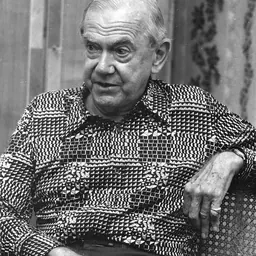
Books and films Many books have been written about the Duvalier era in Haiti, the best known of which is Graham Greene's novel The Comedians. Duvalier, however, dismissed the piece and referred to its author as "a cretin, a stool pigeon, sadistic, unbalanced, perverted, a perfect , lying to his heart's content, the shame of proud and noble England, a spy, a drug addict, and a torturer". The book was later made into a film. Greene himself was declared and barred from entering Haiti.
Alan Whicker featured Duvalier in a 1969 episode of Whicker's World, which included an interview with the president. Made by Yorkshire Television, the documentary is deeply revealing of Duvalier's character and of the state of Haiti in 1969.
The first authoritative book on the subject was Papa Doc: Haiti and its Dictator by Al Burt and Bernard Diederich, published in 1969, though several others by Haitian scholars and historians have appeared since Duvalier's death in 1971. One of the most informative, Pathe Real Dictators podcast featured aungeon of Death, dealt specifically with victims of Fort Dimanche, the prison which Duvalier used for the torture and murder of his political opponents.
In 2007, John Marquis wrote Papa Doc: Portrait of a Haitian Tyrant, which relied in part on records from a 1968 espionage trial in Haiti to detail numerous attempts on Duvalier's life. The trial's defendant, David Knox, was a Bahamian director of information. Knox lost and was sentenced to death, but he was later granted amnesty.
In 2020, Real Dictators podcast, featured a three-part a biographical series on the dictator's life.
Don’t just read it —
keep it.
Full-length biographies made to live with: read them, listen on the way to work, watch them tonight.
- E-book
- Audio
- Video
Instant download · yours to keep · every purchase keeps this site free
Important facts
Family & relationships
People in François Duvalier's life
Named in this biography and alive at the same time





Related people
Same field, nearest in time




Contemporaries
People whose lives overlapped François Duvalier's


Frequently asked questions
Who was François Duvalier?
40th President of the Republic of Haiti (1907-1971)
When was François Duvalier born?
François Duvalier was born on 14 April 1907 in Port-au-Prince.
When did François Duvalier die?
François Duvalier died on 21 April 1971 in Port-au-Prince.
What was François Duvalier's occupation?
François Duvalier was a politician and physician.
What nationality was François Duvalier?
François Duvalier was Haitian.
Sources & further reading
· Wikipedia: François Duvalier
Cite this page
APA: Biography.guide. (2026). François Duvalier. https://biography.guide/francois-duvalier/
MLA: "François Duvalier." Biography.guide, https://biography.guide/francois-duvalier/.
Chicago: "François Duvalier." Biography.guide. https://biography.guide/francois-duvalier/.
Data last updated: 2026-09-22 · Spot an error? Report a correction.
Portrait: Wikimedia Commons · author & licence
Page generated 2026-09-27 05:02 UTC