
Juan Bosch
First democratically elected President of the Dominican Republic
About Juan Bosch
Lived 1909 – 2001 (aged 92). Juan Bosch was a Dominican politician, historian, writer and head of state.
Juan Emilio Bosch y Gaviño (30 June 1909 – 1 November 2001), also known as El Profesor (Spanish for the Teacher), was a Dominican politician, historian, writer, essayist, educator, and the first democratically elected president of the Dominican Republic for seven months in 1963.
Juan Bosch was a leading opponent against the dictatorial regime of Rafael Trujillo, spending over two decades as the leader of the Dominican opposition while in exile. In 1939, he helped found the Dominican Revolutionary Party (PRD) and returned to the Dominican Republic months after Trujillo's assassination in 1961, winning the first free elections in decades. In 1973, he founded the Dominican Liberation Party (PLD). and regarded as one of the most prominent short-story writers in Dominican literature.
Early life Juan Bosch Gaviño was born in the city of La Vega on 30 June 1909. His father was a Spaniard of Catalan origin, and his mother was a Spaniard Puerto Rican from Juana Diaz, Puerto Rico. He lived the first years of his childhood in a rural community called Río Verde, where he began his primary studies. He did his secondary studies at the San Sebastián de La Vega school, only reaching the third level of high school. In 1924 he moved to Santo Domingo, where he worked in several commercial stores. Later in 1929 he traveled to Spain, Venezuela and some Caribbean islands.
In 1934, he married Isabel García and had two children with her: Leon and Carolina. During Trujillo's dictatorship, Bosch was jailed for his political ideas, being released after several months. In 1938, Bosch managed to leave the country, settling in Puerto Rico.
Exile
By 1939 Bosch had gone to Cuba, where he directed an edition of the completed works of Eugenio María de Hostos, something that defined his patriotic and humanist ideals. In July, with other Dominican expatriates, he founded the Partido Revolucionario Dominicano (PRD), which stood out as the most active front against Trujillo outside the Dominican Republic.
Bosch heavily sympathised with leftist ideas, but he always denied any communist affiliation. He collaborated with the Cuban Revolutionary Party and had an important role in the making of Cuba's 1940 Constitution.
Bosch met his second wife, Carmen Quidiello, a Cuban poet and playwright, in Matanzas in 1941. The couple married in 1943 and had two children, Patricio and Barbara. At the same time, his literary career was ascending, gaining important acknowledgments like the Hernandez Catá Prize in Havana for short stories written by a Latin American author. His works had a deep social content, among them "La Noche Buena de Encarnación Mendoza", "Luis Pié", "The Masters" and "The Indian Manuel Sicuri", all of them described by critics as masterpieces of their sort.
Bosch was one of the main organizers of the abortive Cayo Confites expedition of 1947, in which a military force backed by the Caribbean Legion unsuccessfully attempted to invade the Dominican Republic from Cuba. Bosch fled to Venezuela after the expedition's failure, where he continued his anti-Trujillo campaign. In Cuba, where he returned by requirement of his friends in the Authentic Revolutionary Party, he played a notorious part in the political life of Havana, being recognized as a promoter of social legislation and author of the speech pronounced by President Carlos Prío Socarrás when the body of José Martí was transferred to Santiago de Cuba.
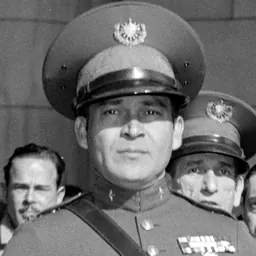
When Fulgencio Batista led a coup d'état against Prío Socarrás and took over the presidency in 1952, Bosch was jailed by Batista's forces. After being liberated, he left Cuba and headed to Costa Rica, where he dedicated his time to pedagogical tasks, and to his activities as leader of the PRD.
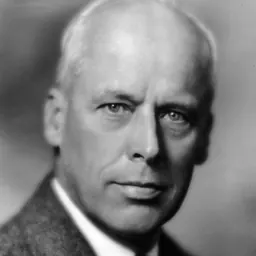
Molasses tycoon Jacob Merrill Kaplan earned his fortune primarily through operations in Cuba and the Dominican Republic. The J.M. Kaplan Fund was found in a 1964 congressional investigation to be a conduit for funneling CIA money to Latin America, including through the Institute of International Labor Research (IILR) headed by Norman Thomas, six-time presidential candidate for the Socialist Party of America.
Via the Fund, the CIA gave Figueres money to publish a political journal, Combate, and to found a left-wing school for Latin American opposition leaders. Funds passed from a shell foundation to the Kaplan Fund, next to the IILR, and finally to Figueres and Bosch.
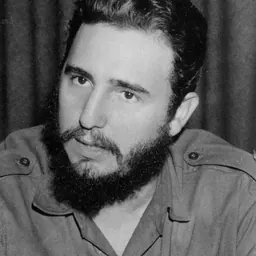
In 1959 the Cuban Revolution took place, led by Fidel Castro, causing a major political, economic and social upheaval in the Caribbean island. Cord Meyer, a CIA official, was chief of International Organizations Division, a CIA-sponsored group for promoting democracy in international groups. Richard N. Goodwin, Assistant Special Counsel to the President, who had direct contacts with the rebel alliance, argued for intervention against Trujillo. However, in the elections of 20 December 1962, Bosch and his running mate, Armando González Tamayo, won a sweeping victory over Viriato Fiallo of the National Civic Union in what is acknowledged to be the first free election in the country's history.
On 27 February 1963, Bosch was sworn in as president in a ceremony that was attended by important democratic leaders and personalities of the region, like Luis Muñoz governor of the U.S. territory of Puerto Rico and José Figueres of Costa Rica. Bosch immediately launched a deep restructuring of the country. On 29 April, he promulgated a new social democratic constitution. The new document changed the laws in various ways. Among other things, it declared specific labour regulations, and mentioned unions, pregnant women, homeless people, the family, rights for the child and the young, for the farmers, and for illegitimate children.
However, Bosch faced powerful enemies. He moved to break up latifundia, drawing the ire of landowners. The Church thought Bosch was trying to oversecularize the country. Industrialists did not like the new Constitution's guarantees for the working class. The military, who previously enjoyed free rein, felt Bosch put them on too short a leash.
Coup d'état
On 25 September 1963, after only seven months in office, Bosch was overthrown in a coup led by General Elias Wessin y Wessin, General Antonio Imbert Barreras, and other military leaders which established a three-man military junta. Bosch was deported to Guadeloupe on 28 September 1963, but would fly to Puerto Rico on 1 October 1963, where he spent the remainder of his exile.
After placing third in the 1994 election, Bosch retired from politics at the age of 83.
Death and legacy Juan Bosch died on 1 November 2001, in Santo Domingo. As a former president, he received the corresponding honors at the National Palace, and was buried in his hometown of La Vega. A metro station in Santo Domingo was named in Bosch's honor in 2009.
His wife, former First Lady Carmen Quidiello, died on 19 December 2020, at the age of 105.
Don’t just read it —
keep it.
Full-length biographies made to live with: read them, listen on the way to work, watch them tonight.
- E-book
- Audio
- Video
Instant download · yours to keep · every purchase keeps this site free
Important facts
Family & relationships
People in Juan Bosch's life
Named in this biography and alive at the same time

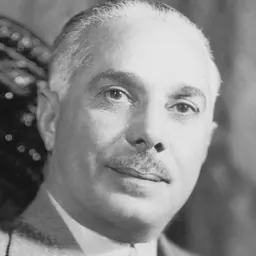
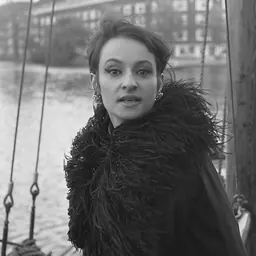
Related people
Same field, nearest in time






Contemporaries
People whose lives overlapped Juan Bosch's


Frequently asked questions
Who was Juan Bosch?
First democratically elected President of the Dominican Republic (1909-2001)
When was Juan Bosch born?
Juan Bosch was born on 30 June 1909 in La Vega Province.
When did Juan Bosch die?
Juan Bosch died on 1 November 2001 in Salcedo.
What was Juan Bosch's occupation?
Juan Bosch was a politician, historian, writer and head of state.
What nationality was Juan Bosch?
Juan Bosch was Dominican.
Sources & further reading
· DBpedia: Juan Bosch (politician)
Cite this page
APA: Biography.guide. (2026). Juan Bosch. https://biography.guide/juan-bosch/
MLA: "Juan Bosch." Biography.guide, https://biography.guide/juan-bosch/.
Chicago: "Juan Bosch." Biography.guide. https://biography.guide/juan-bosch/.
Data last updated: 2026-09-20 · Spot an error? Report a correction.
Page generated 2026-09-27 05:26 UTC