
About Francisco Goitia
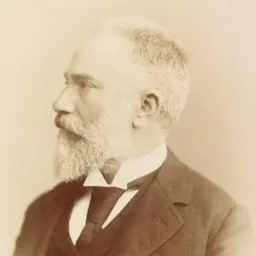
Lived 1882 – 1960 (aged 77). Francisco Goitia was a Mexican intellectual, sculptor, painter and artist.
Francisco Bollaín y Goitia García (4 October 1882 – 26 March 1960) was a Mexican artist. Goitia was a reclusive and complicated man, whose life and work was heavily influenced by the Mexican Revolution. He was of the Mexican muralism generation but did not share its politics. Goitia worked with the Francisco Villa army, creating works depicting the violence of that time and afterwards, worked with anthropologist Manuel Gamio depicting indigenous history and culture. He lived most of the last half of his life simply in then-rural Xochimilco, away from the cultural and intellectual life of Mexico City, dying there in his house. He did not leave behind a large collection of work, but a number of his paintings are notable in their own right such as Tata Jesucristo. His work has been recognized with a film biography and a museum in Zacatecas named after him.
Early life Zacatecas Landscape with Hanged Men II, circa 1914, oil on canvas, 194 × 109.7 cm. Museo Nacional de Arte Goitia was born in Patillos, Zacatecas on October 4, 1882, the illegitimate son of Andrea Altamira and hacienda administrator of Basque origin, Francisco Bolain and Goitia. His mother died giving birth, and he was raised by a wet nurse name Eduarda Velazquez.
He grew up for a time at the Charco Blanco ranch, and then was sent to Fresnillo to attend primary school. After he graduated, his father had him come back to the hacienda to do office and administrative work. Goita did his daily work as quickly as possible in order to enjoy the forests, swimming in the rivers and pursuing wildlife.
Although it was customary in Zacatecas at the time for sons to follow their fathers' positions of employment, office work did not agree with Francisco and his father decided to send his son to Mexico City to study. There he studied under José María Velasco, Julio Ruelas, Germán Gedovius and Saturnino Herrán and became friends with Rufino Tamayo, who influenced his work. Here he began to study with Catalan painter Franesc Gali, also developing a friendship with Luis Plaindura, an art collector who supported him economically.
He moved into a simple adobe house he built himself, next to the area's chinampa fields and one of its trolley stops.
In the 1940s, he returned to Zacatecas for a time to paint, restore canvases at the Franciscan monastery of Guadalupe and do other projects as well as support religious orders, often donating to them the proceeds of his art sales. The then-governor of the state offered him the opportunity to paint murals on government buildings but Goitia refused as he did not share the political or social ideals of Mexican muralism.
Artistry Goitia's work as a student until his time Gamio, shows experimentation and studying, including his work while with the Villa army, some of which are in an exaggerated Symbolist style . His work is generally described as realist, with little ornamentation, with elements of Expressionism or Impressionism. Later works have been described as post-Impressionist and as "Expressionist Modernism." He was of the generation of Mexican muralism but did not participate in the movement.
His life began in the Porfirio Díaz years, living to see the Revolution and how it shaped Mexico in the first half of the 20th century. These experiences shaped him both as a person and as a painter. His themes are generally somber, expressing a sense of poetry in the collective conscious and suffering of the Mexican people. His technique is shadowy and archaic in appearance, generally depicting scenes of the Revolution and the poor, people suffering physical and moral misery. His early contact with nature influenced many of his paintings.
He did not leave behind many works, in part because he created works sparked by events and many were not meant to last more than weeks or months. However, several of his works are classics in Mexican iconography. These include Tata Jesucristo (1927) (today at MUNAL), Los ahorcados, El viejo en el muladar and a self-portrait which he never finished.
Don’t just read it —
keep it.
Full-length biographies made to live with: read them, listen on the way to work, watch them tonight.
- E-book
- Audio
- Video
Instant download · yours to keep · every purchase keeps this site free
Important facts
People in Francisco Goitia's life
Named in this biography and alive at the same time

Related people
Same field, nearest in time




Contemporaries
People whose lives overlapped Francisco Goitia's


Frequently asked questions
Who was Francisco Goitia?
Mexican artist (1882-1960)
When was Francisco Goitia born?
Francisco Goitia was born on 4 October 1882 in Zacatecas.
When did Francisco Goitia die?
Francisco Goitia died on 26 March 1960 in Mexico City.
What was Francisco Goitia's occupation?
Francisco Goitia was an intellectual, sculptor, painter and artist.
What nationality was Francisco Goitia?
Francisco Goitia was Mexican.
Sources & further reading
Cite this page
APA: Biography.guide. (2026). Francisco Goitia. https://biography.guide/francisco-goitia/
MLA: "Francisco Goitia." Biography.guide, https://biography.guide/francisco-goitia/.
Chicago: "Francisco Goitia." Biography.guide. https://biography.guide/francisco-goitia/.
Data last updated: 2026-09-20 · Spot an error? Report a correction.
Page generated 2026-09-27 05:17 UTC