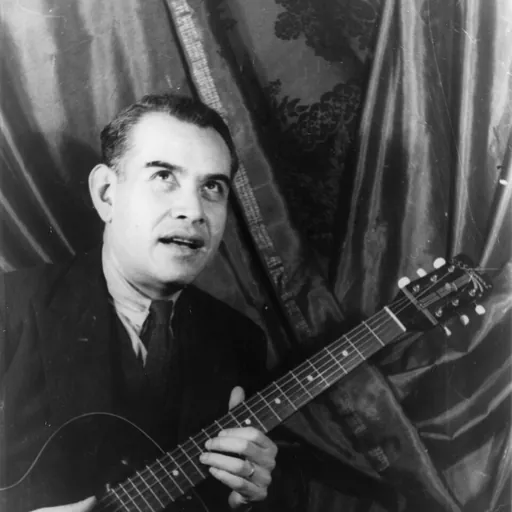
About Rufino Tamayo
Lived 1899 – 1990 (aged 90). Rufino Tamayo was a Mexican painter, printmaker and sculptor.
Rufino del Carmen Arellanes Tamayo (; August 25, 1899 – June 24, 1991) was a Mexican painter of Zapotec heritage, born in Oaxaca de Juárez, Mexico. Tamayo was active in the mid-20th century in Mexico and New York, painting figurative abstraction with surrealist influences. His mother was a seamstress and his father was a shoemaker. His mother died of tuberculosis in 1911. His Zapotec heritage is often cited as an early influence.
While there, he devoted himself to helping his family with their small business. However, in 1917 Tamayo's aunt enrolled him at Escuela Nacional de Artes Plásticas at San Carlos to study art. After the Mexican Revolution, Tamayo devoted himself to creating a distinct identity in his work. He expressed what he envisioned as traditional Mexico and eschewed the overt political art of such contemporaries as José Clemente Orozco, Diego Rivera and David Alfaro Siqueiros. He disagreed with these muralists in their belief that the revolution was necessary for the future of Mexico but considered, instead, that the revolution would harm Mexico.
In his painting, Niños Jugando con Fuego (Children Playing with Fire, 1947), Tamayo shows two individuals being burnt by a fire they have created, a symbol of the Mexican people being injured by their own choice and action. Tamayo claimed, "We are in a dangerous situation, and the danger is that man may be absorbed and destroyed by what he has created". Due to his political opinions, he was characterized by some as a "traitor" to the political cause.
Tamayo came to feel that he could not freely express his art; he, therefore, decided in 1926 to leave Mexico and move to New York City. Prior to his departure, Tamayo organized a one-man show of his work in Mexico City where he was noticed for his individuality. Tamayo Trayectos reopening exhibition of the Museo Rufino Tamayo, Mexico City in the 2012. Tamayo's legacy in the history of art lies in his oeuvre of original graphic prints in which he cultivated every technique. Tamayo's graphic work, produced between 1925 and 1991, includes woodcuts, lithographs, etchings, and "Mixografia" prints. With the help of Mexican printer and engineer Luis Remba, Tamayo expanded the technical and aesthetic possibilities of the graphic arts by developing a new medium which they named Mixografia. This technique is a unique fine art printing process that allows for the production of prints with three-dimensional textures.
It not only registered the texture and volume of Rufino Tamayo's design but also granted the artist freedom to use any combination of solid materials in its creation. Tamayo was delighted with the Mixografia process and created some 80 original Mixographs. One of their most famous Mixografia is titled Dos Personajes Atacados por Perros (Two Characters Attacked by Dogs).
In 1935, he joined the Liga de Escritores y Artistas Revolucionarios (LEAR). The LEAR was an organization in which Mexican artists could express through painting and writing their responses towards the revolutionary war and governmental policies than are current in Mexico. Although Tamayo did not agree with Siqueiros and Orozco, they were chosen along with four others to represent their art in the first American Artists' Congress in New York. Now married, Rufino and Olga had planned on staying in New York only for the duration of the event; however, they made New York their permanent home for the next decade and a half.
In 1948, Tamayo's first major retrospective was held at the Palacio de Bellas Artes in Mexico City. Although his position remained controversial, his popularity was high. During this time, he became acquainted with young American artist Joseph Glasco who was studying at the school of art at San Miguel de Allende and Tamayo moved into Glasco's apartment and studio at one point. Uncomfortable with the continuing political controversy, Tamayo and Olga moved to Paris in 1949 where they remained for the next decade. showing her struggles through color choices and facial expressions. The shared difficulties of painter and wife can be seen in the portrait Rufino and Olga, circa 1934, where the couple appears broken by life's obstacles.
Tamayo also painted murals, some of which are displayed inside Palacio Nacional de Bellas Artes opera house in Mexico City, such as Nacimiento de la nacionalidad (Birth of the Nationality, 1952).
Tamayo was known to have taught Francisco Toledo and Veronica Ruiz de Velasco, who were both in the National Museum of Modern Art.
Teaching and influence
While Tamayo did not maintain a formal teaching practice, he occasionally mentored younger artists and had a profound influence on Mexican art, particularly artists from his native Oaxaca.
In 1985, Tamayo invited emerging artist Veronica Ruiz de Velasco to his studio for private lessons, praising her exceptional use of color. She later became one of the youngest female artists to exhibit solo at Mexico's Museo de Arte Moderno.
Tamayo's success as an Oaxacan artist who achieved international recognition while maintaining connections to indigenous Mexican culture influenced subsequent generations, including Francisco Toledo (1940-2019), who similarly integrated Zapotec cultural themes into contemporary art. Tamayo's approach demonstrated that Mexican artists could achieve international recognition while remaining rooted in regional indigenous traditions.
Influences
Tamayo was influenced by many artists. María Izquierdo, a fellow Mexican artist with whom he lived with for a time, taught Tamayo precision in his color choices. He selected colors true to his Mexican environment. He argued, "Mexicans are not a gay race but a tragic one ..."
Other influences came from Tamayo's cultural heritage. One can say that Tamayo was one of the few artists of his era who enjoyed Mexico's ethnic differences. He enjoyed the fusion of Spanish-Mexican-Indian blood and that is shown in some of his art pieces. In Lion and Horse (1942), Tamayo used pre-Columbian ceramics. Many people doubted that Mexican artists could actually create art. Under the Díaz regime, artists of Mexican origin were ignored by society; it was commonly held that they lacked the skills to surpass artists of European descent.
Outside Mexico From 1937 to 1949, Tamayo and his wife Olga lived in New York where he painted some of his most memorable works. He had his first show in New York City at the Valentine Gallery. He gained credibility thereby and proceeded to exhibit works at the Knoedler Gallery and Marlborough Gallery. While in New York, Tamayo instructed Helen Frankenthaler at the Dalton School. Tamayo, while in the United States, attended important exhibitions that influenced his art mechanics. From Ingres to Picasso and French art exhibitions, Tamayo was introduced to Impressionism, Fauvism, and Cubism. Also, at an exhibition in Brooklyn in 1928, Tamayo came into contact with Henri Matisse, the French artist. With that being said, Octavio Paz, author of the book Rufino Tamayo, argues that, "Time and again we have been told that Tamayo is a great colourist; but it should be added that this richness of colour is the result of sobriety". By being pure or, as Paz explained, sober with his color choice, Tamayo's paintings were enriched, not impoverished.
List of artworks
Untitled (1926) Cabeza mujer (1927) Mujeres con rebozo (1927) Still life with corn (1928) Naturaleza muerta con pie (1928) Still Life (1928) Interior with an alarm clock (1928) Frutero Y Domino (1928) The Window(1932) Aviation (1934) Rufino and Olga (1934) Two Bathers (1934) Animals (1941) Two Women Combing Their Hair (1941) Woman with a Bird Cage (1941) Lion and Horse (1942) Woman Spinning (1943) Children Playing with Fire (1947) Nacimiento de nuestra nacionalidad (1952) Mexico de Hoy (1953) El día y la noche (Day and Night) (1954) Naturaleza muerta (1954) America (1955) Matrimonio (1958) Retrato de niños (Pareja de niños) (1966) El Perro en la Luna (The Dog on The Moon) (1973) Watermelons (1977) Tres personajes cantando (Three Singers) (1981)
Hombre con flor (Man with Flower) (1989) Luna y Sol (Moon and Sun) (1990)
Return home and later years A panoramic photograph of the entrance floor in Museo Soumaya with Rufino painting. In 1959, Tamayo and his wife, Olga Flores, returned to Mexico permanently and Tamayo built an art museum in his home town of Oaxaca, the Museo Rufino Tamayo. In 1972, Tamayo was the subject of the documentary film, Rufino Tamayo: The Sources of his Art by Gary Conklin.
The Tamayo Contemporary Art Museum (Museo Tamayo de Arte Contemporáneo), located on Mexico City's Paseo de la Reforma boulevard where it crosses Chapultepec Park, was opened in 1981 as a repository for the collections that Rufino Tamayo and his wife acquired during their lifetimes, and ultimately donated to the nation. Tamayo painted his last painting in 1990, at the age of 90, Luna y Sol (Moon and Sun).
Tamayo's work has been displayed in museums throughout the world, including the Solomon R. Guggenheim Museum in New York City, The Phillips Collection in Washington, the Cleveland Museum of Art in Cleveland, Ohio, the Naples Museum of Art in Naples, Florida, Art institute of Chicago in Chicago, Illinois, Oklahoma City Museum of Art in Oklahoma City, Oklahoma and The Museo Nacional Centro de Arte Reina Sofia in Madrid, Spain.
Death On June 12, 1991, Tamayo was admitted to Mexico City's National Institute of Medical Sciences and Nutrition for respiratory and heart failure. He suffered a heart attack and died on June 24, 1991.
Before his death, Tamayo continued creating art pieces in his late years. He was very productive at that stage in life. There were several important exhibitions and publications organized after his death. Although she knew little about modern art, Gibson felt the painting "had power" and took it without knowing its origin or market value. She spent four years trying to learn about the work, eventually learning from the PBS website that it had been featured on an episode of Antiques Roadshow. After seeing the Missing Masterpieces segment about Tres Personajes, Gibson and the former owner arranged to sell the painting at a Sotheby's auction. In November, 2007 Gibson received a $15,000 reward plus a portion of the $1,049,000 auction sale price.
Recognitions National Prize for Arts and Sciences in Fine Arts of Mexico, 1964 Honorary Doctor by the National University of Mexico, 1978 Honorary Doctor of Fine Arts by the University of Southern California, 1985 Gold Medal of Merit in the Fine Arts of Spain, 1985 Belisario Domínguez Medal of Honor by the Mexican Senate, 1988 Grand Officer of the Order of Merit of the Italian Republic, 1989 Honorary member of the National College of Mexico, 1991
Exhibitions and retrospectives Tamayo: The New York Years, Smithsonian American Art Museum 2017–2018
Gallery
Don’t just read it —
keep it.
Full-length biographies made to live with: read them, listen on the way to work, watch them tonight.
- E-book
- Audio
- Video
Instant download · yours to keep · every purchase keeps this site free
Important facts
People in Rufino Tamayo's life
Named in this biography and alive at the same time




Related people
Same field, nearest in time



Contemporaries
People whose lives overlapped Rufino Tamayo's




Frequently asked questions
Who was Rufino Tamayo?
Mexican painter, printmaker, and sculptor (1899-1991)
When was Rufino Tamayo born?
Rufino Tamayo was born on 26 August 1899 in Oaxaca de Juárez.
When did Rufino Tamayo die?
Rufino Tamayo died on 24 June 1990 in Mexico City.
What was Rufino Tamayo's occupation?
Rufino Tamayo was a painter, printmaker and sculptor.
What nationality was Rufino Tamayo?
Rufino Tamayo was Mexican.
Sources & further reading
Cite this page
APA: Biography.guide. (2026). Rufino Tamayo. https://biography.guide/rufino-tamayo/
MLA: "Rufino Tamayo." Biography.guide, https://biography.guide/rufino-tamayo/.
Chicago: "Rufino Tamayo." Biography.guide. https://biography.guide/rufino-tamayo/.
Data last updated: 2026-09-22 · Spot an error? Report a correction.
Portrait: Wikimedia Commons · author & licence
Page generated 2026-09-27 05:01 UTC