
About Francisco Claver
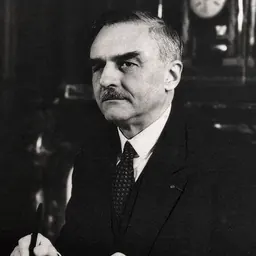
Lived 1929 – 2010 (aged 81). Francisco Claver was a Filipino university teacher, catholic priest, catholic bishop, bishop and catholic theologian.
Francisco Funaay Claver, S.J. (20 January 1926 – 1 July 2010) was a Filipino Jesuit, cultural anthropologist and human rights activist. As a Roman Catholic prelate, he is renowned for his writings on ecclesiology and social justice, and his efforts to institutionalize Vatican II reforms in the Philippine Catholic Church. As a human rights activist, Claver was one of the most persistent critics of the Marcos dictatorship among Philippine Catholic Church leaders. Claver was at the forefront of civil society groups that opposed the Marcos regime's World Bank-funded Chico River Dam project, which would have caused the displacement of Indigenous peoples living in the area. He was also responsible for drafting the 1986 Philippine bishops' statement, which was considered a key moment in the People Power Revolution that overthrew the Marcos dictatorship. Claver is considered one of the "intellectual minds" in the ranks of the bishops of the Catholic Church in Asia.
Biography Claver was born in 1929 in Bontoc, the capital of the old Mountain Province during the American Occupation of the Philippines. It was only in the 1860s when the Spanish colonial government finally established political control of the largely unhispanized central Cordillera region of Northern Luzon. In Bontoc, efforts to spread Christianity did not last as Spanish Augustinians abandoned their mission in 1898. Catholicism started to take roots in the Cordillera with the arrival of Belgian missionaries at the start of the American colonial period.
Claver received his early education in schools in Benguet and Kalinga. He entered the Society of Jesus on 30 May 1948 and received initial Jesuit formation in Novaliches and Cebu. He was sent for his theological studies to Woodstock College, Maryland, United States of America, where he was ordained to the priesthood on 18 June 1961. This makes Claver the first Roman Catholic priest ordained from the Indigenous Bontoc people of northern Luzon.
Claver began special studies in Anthropology and spent a year at the Ateneo de Manila University, and another two years doing research in mission parishes of Bukidnon. He established a new mission, the first among the Manobo people, and later finished his doctoral work at the University of Colorado in 1972.
In 1969, he was appointed bishop of Malaybalay in Bukidnon, a province in the southern island of Mindanao, where he served from 1969 to 1984. Within the Catholic Bishops' Conference of the Philippines (CBCP), Claver served as chair of the Episcopal Commission for Indigenous Peoples, and of the Commission for Justice and Peace.
Claver died on 1 July 2010 while confined at the Cardinal Santos Memorial Hospital in San Juan City. Claver's remains were brought back to his hometown of Bontoc where a funeral was held for three days at the Santa Rita de Cascia Cathedral. The bishop was laid to rest at the Jesuit Cemetery in the Sacred Heart Novitiate, Novaliches district of Quezon City.
Pastoral Ministry In the spirit of the Second Vatican Council reforms, Claver's ecclesiology emphasized the importance of a participatory Church, one which puts more emphasis on the Church as a community rather the Church as a hierarchy. In 2009, Claver published his work The Making of a Local Church, where he stressed that the best way to renew faith life at all levels of the Catholic Church was to develop small, local communities that are responsive to local needs. Claver dedicated his numerous years as the bishop of Malaybalay (1969-1984) and Bontoc-Lagawe (1995-2004) to establishing Basic Ecclesial Communities (BECs), a model of a local church that actively engaged as many laypeople in the grassroots as possible. While his idea of joint pastoral responsibility between the clergy and the lay people caused discomfort among some conservative church leaders, Claver's church model won him the admiration of many Catholic church leaders and theologians within and outside of the Philippines, including leaders of some Protestant groups.
Claver also championed the indigenization movement within the Philippine Catholic Church. Indigenization involved teaching and expressing using the language and artistic and musical traditions found in the local culture. For example, Claver wanted the Manobos to get to know God by using Bibles translated in the Manobo language published by the researchers at the Summer Institute of Linguistics, a non-Catholic group.
Human rights activism and opposition against the Marcos dictatorship When President Marcos placed the Philippines under Martial Law in 1972, the Catholic Church hierarchy did not share a unified outlook towards martial law. The Catholic Bishops' Conference of the Philippines (CBCP) was dominated by a faction of conservative Catholic bishops, led by Archbishop Julio Rosales of Cebu, who believed that the Church should stay out of political matters and focus solely on religious and spiritual concerns. Another group of Church leaders representing the moderate faction was led by Jaime Cardinal Sin of Manila. This group criticized specific injustices of the regime without attacking martial law in principle, a strategy they called "critical collaboration". A third group, representing the liberal front, protested martial law in principle and its wide array of abuses. This third group bishops who tended to be younger, located in smaller dioceses, and more committed to the social action goals of the church. Latin American Jesuits opposed the brutality of military dictatorships in their respective countries, and they were actively engaged with the social and political issues of the time, often at great personal risk. Alingal was murdered by unknown assailants in his rectory on 13 April 1981 (Easter Sunday). Claver's non-violent opposition is exemplified by his involvement with the Association of Major Religious Superiors, composed of 2,500 Catholic priests and 7,000 nuns, most of them teachers, who have led prayer rallies and symposiums at leading women's colleges.
The bishop used the pulpit, the print media, and the radio to condemn the violations and admonish the abusers, including Bukidnon Governor Carlos Fortich, whose family owned huge landholdings in the province.
In 18 November 1976, the military raided the DXDB (radio station operated by the Bukidnon Catholic Church), took away all its broadcast equipment and left the station padlocked on orders from then defense minister Juan Ponce Enrile. On hindsight, Claver's decision to vacate his office allowed him to redirect his energies to mounting a more vigorous campaign against the Marcos regime.
1986 People Power Revolution After resigning as bishop in 1984, Claver moved back to Manila to assist Fr. John Caroll, SJ who was the head of the newly founded Institute for Church and Social Issues (ICSI) of the Ateneo de Manila University. At the time, the assassination of Ninoy Aquino a year earlier unleashed outrage across socioeconomic lines against Marcos. It did not help that Aquino's assassination worsened the economic conditions of the country that furthered the disenchantment of the urban middle class and economic elites.
In the aftermath of the 1986 Snap elections, Claver drafted the official post-election declaration of the Catholic Bishops' Conference of the Philippines (CBCP), which declared that in the bishops' judgment, “the polls were unparalleled in the fraudulence of their conduct.” While the statement did not propose any concrete steps, it called on the people to verify the facts in the light of their own experience and to discern what steps to take. The Filipino bishops decided that it was within their competence, and indeed that it was their responsibility. The declaration drafted by Claver foreshadowed Cardinal Sin's call to the public a week later, urging them to take to the streets. This pivotal moment marked one of the key turning points in the EDSA People Power Revolution, ultimately leading to the downfall of the Marcos dictatorship.
Don’t just read it —
keep it.
Full-length biographies made to live with: read them, listen on the way to work, watch them tonight.
- E-book
- Audio
- Video
Instant download · yours to keep · every purchase keeps this site free
Important facts
People in Francisco Claver's life
Named in this biography and alive at the same time




Related people
Same field, nearest in time

Contemporaries
People whose lives overlapped Francisco Claver's

Frequently asked questions
Who was Francisco Claver?
First Igorot Bishop (1929-2010)
When was Francisco Claver born?
Francisco Claver was born on 20 January 1929 in Bontoc.
When did Francisco Claver die?
Francisco Claver died on 1 July 2010 in Manila.
What was Francisco Claver's occupation?
Francisco Claver was a university teacher, catholic priest, catholic bishop, bishop and catholic theologian.
What nationality was Francisco Claver?
Francisco Claver was Filipino.
Sources & further reading
Cite this page
APA: Biography.guide. (2026). Francisco Claver. https://biography.guide/francisco-claver/
MLA: "Francisco Claver." Biography.guide, https://biography.guide/francisco-claver/.
Chicago: "Francisco Claver." Biography.guide. https://biography.guide/francisco-claver/.
Data last updated: 2026-09-20 · Spot an error? Report a correction.
Page generated 2026-09-27 05:31 UTC